
Wednesday, November 25, 2026



News and Views from the Global South
Environment
LATIN AMERICA: Environment’s Poverty-Fighting Potential Largely Ignored
The environment remains a second-tier matter in Latin America and the Caribbean despite being interwoven with persistent poverty and stalled economic development in the region, according to a new report from the United Nations Environment Programme.
AFRICA: “Everything but Arms Deal Doesn’t Benefit Enough People”
The Everything but Arms trade initiative, which provides preferential treatment to poor countries, benefits only a limited range of people in the target populations. It should also be expanded to more countries, civil society organisations say.CENTRAL AMERICA: Doors Wide Open for Renewable Energy
Heavy reliance on petroleum imports, the need for electricity in rural areas, and the ongoing effort towards sustainable development have focussed Central America's attention on renewable energy. But that doesn't mean there isn't opposition.
Major Strides Seen in Halting Illegal Logging
A comprehensive report, released Thursday by Chatham House, finds that production of illegal timber worldwide has declined by 22 percent since 2002, a trend that is benefiting both communities dependent on tropical forests and the global climate.
ENVIRONMENT-INDIA: Fighting Drought With Check Dams
Gazing out at the lush greenery that surrounds the village of Salaita in northern India, a smile of satisfaction appears on retired army general A.P.S. Chauhan's face.World Bank, NGOs Spar over Indonesian Mine Project
The World Bank's Board of Directors said studies for a potential mining project in Indonesia could move forward Tuesday but civil society groups, citing studies that have already been done, condemned the decision.Pacific Islands Criticise Stalled Climate Financing
Despite the creation of a High-Level Advisory Group on Climate Change Financing (AGF), a group of hard-hit Pacific islands is expressing doubt that aid will be delivered in a timely manner.
DEVELOPMENT-ZIMBABWE: “Competing With the Dogs for Bones”
"People used to mock me, saying that I am competing with dogs for bones, but these taunts do not deter me," says Sibongile Mararike with no sign of rancour.
BRAZIL: Electricity Trumps Biodiversity for Xingu River
Herculano Porto de Oliveira, of Brazil, said he felt forced "to live in hiding on my own land, though I never fought with anyone or stole anything," just for making a living from the biodiversity of the Amazon's Xingú River Basin, where he was born 66 years ago.
EGYPT: Oil, Water and Tourism Don’t Mix
Egypt's Red Sea resort cities have grown up in the shadow of oil development, but with tourism booming and the country's oil reserves drying up, many stakeholders think it is time to exorcise the oil spectre.EUROPE: ‘No’ to GM Could Conceal a ‘Yes’
Genetically modified (GM) foods will be introduced more quickly in Europe as a result of a new proposal, some Brussels officials fear.
New Weather Patterns Threaten U.S. Breadbasket
Climate change is expected to disrupt agriculture in the U.S. Midwest, with high carbon dioxide promoting crop growth but stronger storms, drought, floods and migrating yields dampening yields.
Turks Let Kurdish Forests Burn
The Turkish General Directorate of Forestry claims to devote the bulk of its resources to combating forest fires, but it is passively observing the Turkish army ignite forested areas in the country's predominantly Kurdish southeastern region.CLIMATE CHANGE: Uruguay Fends Off Health Threats – So Far
The incidence of cardiovascular, respiratory and water-borne diseases is rising in Uruguay in tandem with climate change, while dengue fever and malaria lurk at the country's borders. Higher temperatures are encouraging the presence of insect vectors carrying diseases that were eradicated decades ago, experts say.
INDIA: ‘Green Cremation’ Gets A Second Look
Unmindful of the monsoons lashing the Dehradun area in the Himalayan foothills in northern India, Girdhari Singh returns from work daily with a headload of wood that he finds along the road, and stacks it to dry in the cattleshed.
Greenpeace Gets New Wind in its Sails
Exactly 25 years after French secret agents sank its flagship and killed one of its crew, Greenpeace has begun construction of a new Rainbow Warrior. The group’s leaders say its environmental campaigning is needed more than ever.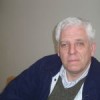
Q&A: “Latin America Faces an Environmental Emergency”
The Latin American economy based on exploitation of natural resources does not create social well-being and is unsustainable in the context of climate change, says Uruguayan Eduardo Gudynas, lead researcher at the Latin American Centre for Social Ecology (CLAES).
ICELAND: The Ash Comes Down Like a Blessing to Some
"It's unbelievable, the eruption has had a very good effect on the grass," says farmer Finnur Tryggvason in Raudafell, just beneath the Eyjafjallajokull glacier that erupted in April and continued till late May.
Bolivian Lowlands Get Life-Saving Flood Warning System
An early warning system to alert people living in the lowlands of the northern Bolivian department of Beni about imminent flooding of the mighty Mamoré and Ibare rivers is saving lives, food and goods, and overcoming the uncertainty that led to enormous losses in the past.
No Free Press for BP Oil Disaster
Last week, the U.S. Coast Guard, working in concert with oil giant BP, instituted new restrictions across the U.S. Gulf Coast that prevent the media from coming within 20 metres of booms or response vessels on beaches or water. But the insidiousness of the restrictions runs even deeper.MOZAMBIQUE: Women at Forefront of Resisting Climate Change
The Mozambican government has adopted various policies to address the effects of climate change, with special attention to women as studies show that they are more adversely affected by this phenomenon.« Previous Page — Next Page »


Through our global network of local writers, we are continuing our award-winning coverage of global and local environmental challenges, with a focus on the people for whom the ecosphere matters in a direct way: rural dwellers who have little means to protect themselves against adverse conditions; communities that need to switch to sustainable development in order to survive; poor women and children, who are the most vulnerable in natural disasters. Sponsored by the United Nations Environment Program (UNEP), the United Nations Development Program (UNDP) and The World Bank (WB), IPS also maintains the award-winning Tierramérica, a specialised information service on environment and development.

The Week with IPS

Tracking global progress towards a sustainable world


