
Wednesday, November 25, 2026



News and Views from the Global South
Environment
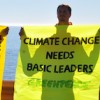
CLIMATE CHANGE: No Deal in Sight, Say Leading Economies of the South
Environment ministers from Brazil, South Africa, India and China are sceptical that a legally-binding agreement on climate change will be reached in Cancun, Mexico in December.Civil Society Calls on World Bank to Reform its Energy Lending
Against the backdrop of the World Bank and International Monetary Fund's spring meetings this weekend, numerous groups have chimed in on the need for and direction of a new World Bank energy strategy.GM Crops Go to US High Court, Environmental Laws on the Line
The U.S. Supreme Court will hear arguments Tuesday in its first-ever case involving genetically modified crops. The decision in this case may have a significant impact on both the future of genetically modified foods and government oversight of that and other environmental issues.RIGHTS-AUSTRALIA: Plan For Nuclear Waste Dump Faces Backlash
Aboriginal landowners in Australia’s far north are battling government plans to construct this country’s long-term nuclear waste storage facility on their land.
Forests Not for Absorbing Carbon, Say Activists
Thousands of activists left the international civil society meet in Bolivia with the goal to fight the use of forests for absorbing carbon emissions, following sharp debate and criticisms of the host government of President Evo Morales.
Murky Waters Flow from Peruvian Andes
Work on a gigantic plan for water diversion and irrigation in a vast area of northern Peru is gaining speed amidst environmental and agricultural worries.
Coal, a Silent Killer
The only way to fight climate-changing carbon emissions is to shut down all of the coalmines and power plants and develop only alternative energy sources, says U.S. expert Alan Lockwood.Ecobreves – HONDURAS: Jesuits Launch Eco-Campaign
"Later is too late" is the campaign launched by the Society of Jesus in Honduras, working with various civil society groups, that seeks to raise awareness about the importance of protecting the environment.Ecobreves – CHILE: Renewed Mapuche Opposition to Airport
The Mapuche organization Ayún Mapu, which includes eight communities of Chile's largest indigenous group, will turn to the courts to prevent the construction of an airport on their land in the region of Araucanía, near Temuco, 670 kilometers south of Santiago.
KENYA: Farming Butterflies Puts Food on the Table
For 10 years, Roselyne Shikami, sold boiled eggs at the bus station just outside the densely wooded Kakamega Forest in western Kenya, near the border with Uganda. Now she is selling butterflies.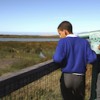
SOUTH AFRICA: Children Help to Assess Water Health
Miss, Miss, there are tiny creatures here in the water!" a Grade 7 pupil shouts excitedly, trying to draw attention to his water sample. At first, the liquid looks clear, but upon closer examination, one can make out a tiny aquatic invertebrate.ARGENTINA: “We’re Drowning in Sadness”
The legal battle waged by an indigenous community in northern Argentina against the government over a project that flooded half of their territory highlights the fact that legal title to their land is not enough to overcome the marginalisation they have faced for centuries.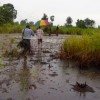
NIGERIA: New Law to Promote Locals in Oil Industry
"This bill seeks to address the compelling need for us as a nation to have indigenous participation in the industry." With these words, Nigeria’s acting President, Goodluck Jonathan, signed the Nigerian Oil and Gas Industry Content Development Bill into law.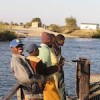
SOUTHERN AFRICA: Sharing the Okavango
Each January, a giant pulse of water from heavy summer rains over the south of Angola enters the Okavango River system and begins a five-month journey through Namibia to a richly biodiverse swamp in Botswana's Kalahari desert. The river is a rarity, scarcely disturbed by human development along its 1,100 kilometre length: shaping its future is the delicate task of the Okavango River Basin Commission.World Court Highlights Environmental Vulnerability of Uruguay River
If anything was left clear by the International Court of Justice (ICJ) ruling on the long-running pulp mill dispute between Argentina and Uruguay, it was the weakness of rules and regulations to prevent pollution of the Uruguay River in the 508-km stretch shared by the two countries.
Wanted: World Referendum, Climate Justice Tribunal
A world people's referendum on climate change will be held in April 2011 for the earth's peoples to decide how to address this global problem.MOZAMBIQUE: Co-existing With Floods
April signals the tail end of the flood season in Mozambique. The country's water managers will soon be able to appraise the effects of changing policies.EU Defends Food as Fuel
The European Union's anti-poverty chief has refused to concede that his promotion of biofuels has helped exacerbate global hunger.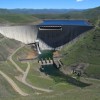
WATER-LESOTHO: Getting Community Consultation Right
The Lesotho Highlands Water Project will move into its second phase in 2010. The first phase has been praised as a shining example of transboundary water sharing in Africa, but community dissatisfaction may mean a rough ride for its extension.
NIGER: Lack of Data on Causes of Death Buffers French Company
French state-owned company Areva continues to deny any wrongdoing after findings that populated areas in Niger remain contaminated with high levels of radio-activity. The company seems to be escaping censure partly because of lack of data on cancer-related causes of death among Nigeriens working at or living near the uranium mines.A North-South Pact to Resolve Water, Sanitation Crisis
An international coalition of over 120 non-governmental organisations (NGOs) is demanding a North-South partnership to resolve the spreading global crisis in water and sanitation.« Previous Page — Next Page »


Through our global network of local writers, we are continuing our award-winning coverage of global and local environmental challenges, with a focus on the people for whom the ecosphere matters in a direct way: rural dwellers who have little means to protect themselves against adverse conditions; communities that need to switch to sustainable development in order to survive; poor women and children, who are the most vulnerable in natural disasters. Sponsored by the United Nations Environment Program (UNEP), the United Nations Development Program (UNDP) and The World Bank (WB), IPS also maintains the award-winning Tierramérica, a specialised information service on environment and development.

The Week with IPS

Tracking global progress towards a sustainable world


