
Friday, November 27, 2026



News and Views from the Global South
Environment
SUDAN: Ruling on Oil-Rich Border Area Fraught With Tension
The international community, in particular the U.S., has a responsibility to ensure that this week's upcoming legal decision on the boundary of Abyei, an oil-rich and contested region along the disputed north-south border within Sudan, is respected and that the residents of Abyei and the affected surrounding areas are protected from violence, said a strategy paper by the Enough Project released Monday.Ecobreves – BRAZIL: Agrarian Reform to Pay for Reforestation
Farmers who received land in an Amazonian distribution will receive about 50 dollars a month to reforest their plots, announced the government's national settlement and agrarian reform agency, INCRA.Ecobreves – ARGENTINA: Restrictions on Sábalo Fishing
Given the national government's delay in setting a quota for exports of the sábalo fish (Prochilodus lineatus), an overexploited river species, the eastern province of Santa Fe established the maximum for catches until year end.Ecobreves – HONDURAS: A Law to Fight Natural Disasters
The Honduran parliament last week passed its first law to prevent and mitigate risks related to natural disasters and to establish greater institutional coordination for confronting such events.Ecobreves – MEXICO: A Factory of Green Ideas
Mexico's University of the Environment (UMA) will begin in September a program in environmental law and public policy.
When Brazil's Arid Northeast Turns Green
The green landscape of Irapuá doesn't look like the usual postcard of Brazil's Northeast of dry, twisted bushes and parched grasses.
Geothermal Debate Simmers in El Tatio
El Tatio, the world's third largest geyser field, is in the sights of energy, tourism and conservation interests.
ENVIRONMENT-BRAZIL: Red Card for Porto Alegre?
The southern Brazilian city of Porto Alegre, a pioneer in participatory budgets and environmental policies, and habitual host of the enormous World Social Forum, has returned to the international stage.MIDEAST: Turkey Gets Boost from Pipeline Politics
The political geography of the modern Middle East has been affected for one hundred years by the appetite of westerners and other outsiders for the region's hydrocarbons.AFRICA: Organic Farming Could be Answer to Food Insecurity
Commercial farmers sometimes fail at organic farming because they switch over too quickly, ditching all chemicals, which is as traumatic for the soil as "a drug addict going cold turkey".
ENVIRONMENT-NIGERIA: Playing With Fire
Nigeria's gas flare-out date has once again been extended - this time to 2011. The decision follows 25 years of political procrastination by the federal government and illegal behaviour on the part of major oil multinationals engaged in flaring associated gas (AG), the byproduct of oil production in the Niger Delta.
Q&A: The Threatened Have Some Friends
Declining amphibian populations, dwindling fish stocks, waning ocean biodiversity, loss of forests...All scientists acknowledge that the rate of species loss is greater now than at any time in human history.ENVIRONMENT-BRAZIL: Take the Squeaky Clean Hydro Bus
The government of the state of Sao Paulo in southern Brazil has launched the first hydrogen-fuelled bus in Latin America - the first step towards environmentally sustainable public transport of the future.EDUCATION: Mother Tongue Absent in Thousands of Classrooms
Millions of children across the world fail to receive a basic education not only because they are born into poverty, but because local authorities do not allow them to read and write in their native language at school.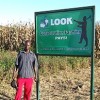
ZAMBIA: Conservation Agriculture Gaining Ground
Not even the least alert of drivers can miss the sign along the busy road 30 kilometres south of Lusaka: "Look, Conservation Farming Pays!"
GUATEMALA: Relentless Devastation of Mangroves
"This place used to be beautiful. It was truly a mangrove forest. When the shrimp farmers arrived, we lost 60 percent of it because of the logging," said Francisco Vásquez, manager of a hotel on the Pacific coast, in the southeastern Guatemalan department of Jutiapa.
PERU: Going to School Still a Feat for Rural Girls
María Belén Sabio, a 30-year-old Awajun woman from Peru’s northeastern Amazonia province, was able to complete a teacher training programme despite having five children to raise. "Life here in the countryside is not easy, and I’ve had a hard time getting ahead," she told IPS.
ENVIRONMENT-MAURITIUS: Hold Your Fire
Mauritius appears to have a happy problem with the 400,000 tons of waste it produces each year. The island's only landfill is full and the government must decide whether to turn to incinerating waste - generating electricity in the process - or to compost it, to the benefit of farmers.ENERGY: Germany Gets Some Nuclear Jolts
The faults at the nuclear plant at Kruemmel near Hamburg surfaced just three days after Chancellor Angela Merkel declared nuclear energy "indispensable" to Germany.SCIENCE: G8 Failure to Launch on Climate
The G8's failure to make meaningful commitments on climate last week pushes the world ever closer to global climate catastrophe, experts warn. Without commitments to take action, there is little comfort in G8 countries' agreement to keep overall global warming below 2.0 degrees Celsius.
COLOMBIA: Gold vs Preservation in the Central Mountains
In a protected area of the Cordillera Central, Colombia's central mountain range, gold mining plans are clashing with the desire of farmers, activists and environmental officials to preserve forests and water resources.« Previous Page — Next Page »


Through our global network of local writers, we are continuing our award-winning coverage of global and local environmental challenges, with a focus on the people for whom the ecosphere matters in a direct way: rural dwellers who have little means to protect themselves against adverse conditions; communities that need to switch to sustainable development in order to survive; poor women and children, who are the most vulnerable in natural disasters. Sponsored by the United Nations Environment Program (UNEP), the United Nations Development Program (UNDP) and The World Bank (WB), IPS also maintains the award-winning Tierramérica, a specialised information service on environment and development.

The Week with IPS

Tracking global progress towards a sustainable world


