
Saturday, November 28, 2026



News and Views from the Global South
Environment
WORLD SOCIAL FORUM: Crisis as Opportunity for “Another World”
A World Social Forum (WSF) revitalised by a global crisis that has awakened new interest in the proposition that "another world is possible" - now perceived as either less utopian or more urgently needed - will take place from Jan. 27 to Feb. 1 in Belém, in northern Brazil.BRAZIL-US: Obama Feeds Hopes
Brazil expects its international standing to be bolstered by more cooperative relations with the United States under the presidency of Barack Obama, as well as a shift in Washington’s position on the issue of climate change and with respect to Cuba.EUROPE: Watching That Space, and Seeing More of the Same
Polished, clever and charismatic, Barack Obama appears the very antithesis of the bungling cowboy that his predecessor in the White House, George W. Bush was widely believed to be. That in itself helps explain why his election as the first black president of the U.S. in November delighted millions in Europe.CLIMATE CHANGE: Don’t Be Fooled by Europe’s Arctic Winter
"Where is global warming, now that we need it?" a comedian asked on German public television ARD. And across Europe people have been asking the same question: if the globe is getting warmer, why is Europe freezing?ICELAND: That Whale of a Question Again
"Start whaling" proclaimed the full-page advertisement that appeared in Icelandic newspapers early January.
AFRICA: Climate Change Threatens Food Security
Climate change will have a significant impact on southern Africa’s already compromised food security, environmental experts warned at the fifth Alexander von Humboldt International Conference at the University of Cape Town (UCT) in South Africa.
Tropical Forests Fight for Survival
The reforestation of vast tropical areas poses the challenge of determining whether second-growth forests will be able to serve as habitat for the millions of unique species that were there before.
Water Pushed to the Limit
The World Water Protocol, which seeks inclusion in the negotiations of the post-Kyoto climate treaty, underscores the urgency of regulating a scarce resource, a common good shared by all humanity.Ecobreves – HONDURAS: Seeking Funds for Renewable Energy
The Honduran government is seeking 400 million dollars to build two hydroelectric dams to meet the country's energy needs, and to promote alternative renewable energy projects, like biofuels, with Brazil as a consultant.Ecobreves – MEXICO: Imports of Used Cars Could Be Toxic
With the doors opened Jan. 1 in Mexico to imports of cars 10 years and older from the United States, air pollution rates could see a dramatic increase, warn observers.Ecobreves – BRAZIL: Energy Plan Contradicts Climate Plan
Two weeks after taking on the goals of its National Climate Change Plan, Brazil announced its 10-year Energy Expansion Plan, which calls for building more than 80 fossil-fuel-based thermoelectric plants and 71 hydroelectric plants (many in the Amazon) by 2017.
EAST AFRICA: Even Fish Heads Are Now Unaffordable
Illegal trade and overfishing in Lake Victoria have led to fish scarcities in Uganda, Kenya and Tanzania. Large quantities of illegally traded unprocessed fish, especially Nile perch and tilapia, may be finding their way to export markets in the European Union (EU).CLIMATE CHANGE: As Politicians Stall, Grassroots Fills Void
Global emissions of carbon dioxide must reach a peak in less than 10 years and then begin a rapid decline to nearly zero by 2050 to avoid catastrophic disruption to the world's climate, according to a new report.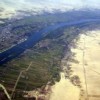
DEVELOPMENT-AFRICA: New Nile Pact Stalled
Ten years of negotiations over a new protocol governing shared use of the Nile River are hanging in the balance, with Egypt and Sudan refusing to give up their present power over how much water is used by countries further upstream.
CUBA: Anti-Hurricane Green Map
The wind was ripping the tiles off the roof of her house, her father-in-law felt his body trembling to the bone, and her husband tried to protect her with a table propped up by mattresses, but as she lived through the worst moment of her entire life, Cuban teacher Gladis San Jorges could think of only one thing: "Oh God, the school! The school!" she cried.ECONOMY-BOLIVIA: Strong 2008 Performance, Uneasy Start to 2009
The Bolivian government of Evo Morales enjoyed a third consecutive year of strong economic growth in 2008, but business leaders warn that the drop in commodity prices will hurt export revenues and lead to a rise in unemployment in the months to come.PERU: Navy Intelligence Agents Arrested for Moonlighting as Private Spies
Peruvian prosecutors and police have busted a ring of active and retired Peruvian navy intelligence agents who moonlighted as telephone tapping experts allegedly engaged in spying.EUROPE: Trucks Get a Free Ride to Emit
Carbon dioxide emissions from using Europe's road to transport goods will increase by more than 50 percent within the next two decades, a new study has predicted.BALKANS: In a New Search for Alternative Energy
The gas crisis has unleashed new interest in turning to alternative energy sources in the Balkans.EASTERN EUROPE: Go with Putin, or Go Nuclear
The gas crisis has placed environmental concerns on the backburner, and raised demands for nuclear production at plants once considered unsafe.MIDEAST: Energy Security Guides China’s Approach
China's pro-active stance in finding a settlement to the latest crisis in the Middle East - a trouble spot which does not normally figure on Beijing's list of top foreign policy priorities - suggests heightened attention to energy security for the country's power-hungry economy.« Previous Page — Next Page »


Through our global network of local writers, we are continuing our award-winning coverage of global and local environmental challenges, with a focus on the people for whom the ecosphere matters in a direct way: rural dwellers who have little means to protect themselves against adverse conditions; communities that need to switch to sustainable development in order to survive; poor women and children, who are the most vulnerable in natural disasters. Sponsored by the United Nations Environment Program (UNEP), the United Nations Development Program (UNDP) and The World Bank (WB), IPS also maintains the award-winning Tierramérica, a specialised information service on environment and development.

The Week with IPS

Tracking global progress towards a sustainable world


