
Saturday, November 28, 2026



News and Views from the Global South
Environment
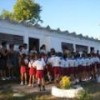
Anti-Hurricane Green Map
Using a Green Map -- a portrait of an area’s cultural, social and ecological resources -- a Cuban municipality was able to rebuild a hurricane-ravaged school on its own.
Toward an Environmental Rationality
The conflict between economy and ecology and that impossible goal that is “sustainable development” give rise to concern over the feasibility of an alternative economy, writes Mexican environmental researcher Enrique Leff in this exclusive column for Tierramérica.Ecobreves – CHILE: Certified Organic Crops on the Rise
During the 2007-2008 season, 30,443 hectares were certified as organic in Chile, according to a report by the governmental Office for Agricultural Studies and Policies (ODEPA).Ecobreves – BRAZIL: Green Seal for Technology
The University of Sao Paulo closed the year 2008 with two important environmental initiatives: the green seal for technological equipments, and the project for a Sustainable Environments and Climate Studies Center.Ecobreves – VENEZUELA: When Garbage Becomes a Problem
Groups of vandals set fire to a landfill where 65,000 tons of solid waste, collected in the north-western Venezuelan city of Maracaibo over the last week of December and the first days of January, had been dumped.Ecobreves – CUBA: More Organic Fertilizers from Sugarcane
Cuba’s sugar industry is setting out to increase its organic fertilizer production and use, as it recognizes that these fertilizers are not only good for the environment, but also for the economy as they cut back on imports of chemical fertilizers.Ecobreves – HONDURAS: New Forestry Map Announced
In six months Honduras will have a new forestry map that will enable it to accurately identify its ecosystems, woodland coverage, and biodiversity, Agriculture and Cattle Minister Héctor Hernández said to Tierramérica.EUROPE: Caught in Freezing Crossfire
Central Europe and the Balkans face a halting of industrial production, closed schools, frozen water supply pipes and eventual economic paralysis as suspension of gas deliveries stops life in the region.CHILE: End of the Copper Boom
Chile’s anti-crisis plan, announced this week, is based on windfall copper earnings saved up over the last few years. But soaring copper prices are a thing of the past, due to the global economic meltdown that originated in the United States, say analysts.EUROPE: Political Chill May Outlast the Big Freeze
As Russia suffers from the financial crisis and Ukraine heads towards bankruptcy, nobody can tell who is to blame for a spat that threatens to freeze Central Europe and the Balkans.CLIMATE CHANGE-BRAZIL: Calls for Adaptation Unheeded
Torrential rains have deluged several Brazilian states since November, causing nearly 200 deaths so far and reinforcing environmentalist campaigns calling for urgent climate change adaptation measures.MEXICO: Fishermen on Strike over High Fuel Prices
Thousands of fishermen in Mexico have gone on strike over the last few days to protest the rise in the cost of diesel fuel which, they say, has reduced their profit margin to zero. But the industry's problems, which have been simmering for decades, go beyond the question of fuel prices.
PERU: A Mining Town’s Woes
A four-hour drive from the Peruvian capital, the town of Morococha ("coloured lake" in the Quechua language) is a living example of what the mining industry has brought to many poor rural villages and towns in this country.RUSSIA: Gas Dispute Raises Political Heat
Disputes over gas supply from Russia to Europe have again taken on a political dimension.
PERU: Open-Pit Mine Continues to Swallow City
An immense open-pit mine located 4380 metres above sea level is swallowing up the centre of the city of Cerro de Pasco in Peru’s central highlands, while the damages, in the form of toxic waste, spread to nearby villages.ARGENTINA: Ecoclubs Draw Youngsters into Environmental Leadership
Ecoclubs, an international social movement of teenagers and young people who work with their communities to enhance quality of life through environmentally-related initiatives, while developing their own potential for leadership and action, were born in Argentina 16 years ago and have since expanded to 30 countries in Latin America, Europe and Africa.ENVIRONMENT-CAMBODIA: Opting For The Big Dam
It has been a long held plan of Cambodia’s government - a hydropower dam on the mainstream of the Mekong River in the central part of the country.
ENVIRONMENT: Climate Change Forcing Penguins North?
Warm ocean currents may have confused some 2,500 penguins from Argentina's Patagonia region that washed up - dead and alive - on Brazil's northern coast.PORTUGAL: Mega Solar Power Plant Begins to Operate
The most ambitious and innovative solar power project in the world kicked off Monday in this white-walled village in the southern Portuguese municipality of Moura, one of the most impoverished areas in the European Union.ENVIRONMENT-AUSTRALIA: Emissions Reduction Target ‘Weak’
The gap between the Rudd government’s rhetoric and practice in addressing climate change, albeit with one eye on the worsening global financial conditions, has led to a palpable feeling of betrayal among Australians.
VENEZUELA: The Cost of the World’s Cheapest Gasoline
The world’s most inexpensive gasoline is sold in Venezuela, through a longstanding subsidy programme that benefits car owners while depriving the oil industry of a large source of funds for reinvesting.« Previous Page — Next Page »


Through our global network of local writers, we are continuing our award-winning coverage of global and local environmental challenges, with a focus on the people for whom the ecosphere matters in a direct way: rural dwellers who have little means to protect themselves against adverse conditions; communities that need to switch to sustainable development in order to survive; poor women and children, who are the most vulnerable in natural disasters. Sponsored by the United Nations Environment Program (UNEP), the United Nations Development Program (UNDP) and The World Bank (WB), IPS also maintains the award-winning Tierramérica, a specialised information service on environment and development.

The Week with IPS

Tracking global progress towards a sustainable world


