
Saturday, November 28, 2026



News and Views from the Global South
Environment
PAKISTAN: Quake Survivors Await Relief
Poor infrastructure and communications are making it difficult for rescue and relief teams to reach scattered hamlets in the mountainous plateau area affected by the 6.4 magnitude earthquake that struck Pakistan’s Balochistan province at dawn on Wednesday.
DEVELOPMENT-AFRICA: Water and Improved Livelihoods
"Sanitation may hold the key to success or failure of the MDGs. It is really a time bomb in terms of health and the environment, waiting to be detonated," Professor Damas Mashauri told participants at a seminar on water and sustainable development taking place in Johannesburg, South Africa.
ARGENTINA: Illegal Embankment Continues to Harm Wetlands
The government of the northeastern Argentine province of Corrientes has been unable to enforce the ruling of the district's highest court, which nearly a year ago ordered the removal of a 30-kilometre embankment that is damaging the valuable wetlands ecosystem known as the Esteros del Iberá.ENVIRONMENT-CHINA: Coal Far Costlier Than Thought – Study
Often criticised for its massive coal-based industries that jeopardise international efforts to combat global warming, China is undoubtedly the biggest victim of its voracious coal consumption.
ENVIRONMENT: Massive Shift to Clean Energy Could Start Tomorrow
An aggressive shift towards renewable power generation and energy effiency could save the world from the most devastating impacts of climate change, and at the same time create a multi-billion-dollar industry and save trillions of dollars in future fuel costs, experts say.ENVIRONMENT: Europe Casts a Net for Dying Fish
The European Union has resisted calls for a ban on fishing for bluefin tuna in the Mediterranean despite warning signs that the species is being exploited towards extinction.
Trade Opens Environmental Window on Peru
Ecologists await Peru's revision of controversial environmental standards that contradict commitments made in the Free Trade Agreement with the United States.
Why Colombia's Indigenous Peoples Are Protesting
For the Colombian government, caught up in polls that put it at the peak of popularity, indigenous protests could not be anything but the work of conspirators, writes indigenous expert Héctor Mondragón in this column for Tierramérica.
Illegal Embankment Continues to Harm Argentine Wetland
An unprecedented ruling in Argentina's environmental jurisprudence has seen almost one year pass while awaiting compliance.Ecobreves – GLOBAL: UN Day Dedicated to Climate Change
Possible actions to confront climate change were the focus of United Nations Day, celebrated Oct. 24 with a seminar at the UN University headquarters in Japan.Ecobreves – HONDURAS: Award for Indigenous Ecotourism Project
The Moskitia Route, an ecotourism project involving four indigenous communities in Honduras, has received the global prize "Tourism for the People".Ecobreves – BRAZIL: Climate Plan Up for Public Debate
Citizens and activists have until Oct. 31 to suggest modifications to the National Climate Change Plan proposed by a committee made up of seven government ministries.Ecobreves – CUBA: Biogas Plant Begins Operating
A new biogas plant located at the capital's largest dump and with the capacity to process 20 tons of urban waste per day will generate enough electricity to supply 120 fully equipped households.Ecobreves – CHILE: Eco-Education in Preschool
The National Environment Commission (CONAMA) of Santiago is premiering on Oct. 29 the first manual for environmental education for kindergarteners and first and second graders.Ecobreves – VENEZUELA: Like a Big Garbage Dump
Venezuela produces some 27,000 tons of garbage each day, and most of it ends up in one of the 800 open-air dumps, which contaminate water, land, flora and fauna and contribute to the spread of disease among the population.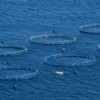
ARGENTINA: Caution and Enthusiasm for Fish Farming
Fish farming is expanding in Latin America, fuelled by the demands of a global market that is facing the stagnation of commercial fishing. But some people are warning about the limits of industrial production of fish and the environmental and social risks.ENERGY: Harsh Blow for OPEC
In an unexpected reaction, oil prices continued to slide, by up to six percent Friday, despite OPEC’s decision to cut output by 1.5 million barrels a day as of Nov. 1.
NETHERLANDS: When the Electricity Is in Your Feet
As everyone knows, the wind and the sun produce energy. But now there is also a way to generate electricity by dancing.
KENYA: Biofuels Boom and Bust
The Kenyan government has hailed bio-diesel as an innovation that combines green politics with poverty reduction. But recent drops in biofuel prices have caused concern about the sustainability of alternative fuel production.
MINING-WEST AFRICA: ECOWAS Stirs Up Trouble With MOU
The Economic Community of West African States has taken the unprecedented step of inviting Oxfam America to coordinate the drawing up of a mining code for the region. The decision has infuriated some civil society organisations.PHILIPPINES: 'Women Take the Brunt of Climate Change'
Filipina farmer Trinidad Domingo views the coming rice harvest season with trepidation. A typhoon destroyed much of her crop and Domingo estimates that her two-hectare plot will produce less than the usual 200 sacks of rice.« Previous Page — Next Page »


Through our global network of local writers, we are continuing our award-winning coverage of global and local environmental challenges, with a focus on the people for whom the ecosphere matters in a direct way: rural dwellers who have little means to protect themselves against adverse conditions; communities that need to switch to sustainable development in order to survive; poor women and children, who are the most vulnerable in natural disasters. Sponsored by the United Nations Environment Program (UNEP), the United Nations Development Program (UNDP) and The World Bank (WB), IPS also maintains the award-winning Tierramérica, a specialised information service on environment and development.

The Week with IPS

Tracking global progress towards a sustainable world


