Languages
Friday, November 13, 2026



News and Views from the Global South
Featured
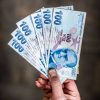
Crisis alla Turca II – From Currency Crisis to Debt Crisis?
The meltdown of the Turkish currency that began in 2018 has continued unabated with the decline reaching unprecedented proportions in recent days. The causes of that turmoil including underlying financial fragilities and political shocks were discussed in a previous piece by this author. Since then the economy has become even more vulnerable in these respects.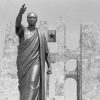
Reclaiming Africa’s Early Post-independence History
In 1965, Kwame Nkrumah described the paradox of neocolonialism in Africa, in which “the soil continue[s] to enrich, not Africans predominantly, but groups and individuals who operate to Africa’s impoverishment.” He captured what continues to be an essential feature of Africa’s political economy.
Distributed Generation Provides Hope of Energy for the Poor in Brazil
"Showing solidarity is consuming the energy generated in your own municipality" - this is the motto of a project of distributed electricity generation in one of Brazil's many poor neighbourhoods.
Cultivating an Eco-friendly Culture in Indonesia’s Schools
In West Jakarta, Indonesia, teachers at the private Santo Kristoforus High School are so environmentally conscious they make other schools seem a little bit green when it comes to environmental education.
Global Data Community’s Response to COVID-19
The world is currently counting more than 42 million confirmed cases of the COVID-19 and over 1 million deaths since the start of the pandemic.1
The Mental Health Consequences of the Lekki Toll Gate Attack
On October 20, 2020, young Nigerians who were protesting against police brutality were shot by men in Nigerian military uniforms. Unarmed, peaceful citizens were massacred at the Lekki Toll Gate in Lagos, southwest Nigeria.
The Path to Global Food Security
This year, the Nobel Peace Prize recognised the inextricable link between hunger and conflict. With climate change as a further complicating factor, research, investment, and coordination with local farmers are critical for ensuring food security for all.
Finance Covid-19 Relief and Recovery, Not Debt Buybacks
In July, the UN Secretary-General warned that a “series of countries in insolvency might trigger a global depression”. Earlier, the United Nations Conference on Trade and Development (UNCTAD) and the International Monetary Fund (IMF) had called for a US$2.5 trillion coronavirus crisis package for developing countries.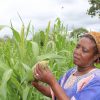
Using Traditional and Indigenous Food Resources to Combat Years of Successive Drought
For Zimbabwean farmer Sinikiwe Sibanda, planting more sorghum and millet than maize has paid off. As the coronavirus pandemic has led to decreased incomes and increased food prices across the southern African nation -- it is estimated that more than 8 million Zimbabweans will need food aid until the next harvest season in March -- Sibanda's utilisation of traditional and indigenous food resources could provide a solution to food security here.
The United Nations, 75 Years Young: Engaging Youth Social Entrepreneurs to Accelerate the SDGs
This year, the United Nations is marking its 75th anniversary – a milestone of extraordinary economic and social progress in Asia and the Pacific. While the Organization enjoys a lifespan almost equal to the world’s improved average life expectancy, the future lies with those who have recently embarked on theirs: our young people.
Reaching Remote Women Through Inclusive Technology
The coronavirus pandemic has impacted the way people value working from home, career building, and their overall approach to utilising downtime. It has blurred out the lines between hobby, casual reading, and how time is spent away from work.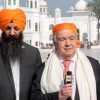
Not in Our Name, Never in Our Name: A Conversation with Muslim Faith Leaders Echoing the Wisdom of a Pontiff
As the Grand Imam of Al-Azhar, Ahmed Al-Tayeb said on October 20: “As a Muslim and being the Grand Imam of Al-Azhar, I declare before Almighty God that I disassociate myself, the rulings of the religion of Islam, and the teachings of the Prophet of Mercy, the Prophet Muhammad (pbuh), from such heinous terrorist act and from whoever would embrace such deviant, false thought.
Q&A: Why are Stillbirths still Societal Taboo?
Societal taboo and a lack of understanding about stillbirth can cause the issue to be neglected among health practitioners, according to Dr. Danzhen You, a senior adviser on Data and Analytics at the United Nations Children's Fund (UNICEF).
Rising above the Hate Online – Indian Muslim Women Speak Out
When a minority woman with an opinion doesn’t comply with stereotypes, she is targeted with online hate, says award-winning journalist and senior editor at The Wire, Arfa Khanum Sherwani in an exclusive interview with Inter Press Service.
Budgeting for a Better Future, for Every Child
2020 has not turned out as planned. As the COVID-19 pandemic continues to impact populations around the world, governments have been forced to take a fresh look at their spending and how to meet additional costs of pandemic response as they expect a fall in revenue. Budget information has become even more critical.
Living with Drought: Lessons from Brazil’s Semiarid Region
 No one died of hunger during the worst drought in Brazil's semiarid ecoregion, between 2011 and 2018, in sharp contrast to the past when scarce rainfall caused deaths, looting, a mass exodus to the South and bloody conflicts.

Capture of CO2 and Hydrogen as Part of Latin America’s Energy Future
While struggling to increase the generation and consumption of renewable energy, Latin America is beginning to see the rise of new technologies, such as the capture and storage of carbon and hydrogen from fossil fuels or wind and solar energy.
‘The Sahel – a Microcosm of Cascading Global Risks Converging in One Region’
The European Commission this week pledged $27.8 million in humanitarian support to the Sahel region as floods and the coronavirus pandemic exacerbate the stability in a region deeply in conflict. While the figure is less than 2 percent of the $2.4 billion that the United Nations has appealed for, Amnesty International researcher Ousmane Diallo told IPS that despite past donations from international development partners to Sahelian countries, the situation hasn’t improved over the years.
Mahatma’s Non-Violence: Essence of Culture of Peace for New Humanity
I will begin by presenting to you excerpts from the message from UN Secretary-General António Guterres on the International Day of Non-Violence.
Bulawayo Water Crisis: When the Taps Run Dry and the City Runs out of Ideas
Dotted across the Zimbabwean city of Bulawayo, the water tanks installed in private residences is evidence that years of a water crisis, that has seen some suburbs here going for months without running water, has not spared anyone. The large plastic drums, locally called Jojo tanks after the company that manufacturers them, and which have a storage range of up to 10,000 litres, have assumed a class status of sorts in Bulawayo.
The Plight of Domestic Workers in Brazil
The inclusivity of Brazilian society is put to the test as the coronavirus pandemic highlights a labour sector ripe with historical and structural inequality: domestic work.« Previous Page — Next Page »


The Week with IPS

NEXT STOP - SDGs
Tracking global progress towards a sustainable world
Tracking global progress towards a sustainable world
