Languages
Saturday, November 14, 2026



News and Views from the Global South
Featured

The Boardwalk For Birds: Protecting Lake Victoria’s Dunga Beach Wetland
At around 11am on a Saturday, Luke Okomo arrives at Dunga Beach, on the outskirts of Kenya’s Kisumu City, and heads straight to what is known as the ‘Dunga Papyrus Boardwalk’.
The Economic Impact of COVID-19 on Developing Countries – Part 2
What is likely to be the impact of the COVID-19 pandemic on developing economies? In the first of this two part article we looked at possible short term disruptions and discussed actions by the private sector and Governments.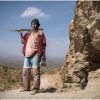
Growing Youth Activism for Environmental Protection in Africa
The mining sector in Africa is facing radical change as youth activists take action against the environmental degradation caused by mining industries. Tensions between activists and the mining industry have raised, however, concerns over human rights abuses.
Latin America Has Weak Defences Against the Pandemic
Health systems in Latin America, already falling short in their capacity to serve the population, especially the poor, are in a weak position and face serious risks when it comes to addressing the COVID-19 pandemic.
U.N. Releases Report on Socio-economic Effects of Coronavirus
As the number of coronavirus cases continues to grow, concerns are simultaneously growing about the current and long-term effects this will have on certain demographics -- specifically, women, the youth, migrant workers, and many employees around the world.
In memoriam ‒ Martin Khor
We are greatly saddened by the passing of Martin Khor, a long-time friend and colleague, an undaunted fighter for the poor and underprivileged, a passionate believer in a more balanced and inclusive multilateralism, a rare intellectual and eloquent orator, an icon of the Global South worthy of veneration, greatly respected for his struggle for justice and fairness against the dominance and double-standards of big economic powers.
What More than COVID-19 to Jolt G20 into Collective Action?
My recent study on “The G20@10: Time to shift gears” 1 shows that, during the past decade, the main joint, collective action of the G20 has been to issue communiqués and other types of statements.
Can We Use Digital Technology to Cushion the Pandemic’s Blow?
As the world grapples with COVID-19, governments face a daunting challenge: limiting the adverse impact of a pandemic that has ground economic activity to a halt, affecting people at a scale rarely seen before.
Snapshot of Life under Lockdown in Bangladesh
 The Coronavirus pandemic is changing how we live our daily lives. The scale of the COVID-19 and its impact on our lives is unprecedented. When humanity gets past this, the world will be a very different place than the one we have known.

Coronavirus Proves Need for Free Healthcare for All– Now
The multi-layered crisis of the Coronavirus epidemic has been a dramatic shock to everyone. But, to communities affected by HIV and AIDS, the crisis has not only brought a further shock to already vulnerable people, it has brought other reactions too – a troubling sense of déjà vu, and a passionate, empathetic, fierce solidarity with all those affected by Coronavirus.
Surviving Domestic Violence in times of Covid19
“I come from Baglung District, a part of Dhawalagiri Zone in Nepal. My house overlooks the river. Do you know, our district is known for the suspension bridges?”, her eyes glimmer for a fraction of a second and then she breathes a heavy sigh! Her right hand is still wrapped in a scarf, while with the other she pats her 17-month-old. “If I ever get a chance I will take you to my village, we have a lot of medicinal plants.” She pauses while tears roll down as she continues our Facetime session. “I was 16 when I had my first child and I was 17 when my arm was broken by my mother-in-law.”
The Need for Empathy in the Time of Coronavirus
The experience and interpretation of the Coronavirus pandemic oscillates between the personal and the general spheres. The official discourse and measures taken by authorities have a direct impact on our lives, change our daily existence and foster worries for the future. A dark cloud of uncertainty hovers above us. What do decision makers know? What can they do? What can we do? Many of us are secluded in our own homes, others in wards or hospitals, or even alone and far away from the ones they love:
Modern Day Slavery Reaches a Far Corner of the World
The deadly, fast-spreading coronavirus which upended three key UN conferences—on the empowerment of women, on nuclear disarmament and on indigenous rights—claimed another casualty last week when a commemorative meeting on the transatlantic slave trade was postponed.
GEF Project to be Game-changer for Trinidad Quarries
 A Trinidad and Tobago parliamentary report in 2018 made two disturbing observations about that country’s quarry sector:
- Of the 67 mining operators on record, only 6 were operating with current licenses;
- The State loses large sums in the form of unpaid/uncollected royalties from quarry companies.
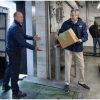
Life in the Time of COVID-19: Quo Vadis Homo Sapiens?
The writing is on the wall for all to see from far and wide – there is nowhere to hide from this invisible enemy, a new coronavirus, maybe with the exception of self-isolation, quarantined at home and even then, we are not 100% safe.
West First Policies Expose Myths
As the epicentre of the COVID-19 pandemic shifts from China to the developed West, all too many rich countries are acting selfishly, invoking the ‘national interest’, by banning exports of vital medical supplies.
Harness Youth to Change World’s Future
Vanessa Nakate of Uganda may have been cropped out of a photograph taken at the World Economic Forum, but she along with Swedish activist Greta Thunberg have made the climate crisis centre stage.
Mexico’s Plan to Upgrade Hydropower Plants Faces Hurdles
Water security and profitability are the Achilles heels of the plan to modernise 60 hydroelectric plants in Mexico, drawn up by the administration of President Andrés Manuel López Obrador.
Life in the Times of Corona: Lockdown & Livelihood in the Lurch
The worldwide spread of novel coronavirus disease (COVID-19) is severely affecting the global economy and as per the recent updates almost one-third to half of the global population are now under some form of a lockdown.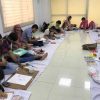
A Story of Triumphs and Tribulations: Implementing Services for Autism in Bangladesh
A few days ago, a friend said to me that my focus on autism, although rather successful, had “sucked out all energy from other critical areas of social need in Bangladesh.” My friend wanted to know if I would be interested in expanding my visibility and successful approach to autism, to other issues that have apparently been left by the wayside due to everyone’s eagerness to work on an issue popular with the Prime Minister’s daughter!
Slums, Camps, Terrorism: Experts Worry about Coronavirus Hitting South Asia
As coronavirus makes its way through different continents, countries, and communities around the world having claimed more than 23,000 lives, experts are ringing alarm bells about the implications of the disease as it hits South Asia, which hosts almost 2 billion of the world’s population.« Previous Page — Next Page »


The Week with IPS

NEXT STOP - SDGs
Tracking global progress towards a sustainable world
Tracking global progress towards a sustainable world
