Languages
Wednesday, November 18, 2026



News and Views from the Global South
Featured

Civil Society Organisations Under Attack by Rightwing Governments & Extremist Groups
The widespread political repression in countries such as the Philippines, Egypt and Saudi Arabia-- and rising right-wing nationalism in the US, Brazil, Italy, India, Poland and Hungary-- have increasingly triggered attacks on human rights and civil society organisations (CSOs).
Safe Menstrual Practices Important for Progress
As menstruation continues to be shamed in many communities, one organisation is rising up to the challenge to ensure “safe menstruation for all women of Bangladesh.”
The Campaign Against Greta is an Index of the Loss of Values
Since the powerful march of hundreds of thousands of students in 1,000 towns against climate change, an unexpected campaign of delegitimation, ”demystification” and demonisation has started against Greta Thunberg, the Swedish teenager who started the movement. After searching the media, social media and websites, this campaign can be divided into four different groups.
Cyclone Idai: A Time to Reassess Disaster Management
It was one of the worst tropical cyclones hit Southern Africa in recent times. Cyclone Idai, which has been characterised by heavy rains and flooding including mudslides in some parts of Mozambique, Zimbabwe, and Malawi, has left more than 750 dead, with thousands marooned in remote rural areas, whilst others are still unaccounted for. More than 1,5 million people are affected by the cyclone in the region.
Anguilla’s Fishers Share their First-Hand Knowledge About Climate Change and its Impact
Fishers in Anguilla saw posted on Youtube this week a video they helped produce that depicts the impacts of climate change on their industry. Titled “Anguilla’s Fishing Dilemma”, the four-and-a-half minute video highlights some of the main challenges Anguilla’s 92 licensed fishers face in earning a living.
“Don’t Tell My Husband I Have Leprosy”: Social Stigma Silences Marshall Islands’ Women
Meretha Pierson has been a nurse for the past seven years, working in the government-run leprosy clinic in Majuro, the capital of the Marshall Islands. Her patients come in all ages, from different economic backgrounds and different professions. But, aside from their diagnosis, they all have something else in common: everyone wants to keep their illness a secret.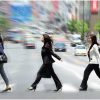
Japan’s Gender Gap
Japan is not making progress in gender equality, at least relative to the rest of the world. Despite the Japanese government’s attempts in recent years to pass legislation promoting the economic activity of women, Japan ranked a miserable 110 out of 149 in the World Economic Forum’s 2018 Gender Gap Index, which benchmarks countries on their progress toward gender parity across four major areas.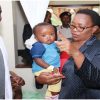
NHIF Reform Critical to Affordable Health For All in Kenya
Consider this. One million Kenyans fall into poverty every year due to catastrophic out of pocket health expenditures. For the almost four in every five Kenyans who lack access to medical insurance, the fear that they are just an accident or serious illness away from destitution.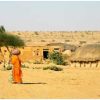
Changing Weather Will Affect Living Standards of Half of India’s Population
The India Meteorological Department (IMD) on January 16 declared that 2018 was the sixth- warmest year in the last 117 years or since 1901, when recording started. Pointing towards changing weather and climate parameters, it also noted that the last monsoon rainfall was the sixth-lowest since 1901.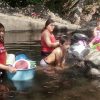
Monoculture Crops Threaten Community Water Projects in El Salvador
For nearly three decades, several communities in southeastern El Salvador have collectively and efficiently managed the water they consume, but monoculture production and climate change put their water at risk.
Q&A: Guyana’s Roadmap to Become a Green State
In 2008, the then president of Guyana, Bharrat Jagdeo, established within the Ministry of the Presidency the Office of Climate Change. Guyana became the first country in the region to do so. A year later, Jagdeo set out a vision to forge a new low carbon economy in the Caribbean nation.
French Museum Puts Spotlight on Immigrants’ Musical Impact
Amid the morass of Brexit and continuous debates on immigration, a French museum has launched a thought-provoking exhibition about music and migration.
Defining the End State Ecosystem: How Can We Get Better at it?
Restrictions on the movement of people impedes Africa's development, limiting economic integration and trade between African countries. Using a systems-thinking approach, champions and decision-makers have led the charge towards a visa free Africa.
The Myth About the Race for Artificial Intelligence
UMEA, Sweden, 26 March 2019 (IPS) -- At this year’s Davos economic forum, US executives warned that China may be winning the so-called Artificial Intelligence (AI) race with Europe. In another recent article, Bloomberg pointed out that countries are rushing to not be left behind.
World Bank Financializing Development
The World Bank has successfully legitimized the notion that private finance is the solution to pressing development and welfare concerns, including achieving the Sustainable Development Goals (SDGs) through Agenda 2030. A recent McKinsey report estimates that the world needs to invest about US$3.3 trillion, or 3.8 per cent of world output yearly, in economic infrastructure, with about three-fifths in emerging market and other developing economies, to maintain current growth.
The Destruction of the Environment: An Unfolding Tragedy for Humanity
Late last year the World Wide Fund for Nature released their Living Planet Report for 2018. WWF’s estimates were stark: populations of mammals, birds, fish, reptiles, and amphibians have, on average, declined by 60 percent between 1970 and 2014.
World’s Best Teacher Prize and One Million Dollars Awarded to Kenyan Teacher from Impoverished Community
A maths and physical science teacher from an impoverished school in Kenya’s Rift Valley, Peter Tabichi, has won the one million dollar Global Teacher Prize, becoming the first teacher from Africa to clinch the prize established to honour the profession.
What They Need: Money, Resources, & a Seat at the Table
As a long-time advocate, I’ve been invited to speak at dozens of global conferences about the needs of girls and women in humanitarian emergencies.
Q&A: Why Treating Leprosy as a Special Disease Violates the Rights of the Person Affected by It
His multiple awards and degrees aside, Dr. Arturo Cunanan is known as a people’s doctor; one who has profound belief in the human rights of every person affected by Hansen’s disease, commonly known as leprosy.
Words Matter: Trump and the Massacres in Christchurch
These lyrics are from Fire, the only hit by The Crazy World of Arthur Brown, which in 1968 sold over one million singles. Brenton Tarrant played it in his car while he triumphantly left the Al Noor Mosque in Christchurch, New Zealand. He had just gunned down around 100 unarmed worshippers and was on his way to another mosque to continue the slaughter before Friday prayers ended on 15 March. His murderous rampage finished by the Linwood Islamic Centre, where he could not find the entrance. He shut a man and his wife, whom he encountered outside the building and then shattered a window with a hail of bullets, killing five more inside, while he shouted that everyone had to leave the mosque. A courageous shop keeper rushed out and throw a credit card reader at Tarrant, who rushed back to his car followed by the shop keeper, who shattered the windshield with a handgun he had picked up from the ground. Tarrant run away, but was almost immediately restrained by police who had been able to trace him.
South-South Cooperation: a Path to Implementing UN’s 2030 Agenda
I see five issues that will be central to implementing the Paris Agreement on climate change and achieving the 2030 Agenda for Sustainable Development. South-South Cooperation can offer solutions to all of them. First, rising inequality both between and within countries is eroding trust and deepening a sense of injustice. Globalization has enabled many people to escape poverty – but its benefits are not shared equitably and its costs fall disproportionately on the poor and vulnerable.« Previous Page — Next Page »


The Week with IPS

NEXT STOP - SDGs
Tracking global progress towards a sustainable world
Tracking global progress towards a sustainable world
