Languages
Wednesday, November 18, 2026



News and Views from the Global South
Featured

Ambitions Are Affordable for Asia and the Pacific
Three years of implementation of the transformative 2030 Agenda for Sustainable Development in Asia and the Pacific shows the region has some catching up to do. Despite much progress, the region is not on track to reach the 17 Sustainable Development Goals set out in the United Nations 2030 Agenda for Sustainable Development. We are living in a time of booming prosperity, yet many are getting left behind. Basic needs, such as the freedom for all from hunger and poverty, ill-health and gender-based discrimination, and equal opportunity for all are elusive. Economic, social and planetary well-being has a price tag. Calculations by the United Nations Economic and Social Commission for Asia and the Pacific (ESCAP) show that it is mostly affordable for the region.
The Crucial Role of the Military in the Venezuelan Crisis
In January 2019 Venezuela’s opposition-led National Assembly swore in congressman Juan Guaidó as the country’s interim president. Guaidó’s claim to power is a severe blow against the already weakened government of Nicolás Maduro, whose re-election as president in May 2018 was widely rejected by the international community and deemed illegitimate by over 50 foreign governments.
Smart Cities hold Key to Sustainable Development
Asia and the Pacific’s phenomenal development has been a story of rapid urbanization. As centres of innovation, entrepreneurship and opportunity, cities have drawn talent from across our region and driven economic growth which has transformed our societies.
Education for All—Refugees Too
Young Rohingya refugees are now facing new hardships as the Bangladeshi government cracks down on their education and future opportunities.
China and Developing Countries: Managing Chinese Investments
Fifty years ago China was a poor country with little influence in the international sphere and without even a seat at the United Nations. Since then rapid economic growth in China has made it an economic powerhouse that increasingly plays a leading role on the world stage as a trade partners as well as a source of investment.
Increasing Leprosy Cases in Micronesia Points to Better Detection and Awareness
 Elizabeth Keller is one of the most senior health officials in the Federated States of Micronesia (FSM).
She is the current acting chief of Public Health and also the head of the leprosy programme in the island nation’s capital of Pohnpei.

Financial Hurdles to Eliminating Leprosy in Micronesia
Mayleen Ekiek has been working with the Department of Health in the Federated States of Micronesia (FSM) for 12 years now. She is the head of the National Leprosy Programme in the Pacific island nation, which still remains one of three, along with the Marshall Islands and Kiribati, that is yet to eliminate leprosy. 
Has Privatization Benefitted the Public?
In most cases of privatization, some outcomes benefit some, which serves to legitimize the change. Nevertheless, overall net welfare improvements are the exception, not the rule. Never is everyone better off. Rather, some are better off, while others are not, and typically, many are even worse off. The partial gains are typically high, or even negated by overall costs, which may be diffuse, and less directly felt by losers.
Grassroots Organising Points the way in Fight Against Rising Repression
“I never thought it would get so big and I think it is amazing.” The words of a 16-year-old Swedish teenager who skipped school to protest outside her government’s inaction on climate change. Greta Thunberg is marvelling at how, in just a few short months, her solitary protests outside Sweden’s parliament, have inspired and united hundreds of thousands of young people and others across the globe into a powerful, growing grassroots movement for climate change action.
An Indigenous Nation Battles for Land and Justice in Bolivia
The ancient Qhara Qhara nation began a battle against the State of Bolivia in defence of its rich ancestral lands, in an open challenge to a government that came to power in 2006 on a platform founded on respect for the values and rights of indigenous peoples.
Sierra Leone: Bio Government’s First Year
If the government of Sierra Leone’s President Julius Maada Bio were to be graded on their first year’s performance in office, it is likely that their report card would read, “promising start, which they must surpass in the years ahead”.
Human Rights Defenders Need to be Defended as Much as they Defend our Rights
They are ordinary people – mothers, fathers, sisters, sons, daughters, brothers, friends. But for me they are extraordinary people – the ones who have the courage to stand up for everyone else’s rights. They are the human rights defenders.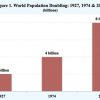
2, 4, 8 and ? Billion People
Two, four and eight billion people is the extraordinary doubling and redoubling of the world’s population that occurred in slightly less than a century. World population, which had grown to 2 billion by 1927, doubled to 4 billion by 1974 and will reach 8 billion by around 2023.
What’s in a Name? Everything.
On March 19, 78 years old Nursultan Äbisjuly Nazarbayev unexpectedly announced his resignation as President of Kazakhstan, referring to the need for “a new generation of leaders”. The same day the speaker of the nation´s parliament was appointed as interim president, awaiting presidential elections scheduled for 2020.
The NPT & Conditions for Nuclear Disarmament
Fifty years ago, shortly after the conclusion of the 1968 nuclear Nonproliferation Treaty (NPT), the United States and the Soviet Union launched the Strategic Arms Limitation Talks (SALT).
‘The First City Completely Devastated by Climate Change’ Tries to Rebuild after Cyclone Idai
The city of Dondo, about 30 kilometres from Beira, central Mozambique, didn’t escape the strong winds of Cyclone Idai. It is estimated that more than 17,000 families were displaced and more than a dozen schools were destroyed in the city.
UK Announces Aid Package for Gazan Hospitals Near Breaking Point
The UK Government has announced an aid package to support hospitals in Gaza that are “near breaking point”. The £2 million package will go to the International Committee of the Red Cross’s 2019 Israel and Occupied Territories (ILOT) Appeal. The aid will contribute to surgical equipment, drugs, wound dressing kits, prosthetics, and post-surgery physiotherapy for up to 3,000 disabled people.
Making it in India: Women Struggle to Break Down Barriers Starting a Business
Radhika Baburao Shinde was all of 12 years old when she was married off to a man who was 10 years older. She was sent away to live with her new husband, a truck driver, and his family in remote, drought-prone Satara district, 330 kilometers southwest of Mumbai. She left school and went to work as a laborer on her husband’s family farm.
Bridging the Gaps for the Disabled
People with disabilities are being left behind, and steps must be taken to ensure their inclusion in the world of education and work.
Militarised Government Attempts to Resume Mega-projects in Brazil
Two military-inspired initiatives are leading Brazil's new government, which includes a number of generals, down the path of mega-projects, which have had disastrous results in the last four decades.
Rising Inequalities in Asia-Pacific have become a Major Obstacle to Accelerating Progress
2019 will be a defining year for the 2030 Agenda; and the regional forums will pave the way for our first stocktaking on the SDGs in the General Assembly in September.« Previous Page — Next Page »


The Week with IPS

NEXT STOP - SDGs
Tracking global progress towards a sustainable world
Tracking global progress towards a sustainable world
