Languages
Thursday, November 19, 2026



News and Views from the Global South
Featured

Statement by the Secretary-General on the Passing of Former Secretary-General Kofi Annan
Kofi Annan was a guiding force for good. It is with profound sadness that I learned of his passing. In many ways, Kofi Annan was the United Nations. He rose through the ranks to lead the organization into the new millennium with matchless dignity and determination.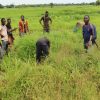
How Ghana’s Rapid Population Growth Could Become an Emergency and Outpace Both Food Production and Economic Growth
Paul Ayormah and his fellow farmers make their way home after hours spent manually weeding a friend’s one-acre maize farm in Ghana’s Eastern Region. “Tomorrow it will be the turn of my maize farm,” he tells IPS.
Palestinian Children, the True Victims of the Conflict
Over 500 to 700 West Bank children are arrested and prosecuted each year by Israeli military forces. Palestinian child rights organisation, Defense for Children International Palestine (DCIP), says that between 2012 and 2017 the organisation represented more than 700 children, some 72 percent of whom endured violence after their arrest.
When Salt Water Intrusion is Not Just a Threat But a Reality for Guyanese Farmers
Mikesh Ram would watch his rice crops begin to rot during the dry season in Guyana, because salt water from the nearby Atlantic Ocean was displacing freshwater from the Mahaica River he and other farmers used to flood their rice paddies.
Scientists Warn of the Imminent Depletion of Groundwater in Chile’s Atacama Desert
Eighteen national science prize-winners in Chile have called for a halt to the over-extraction of water in the four regions over which the Atacama Desert spreads in the north of the country, a problem that threatens the future of 1.5 million people.
Which Way Now for Zimbabwe as Constitutional Court Receives Petition Against Election Results?
Many in Zimbabwe are questioning whether the country can break with its horrid past or embrace a new future after a watershed election that saw Emmerson Mnangagwa win the presidential race by a narrow margin and the opposition lodge a formal petition challenging the results in the Constitutional Court.
Children and Women with Disabilities, More Likely to Face Discrimination
Children with disabilities are up to four times more likely to experience violence, with girls being the most at risk, according to the United Nations Children’s Fund.
Campaigns Promote Women’s Participation in Latin America
An alternative network in Brazil promotes women's participation in elected offices with media support. This campaign, like others in Latin America, seeks to reverse a political landscape where, despite being a majority of the population, women hold an average of just 29.8 percent of legislative posts.
How the Lack of Affordable Vegetables is Creating a Billion-Dollar Obesity Epidemic in South Africa
Every Sunday afternoon, Thembi Majola* cooks a meal of chicken and rice for her mother and herself in their home in Alexandra, an informal settlement adjacent to South Africa’s wealthy economic hub, Sandton.
New Agreement with China: Opportunity to Save Mozambique’s Forests
Mozambique’s forests are disappearing at an alarming rate, with most of the destruction caused by excessive logging, corruption and weak laws.
Q&A: Honouring Women of Africa and the Diaspora
This year, the African Union and the Diaspora African forum are honouring the first woman minister for education in Kenya for her long and outstanding work in girls’ education and governance.
Indigenous Peoples Least Responsible for the Climate Crisis
Indigenous peoples, who comprise less than five percent of the world’s population, have the world’s smallest carbon footprint, and are the least responsible for our climate crisis. Yet because their livelihoods and wellbeing are intimately bound with intact ecosystems, indigenous peoples disproportionately face the brunt of climate change, which is fast becoming a leading driver of human displacement.
Sousa, a Solar Power Capital in an Increasingly Arid Brazil
Sousa, a municipality of 70,000 people in the west of Paraíba, the state in Brazil most threatened by desertification, has become the country's capital of solar energy, with a Catholic church, various businesses, households and even a cemetery generating solar power.
Beyond Boundaries – Cultural Literacy in Indiana & Rwanda
For ten years now, in special partnership with the community of Musanze, Rwanda, Indiana University (IU) has created meaningful programs and connections across the country. It is an unlikely partnership, one that formed over 10 years ago with a university alum recognizing an opportunity for not only cultural literacy but friendship.
Why the Flooding in Grenada is a Clear Reminder of its Vulnerability to Climate Change
Grenada is still tallying the damage after heavy rainfall last week resulted in “wide and extensive” flooding that once again highlights the vulnerability of Small Island Developing States (SIDS) to climate change.
World Day for Indigenous Peoples
 370 million self-identified indigenous peoples are spread across the world, but continue to face discrimination and marginalization.
Dispossessed of their lands, territories and ancestral resources, these people have increasingly been forced to give up their way of life, and have been pushed into unfamiliar worlds to survive.

VIDEO: Climate Change Could Have Devastating Consequences for Saint Lucia
The Caribbean island nation of Saint Lucia is home to more than 2,000 native species — of which nearly 200 species occur nowhere else in the world. Though less than 616 square kilometres in area, the island is exceptionally rich in animals and plants. 
How the Yanadi, an Oppressed Indigenous People in India, are Reclaiming Their Rights One Village At a Time
Under the blazing midday sun, a tractor moves slowly along a dirt trail in Nacharwari Pallem, a village of the Yanadi indigenous people located some three hours from Chennai city in South India. Atop the tractor, women of the village – 36 in all – sit expectantly, ignoring the heat. Squeals of excitement fill the air as the tractor slowly halts near a stretch of rice fields.
Farmer-Herder Conflicts on the Rise in Africa
Violent clashes between farmers and herders in Nigeria’s Middle Belt in June reminded me of a smelting hot afternoon a year ago. I was sitting in my living room watching a herder grazing his cows in my yard in the small town in southwestern Cameroon where I live.
“Outrage is Appropriate, Surprise is Not”: Tackling Sex Abuse in the Aid Sector
A new report on the scale and extent of sexual abuse and exploitation in the aid sector should come as no surprise. It is now time for international agencies, including the UN, to step up and show some much-needed leadership to tackle this issue once and for all.
Helping Indigenous Peoples Live Equal Lives
Although indigenous peoples are being increasingly recognised by both rights activists and governmental organisations, they are still being neglected in legal documents and declarations. Indigenous peoples are only mentioned in two of the 17 United Nations’ Sustainable Development Goals (SDGs) and only seen in two of the 230 SDG indicators, says indigenous rights expert Chris Chapman.« Previous Page — Next Page »


The Week with IPS

NEXT STOP - SDGs
Tracking global progress towards a sustainable world
Tracking global progress towards a sustainable world
