Languages
Monday, September 21, 2026



News and Views from the Global South
Featured
Nairobi Biodiversity Talks Set the Stage for Key COP17 Decisions
Despite record participation in global biodiversity reporting and planning processes, countries remain off track to meet the world's 2030 biodiversity goals, according to discussions that concluded this month at two key meetings under the Convention on Biological Diversity (CBD).
As Mongolia Hosts COP17, Pastoralists Demand Space to Move, Survive and Restore
After moving more than 6,000 km across Eurasia, the Silk Road Caravan has reached Mongolia with stories from pastoralists whose livelihoods are increasingly threatened by drought, degraded land and shrinking access to grazing areas.
International Criminal Court Under Attack
In a recent Wall Street Journal piece, US Secretary of State Marco Rubio pledged to ‘dismantle’ the International Criminal Court (ICC). The Trump administration intends to pressure states into quitting the court, threatening sanctions, travel bans, visa restrictions and ‘increased scrutiny’ of states that receive its funding. At stake is the court’s ability to stand with victims of the gravest of human rights crimes.
PARAGUAY: ‘Transparency Should Strengthen Democracy, Not Turn Criticism of Those in Power into a Cause for Suspicion’
CIVICUS discusses the challenges posed by Paraguay’s ‘anti-NGO law’ with Hugo González, executive director of the Paraguayan Network of LGBTQ+ Artists (REPAR+), a civil society organisation (CSO) that promotes the rights of LGBTQI+ people, which has joined the constitutional challenge against this law.
Pakistan’s Crackdown on Journalists Comes Under Heavy Fire
Pakistan, one of few South Asian countries to oscillate between democratic governments and authoritarian regimes, is cracking down on journalists, including foreign correspondents covering the political situation in the world's fifth most populous nation, with an estimated population of over 250 million people and ranking behind India, China, the United States, and Indonesia.
African Rights Advocates Coordinate Response to Family Law Backlash
Women's rights advocates, judges and lawyers have launched a coordinated campaign to reform family laws that discriminate against women and girls in Africa.
Nicaragua: End of the Electoral Illusion
On 19 July, the 47th anniversary of the Sandinista revolution that first brought him to power, Nicaraguan President Daniel Ortega declared that his country would hold ‘no more elections’ so that the opposition could never again try to ‘seize power’. Just like that, he scrapped a presidential vote that had previously been pushed back to 2027, abandoning even the fiction of democratic legitimacy. The move changes little in practice, since no free vote had been possible for years. But it’s still revealing: a government that controls the army, the courts, the electoral machinery and the police, and will still not risk even a stage-managed ballot, is one that has lost confidence in its people.
UN Special Rapporteur Urges the Protection of Children’s Rights Amid Deepening Conflict and Digital Threats
On July 7, the United Nations (UN) Secretary-General Antonio Guterres presented a report from the Special Rapporteur on the sale, sexual exploitation, and sexual abuse of children, Ai Kihara-Hunt, to the General Assembly, underscoring her goals and priorities for the implementation of protection measures for children worldwide.
Malawi Bets on Battery Storage to Climate-Proof Its Fragile Power Grid
For years, Malawi's electricity supply has been at the mercy of droughts, floods and cyclones that have repeatedly exposed the vulnerability of a power system heavily dependent on hydropower.
Obstetric Violence: Syrian Women Speak Out
The abuse 30-year-old Nour Al-Badawi experienced in an Aleppo public hospital while giving birth resulted in her having two major follow-up operations and left her with depression and anxiety.
Asia’s Energy Progress Is Great, But Must Pick Up Pace
In much of the Asia-Pacific region, energy is a success story. Electricity access has greatly increased and the use of clean cooking fuels is now widespread. The region has kept pace with the rest of the world in adopting renewable energy. Many countries have made energy efficiency gains; the Republic of Korea is one of those in the lead worldwide. Progress has continued even in the face of recent energy crises sparked by the war in Ukraine and conflict over the Strait of Hormuz.
Where Some See Waste, Others See Opportunity: Young Sierra Leoneans Fight Against Electronic Waste, Plastic Pollution
Growing up, Peter George, a young innovator in Bo District in Southern Region, Sierra Leone, watched people dump electronic waste near the farmland where his grandmother cultivated crops.
INDIA: ‘The Cockroach Janta Party Brings Together Everyone Who Has Been Neglected for Years’
CIVICUS discusses India’s Cockroach Janta Party movement with Harshit Singh, a young activist, poet and storyteller who took part in protests in Delhi.
Burkina Faso’s Cancelled Democracy
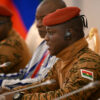
Burkina Faso’s charismatic young military leader, army captain Ibrahim Traoré, has stopped pretending. In April, he declared that people should ‘forget about the question of democracy’ because ‘democracy isn’t for us’. When Traoré seized power in September 2022, ousting a leader who’d staged a coup earlier that year, he promised elections by June 2024. The junta broke that pledge, pushing any transition back to 2029. Now Traoré has confirmed he has no intention of restoring democracy. Instead, Burkina Faso’s military junta is tightening its repression, while working with neighbouring states to internationalise its dangerously undemocratic model.
US Arms Stockpiles Hit by Iran War
The highly- unpredictable five-month-old US-Iran war has been plagued by on-again, off-again peace agreements -- with such monotonous regularity-- the conflict seems never ending. But according to several news reports, the US faces a new threat-- it may soon run out of key weapons systems.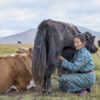
The Year of Pastoralists Must Be More Than Symbolic
This is supposed to be the year the world finally sees and recognizes pastoralists. The United Nations has designated 2026 as the International Year of Rangelands and Pastoralists, bringing long-overdue attention to communities who have sustained some of the world’s most fragile and important landscapes for generations.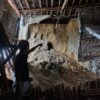
Rohingya Refugees Seeking Safe Haven in Bangladesh Hit by Fresh Disasters
Abdu Rozork awoke suddenly to the sound of children screaming. Heavy monsoon rains had sent a landslide barrelling into the section of their bamboo shelter where the women and children were sleeping.
CHINA: ‘The Ethnic Unity Law Means There Is One Acceptable Way to Be Chinese’
CIVICUS speaks about China’s recently implemented Ethnic Unity Law with Gulchehra Hoja, a correspondent for Reporters Without Borders and a Uyghur activist and journalist known for her reporting on human rights abuses against Uyghur people in China.
New Chickpea Variety to Drive Climate Resilience in Africa
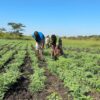
New chickpea seed research and production have become the new frontier of climate resilience in southern Africa as farmers battle failing cereal production.
Green transition: Pay the Least, Benefit the Most
Inaction and maintaining the status quo of fossil fuel dependence carry significant costs. The recent closure of the Strait of Hormuz, for instance, caused enormous losses to the global economy, with many Asia-Pacific countries bearing disproportionately larger adverse impacts. Had these economies had a more diversified energy mix, they would have benefited from such resilience under current circumstances.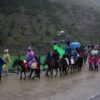
Climate Change Makes Sacred Ice Vanish in Kashmir, Locals Fear Loss of Livelihoods
Every summer, before dawn breaks over the Himalayas, Bashir Ahmad leads his horses onto the narrow mountain trail that winds toward the Amarnath cave shrine. For decades, the annual Hindu pilgrimage has been the most important season of the year for his family. The money earned over two months pays for food, school fees, winter supplies, and the upkeep of his animals through the long snowbound months.« Previous Page — Next Page »


The Week with IPS

NEXT STOP - SDGs
Tracking global progress towards a sustainable world
Tracking global progress towards a sustainable world
