Languages
Thursday, November 12, 2026



News and Views from the Global South
Gender

Women’s Groups Applaud Gender Action Plan Following COP 25
After nearly two weeks of negotiations at COP 25 climate negotiations in Madrid last month (2-13 December), governments will be adopting a new 5-year Gender Action Plan (GAP) that progressively builds upon the first GAP, and works to address many of the concerns raised by women and gender groups at the Framework Convention on Climate Change (UNFCCC), including calls for greater focus on implementation and scaling up gender-just climate solutions.
How Gender-based Violence Should be Reported in the Media
Sexual and gender-based violence terrorizes women and girls around the world, affecting as many as one in three women. Reporters play an essential role in bringing these cases to light so that authorities can take action and prevent further abuses. Yet reporting on gender-based violence comes with serious risks to survivors.
2020: a Year Full of Danger
Let’s face what lies ahead with open eyes: 2020 is going to be a very tough year for the world, and developing countries in particular. The infant decade has already begun with the harbingers of climate disaster as thousands fled to beaches in Australia from raging bush fires, and the Middle East braced for more conflict after a U.S. air strike in Baghdad killed Iran’s top general.
Reflections for a New Year
In a world shaken by so many problems, it is difficult to look at 2020 and not make some kind of holistic analysis. While enormous progress has been made on many fronts, it is clear that the tide has turned, and we are now entering – or have already entered – a new low point in the history of humankind..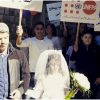
Child Marriages Unlikely to End by UN’s 2030 Deadline
“Right now, I don’t want to get married. I have a long life and a dream in front of me”, a 14-year-old young girl from Bangladesh told her parents as she was just not ready to get married.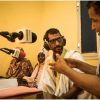
In Mauritania, Imams take to Radio Waves to say Child Marriage is Against Islam
"I refused to marry off my daughter for a simple, good reason: I want my daughter to be empowered,” said Lemeima mint El Hadrami, 49. "I don't want her to go through the same difficulties I did when I was young." El Hadrami was married when she was only 13.
2020 Is the Decade of Action & It Has to Be a Sprint
Happy New Year, Kenya. 2020 marks a decade of action towards the realization of the Sustainable Development Goals by 2030. Peace and development are inextricably linked, with each making the achievement of the other far more likely. This puts the conflict-prevention and development work of the UN at the heart of the agenda in East Africa, but in a multi-agency and programme environment, making meaningful progress is challenging.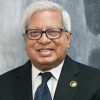
A Tribute to Sir Fazle Hasan Abed (1936 – 2019)
“When I think about Bangladesh, I think about everybody. Not everybody is enjoying Rabindranath and the great literature and culture that Bangladesh has. But I think everybody has got the right to have this experience”, deeply felt by late Sir Fazle Hasan Abed, founder of BRAC (Building Resources Across Communities), a unique, integrated development organization that many have hailed as the most effective anti-poverty organization in the world; who passed away December 20, 2019at the age of 83.
More Women in Tech Will Lead to Peaceful Gender Equal World
It will take around 100 years for the world to reach gander parity according to the Global Gender Gap Report 2020 just published by World Economic Forum.
The Death of a Courageous Journalist Reveals Malta as a ”Mafia Island”
Around 3 pm on 16 October 2017, Daphne Caruana Aruna Galizia was returning home when her Peugeot suddenly exploded 80 metres from her house outside of Bidnjia, a small town 15 km from Malta´s capital Valletta. Her son Matthew heard the violent blast and rushed out to find the smoldering wreck of the car on a field by the road: “I looked down and there were my mother’s body parts all around me”. Her scattered body had hit the ground 10 metres from the demolished vehicle.1
Q&A: Initiative Starts Mental Health Sessions for Bangladeshi Garment Workers
Nearly seven years ago, garment workers in Bangladesh were victims of one of the gravest man-made disasters in history -- a factory collapse that left more than 1,100 workers dead, and rendered thousands with injuries -- in many cases lifelong ones. For many of the workers from Rana Plaza, the trauma remains real even to this day.
Address Malnutrition, Not Just Food Security
Malnutrition remains a formidable challenge in most societies, with less than a tenth of countries in the world not experiencing at least one major malnutrition problem. In relatively more food secure countries, where almost everyone has enough to eat, and few live in fear of a sudden loss of access to food, micronutrient deficiencies and diet-related non-communicable diseases (NCDs) often still loom large.
2019 – A Devastating Year in Review
By any measure this has been a devastating year: fires across the Amazon, the Arctic and beyond; floods and drought in Africa; rising temperatures, carbon emissions and sea levels; accelerating loss of species, and mass forced migrations of people.
Women in Climate Hot Spots Face Challenges Adapting
Women in Asia and Africa hardest hit by climate change have a tough time adapting to the climate emergency, even with support from family or the state, finds a new study. The results raise questions for global agreements designed to help people adapt to the climate emergency, it adds.
Sasakawa Vows to Continue Support for Fighting Leprosy in Bangladesh
Chairman of The Nippon Foundation, Yohei Sasakawa, has assured Bangladesh of continuing support for the Zero Leprosy Initiative announced by the country's Prime Minister, Sheikh Hasina, aimed at eliminating leprosy by 2030.
Bangladesh Can Be Leprosy-Free Before 2030 Prime Minister Tells National Zero Leprosy Conference
Leprosy is not a curse but should be detected and treated early, Bangladeshi Prime Minister, Sheikh Hasina, has told delegates at a gathering in her country's capital to discuss the elimination of the disease.
Children Risk Early Marriage: Climate Change One of the Factors
Filomena (15), a fisherman’s daughter from a village in Nampula Province, Mozambique was married to a 21-year-old from the same village.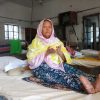
Building a Leprosy Free Bangladesh
Despite having remarkable success in leprosy control in the last decades, the Bangladesh government is now moving forward with a vision to build a leprosy- free country.
Gains and Losses of Irregular Migration
While opening a newspaper or watching a TV program we are every day made aware of the plights of irregular migrants. Some recent examples among many – on 24 October, 39 Chinese nationals were found dead in a lorry trailer in Essex. They had apparently frozen to death within a refrigerator container with temperatures as low as -25C (-13F). This while tragedies occur almost daily on the Mediterranean Sea. On 26 November, a rescue vessel found a boat almost completely sunken. It had three dead bodies aboard. Fifty-five migrants were saved. Three of them were in a critical condition, and one died after reaching Melilla in Spain, where the migrants were brought in. Three children were among the survivors, though a further ten individuals were reported missing. Nowadays, such news items pass by almost imperceptibly. Every day, thousands of unfortunate human beings are trafficked all over the world to suffer underpaid, hazardous work, or prostitution.
Sustainable Fisheries are Key in Addressing Food Security — and Women can Play an Important Role
Experts gathered in November to discuss the importance of sustainable fisheries and its role in eradicating world hunger at a fisheries symposium in Rome.
Fostering Jobs, Entrepreneurship, and Capacity Development for African Youth: The Time for Disruption Is Now!
“There is no greater asset to Africa than its youth,” a statement that has been repeatedly proclaimed, but the continent still has a long way to go. Despite robust economic growth over the past two decades, a 1 percent increase in growth between 2000–14 was associated with only 0.41 percent growth in employment. This figure suggests that employment stood at less than 1.8 percent a year, far below the nearly 3 percent annual growth in the labor force. If this trend continues, 100 million people will join the multitudes of the unemployed in Africa by 2030.« Previous Page — Next Page »





Women make up half the world's population, but don't nearly share half of the world's wealth, well-being and opportunity. Two-thirds of the world poor are women, disproportionally exposing women to precarious living conditions, disease and unmitigated natural disasters. The media, meanwhile, remains a male-dominated sector in much of the world, contributing to women's voices lacking a crucial amplifier to put their concerns on political agendas and unleash the development potential of their ingenuity. Rather than then stereotypical victims of local and global forces, women are also organizer, innovators, conservators and community builders. These are some of their stories.

The Week with IPS

NEXT STOP - SDGs
Tracking global progress towards a sustainable world
Tracking global progress towards a sustainable world
