Languages
Tuesday, November 17, 2026



News and Views from the Global South
Global Governance
Your Life or Your Freedom? The Ultimate Price to Defend the Environment
For the family of indigenous Guatemalan activist Jorge Juc, the announcement last week by US President Donald Trump of an agreement declaring Guatemala a “safe third country” could not be more bitterly ironic.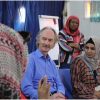
Mediating Peace in a Complex World
“It is all about orchestration”, was Martin Griffiths’, the UN Special Envoy for Yemen, response to the question of what mediation in Yemen looks like today.
Nuclear Weapons Must Go: Lessons of Hiroshima & Nagasaki
It has been 74 years since a nuclear devastation took place. But a clear message stands -- that nuclear weapons must go and peace and love must reign. “Because if we forget the horrific consequences of the use of these devices, the likelihood of repetition is increased.” Jonathan Granoff, President of the Global Security Institute told IPS, as the United Nations marked the tragedies of Hiroshima and Nagasaki.
Canada Effectively Addresses Children in Armed Conflict
More than 24,000 violations have been committed against children across the globe, including recruitment into armed forces, abduction, sexual violence, deprivation of basic needs, attacks on schools and hospitals-- and even murder.
U.S. Sanctions Imperil Aid to Iran’s Flood Victims
Two major humanitarian groups have warned that United States sanctions on Iran are stopping cash flows for vital humanitarian work in the country, adding another complication to the growing rift between Washington and Tehran.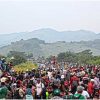
Environmental Migration a Global Challenge
The Atlas of Environmental Migration, which gives examples dating as far back as 45,000 years ago, shows that environmental changes and natural disasters have played a role in how the population is distributed on our planet throughout history.
Saudi Arabia Easing Male Guardianship: But More is Needed
It comes as welcome news that authorities in Saudi Arabia have taken important steps towards dismantling the repressive male guardianship system, which treats women in the country as minors.
A Call for Healthy, Blue Oceans in Asia and the Pacific
Leaders at the Group of 20 summit last month agreed on the “Osaka Blue Ocean Vision,” which aims to reduce additional pollution by marine plastic litter to zero by 2050. The UN Economic and Social Commission for Asia and the Pacific (ESCAP) stands ready to support Japan and other countries in the region to ensure healthy and sustainable oceans.
Protect, Support and Empower Girls in Lake Chad Region
As Lake Chad enters its 10th year of conflict, millions of young girls are being used and manipulated in grotesque ways. Maria Sole Fanuzzi, Lake Chad Child Protection Specialist at Plan International, said: “New York City has 8.25 million people, so when we talk about the girls in the Lake Chad crisis, you have to imagine the whole city where we are now is completely filled by children, and half of that would be girls.”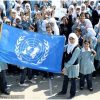
UNRWA Faces Donor Backlash Amidst Charges of Sexual Misconduct & Nepotism
The UN Relief and Works Agency (UNRWA), which has been undermined by a sharp cut in US contributions, has been embroiled in a scandal that threatens to jeopardize its very future.
Europeans Mobilising for New IMF Head
In the grand European political reshuffle of 2019, it turned out that Christine Lagarde was the answer to the conundrum of who should replace Mario Draghi at the European Central Bank. But her move opens another question. Who succeeds Lagarde at the International Monetary Fund?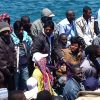
Migration and Human Solidarity
The migrant and refugee crisis has become a serious test for the unity of Europe as a political project. The inflow of destitute migrants and refugees has tested Europe’s political unity to an unprecedented extent. With a long-term solution to the migrant and refugee crisis nowhere in sight, the adverse impact of the current situation has the potential to unfold further and to give rise to a broader crisis with long-term implications, affecting Europe and the MENA region alike.
One Month Since Libya’s Migrant Tragedy, Detentions Continue
It is almost one month since an airstrike on a detention centre in Libya killed and injured scores of migrants and refugees locked up inside, many of whom were detained for doing nothing worse than fleeing instability or seeking better lives in Europe.
Tackling Inequality: A Focus on Cities can Improve Upward Economic Mobility
Tackling inequality in the 21st century requires us to understand and address barriers to upward mobility that segments of people face within countries. In a world with high and increasing levels of urbanization, the conversation on challenges to mobility must start with cities.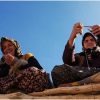
Social Norms & Women’s Access to Financial Services
How do financial services providers (FSPs) shape gender norms that restrict or expand women’s access to financial services? In more ways than you might think, and there are good reasons why FSPs should be aware of this.
Businesses Crucial to the Success of SDGs
We all know that the UN Sustainable Development Goals are ambitious and will take huge collaborative and international effort to achieve. Government action alone is not enough. So how can the private sector actively contribute – and what can be done to ramp up the participation of businesses around the world?
Power is a Privilege & a Responsibility: Q&A with Justin Trudeau, Prime Minister of Canada
It’s on all of us to make gender equality a reality – which means harnessing our collective power to build a gender equal world. By empowering girls and women, realizing sexual and reproductive health and rights, tackling gender-based violence, and confronting the combinations of sexism, misogyny, racism, and colonialism, we can take steps towards true gender equality.
The Age of Digital Geopolitics & Proxy War Between US and China
The geopolitical significance of key digital technologies now takes centre stage in a new global conflict between the US and China. The dispute over the Chinese technology group Huawei exemplifies this situation.
How Widespread is Human Trafficking in the US?
The United States is no exception to the practice of modern day slavery—a crime for which it is rarely held accountable at the United Nations.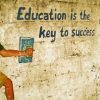
The Role of Education in Breaking down the Walls of Ignorance
Education constitutes an important building block to enhance inter-faith dialogue, cultural exchange between ethnic and linguistic groups, counter violent extremist narratives and promote peaceful and inclusive societies. The founder of Modern India, Mahatma Gandhi, once said:
Human Rights Watch Disappoints on Human Rights
On 22 July 2019, Kenneth Roth published an article in Publico, Lisbon, entitled: “UN Chief Guterres has disappointed on Human Rights”.« Previous Page — Next Page »


The Week with IPS

NEXT STOP - SDGs
Tracking global progress towards a sustainable world
Tracking global progress towards a sustainable world
