Languages
Tuesday, November 17, 2026



News and Views from the Global South
Global Governance
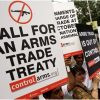
US Takes Back Signature on Arms Trade Treaty
The United States dropped a political bombshell when President Donald Trump announced his administration would withdraw from the historic Arms Trade Treaty (ATT) which the former Obama administration signed in September 2013.
Muslim Terrorists Heading Towards a Jihadist Hell Hole
The history of terrorism in Sri Lanka reveals a clear pattern. The first to take up arms in the post-Independent era were the misguided Sinhala youth. They were educated youth desperately running in search of a quick solution to establish their classless paradise. Their violence did not take them anywhere.
US & Western Arms in Yemen Conflict Signal Potential War Crime Charges
When US political leaders urged the Trump administration to either reduce or cut off arms supplies to Saudi Arabia – largely as a punishment for its indiscriminate bombings of civilians in the four-year old military conflict in Yemen—President Trump provided a predictable response: “If we don’t sell arms to Saudi Arabia, the Chinese and the Russians will.”
A Treaty to End Corporate Immunity?
When Ecuadorean diplomat Luis Gallegos first proposed a “Binding Treaty on Business and Human Rights,” many countries and environmental activists welcomed the idea with open arms.
Privatization Promotes Collusion and Corruption
At the risk of reiterating what should be obvious, the question of private or public ownership is distinct from the issue of competition or market forces. Despite the misleading claim that privatization promotes competition, it is competition policy, not privatization, that promotes competition.
Sri Lanka’s Easter Sunday Carnage: Quo Vadis?
I returned from attending a three-hour Easter Sunday mass at the Fordham University Church around midnight New York time on April 20, 2019, when my phone rang and a colleague asked me what’s going on in Sri Lanka? I said what is going on? He said there were a series of coordinated terrorist bombings with multiple fatalities and scores of injuries in my native country. For the next four and a half hours I was on the phone trying to piece together what happened, including reaching out to Sri Lanka’s Secretary of Defence Hemasiri Fernando.
Media Landscape Marked by “Climate of Fear”
Journalists around the world are increasingly seeing threats of violence, detention, and even death simply for doing their job, a new press index found.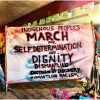
UN’s Empty Promises to World’s Indigenous Peoples
The United Nations, as in so many other areas, gives lip service in support of Indigenous issues while lacking the political will and enforcement power over individual member states to comply with the protection of fundamental human rights for the Original Nations of Indigenous Peoples of the world.
Empowering Girls Through Sport
For too long, women and girls have been excluded from the playing field—literally. But now, many are paving the way in the fight against gender inequality through sports.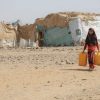
Trump’s Veto Will Trigger More US Arms to Kill Civilians in Yemen
President Donald Trump’s decision to veto a bi-partisan Congressional resolution to end US military involvement in a devastating Saudi-led four-year conflict in Yemen-- is expected to escalate the ongoing war in the trouble-plagued region.
‘You Cannot Muzzle the Media’: Nigerian Journalists on Press Freedom under Buhari
When Nigeria's incumbent president Muhammadu Buhari won re-election this year, he campaigned (as he did in 2015) on an image of good governance and anti-corruption. Billboards in the capital, Abuja, bore the smiling faces of the president--who first led Nigeria as military ruler from 1983-1985--and his vice-president Yemi Osinbajo, and called for voters to let them "continue" their work and take the country to the "Next Level."
Nicaraguans “Will Not Be Silenced”
A year since Nicaragua spiralled into a socio-political crisis, human rights leaders have called on the country to refrain from violence and uphold the human rights of its citizens.
Ancient Rome Offers Lessons on the Importance of Sustainable Development
Sustainable development encapsulates the idea that material progress must always go hand in hand with social inclusion and respect for the environment.
Global Governance and Information
The past seventy years since the end of the second world war have been marked by profound changes in our international system. Relations between states have become more horizontally structured interactions with a rising significance of the common good articulated and pursued by newly-created international programmes and organisations.
Brunei’s Shariah Code & the New Stone Age
Over a week ago – on April 3 – Brunei, the tiny South East Asian kingdom on the island of Borneo, announced its citizens would face the full force of the Shariah law.
From Empowerment During War, Eritrean Women Must Fight Gender Discrimination in a New Peace
As the first anniversary of the swearing on Ethiopia’s Prime Minster Abiy Ahmed rolled around last week, Ethiopians – and observers worldwide – marvelled at the pace and scale of radical reform he has brought to the formerly repressed country in the past year.
Civil Society Under Attack in Name of Counterterrorism
Counterterrorism measures are not only affecting extremist groups, but are also impacting a crucial sector for peace and security in the world: civil society.
Civil Society, Press Freedom & Human Rights Under Attack in Africa
The civic space in several African countries, including Tanzania, Burundi, Zambia, Sudan, Mozambique, Somalia and Eritrea, is gradually shrinking – and mostly under authoritarian leaders and repressive regimes.
Religion & Development: An Enhanced Approach or a Transaction?
Since 2008, a number of articles/opinions have been written, on the nexus between religion and development. In chronological order, the articles first made the case for why ‘religion matters’ to the attainment of developmental objectives, noting how religious leaders are critical to changing social norms which can be in contradiction to human rights, and noting the extent to which faith-based organisations (FBOs) have anyway served as the original social service providers known to human kind.
People Do Not “Deserve to Die”: Injustice of Death Penalty Persists
While figures have dropped, the “inhuman” use of the death penalty still remains too common worldwide, a human rights group said.
Smears, Laws, Lack of Cooperation: Tools Against Activists
The murder of Brazilian politician and human rights activist Marielle Franco just over a year ago and attacks on other rights activists around the world have galvanised civil society organisations, with the United Nations heightening its own strategy to protect rights defenders.« Previous Page — Next Page »


The Week with IPS

NEXT STOP - SDGs
Tracking global progress towards a sustainable world
Tracking global progress towards a sustainable world
