Languages
Sunday, October 4, 2026



News and Views from the Global South
Global

Food Systems and Policies Undermining Food Security
Transnational agribusinesses increasingly shape food policies worldwide. Claiming to best address recent food security concerns, they seek to profit more from innovations in food production, processing, and distribution.
Want to Feed the World? Invest in Food Systems
As the global target to eliminate hunger by 2030 is fast slipping out of reach, investing in how the world feeds itself is the only way to ensure progress.
El Niño Likely to Return: the Case for Early Action
Climate models are converging: El Niño is likely to return by mid-2026 and could be strong. According to the World Meteorological Organization, it could emerge as early as May–July 2026, with several national hydrometeorological agencies in Asia and the Pacific already issuing alerts.
Nuclear ‘Close-Calls’ Prove Deterrence No Guarantee for Peace
The consequences of nuclear warfare would transcend borders and the impact would be felt across generations. Yet knowing this, member states, including nuclear-armed states, are increasingly flouting the nuclear taboo, while also relying heavily on deterrence to prevent fallout.
Empowering Youth Is the Fastest Path to Transforming Least Developed Countries
The future of the world’s least developed countries (LDCs) will be shaped by a critical choice they make today- strategic investment in their youth. Rich in human potential, the young people in LDCs embody ingenuity, resilience and ambition. With the right opportunities, they can transform challenges into opportunities and put their countries strongly on track to sustainable development.
The Mideast Conflict Spreads—Beyond the Strait of Hormuz & towards the UN Cafeteria
The 10-month-old Middle East conflict—which has triggered a rise in the cost of living worldwide, and an increase in the prices of food, groceries and gasoline—is likely to impose burdens on hundreds of UN staffers, delegates, journalists and civil society representatives-- and thousands more, during the General Assembly sessions beginning September.
Data Gaps are Hiding the Most Excluded Children
In 2024, 273 million children, adolescents, and youth were out of school globally as per the UNESCO Institute for Statistics. While that is a staggering number, the figure is incomplete. The 2026 Global Education Monitoring report warns that the global out of school population may be undercounted by at least 13 million once humanitarian sources are used to correct data gaps in conflict-affected contexts.
Breaking the Cycle Between Food Production and Environmental Decline
A newly published review in Nature Reviews Earth & Environment has revealed disturbing statistics on the growing environmental threats posed by global food production. The global food system, designed to feed and nourish humanity, is now a major contributor to climate change via greenhouse gas emissions, and the largest driver of freshwater depletion, biodiversity loss, and nutrient pollution.
Strengthening Financial Integrity: Why It Matters and What Needs to Change
A conversation with Toril-Iren Pedersen, Director of the UNDP Global Policy Centre for Governance, and Michael Jarvis, Executive Director of the Trust, Accountability, and Inclusion (TAI) Collaborative
How Santa Marta Finally Made Fossil Fuel Phase-Out Politically Discussable
The First Conference on Transitioning Away from Fossil Fuels in Santa Marta, Colombia, may eventually be remembered as a defining moment in global climate politics, not because it produced a treaty or a formal negotiation outcome, but because it changed the tone, structure, and ambition of the conversation itself.
The Rise of Centenarians: A Challenging Accomplishment
Throughout human history, reaching the age of 100 was considered an exceptional accomplishment. However, in recent decades, the number of centenarians in the world has been on the rise.
Africa’s Youth are Shaping the Continent’s Climate Future
Africa is on the frontlines of the climate crisis, warming faster than the global average and facing disproportionate climate impacts, despite contributing the least to global greenhouse gas emissions.
The UN NGO Committee: Civil Society’s Gatekeeper in Hostile Hands
In January, the government of Algeria succeeded in locking two civil society groups out of access to the United Nations (UN). It raised questions at the UN Committee on Non-Governmental Organizations, known as the NGO Committee, about two civil society groups with accreditation. It alleged that Italian organisation Il Cenacolo was making politically motivated statements at the UN Human Rights Council and the Geneva-based International Committee for the Respect and Implementation of the African Charter on Human and Peoples’ Rights (CIRAC) was selling UN grounds passes. Four days later, it called a vote to revoke their status. Other states urged delay, but the no-action motion failed, and 11 of the body’s 19 members voted to recommend that the UN’s Economic and Social Council (ECOSOC) revoke Il Cenacolo’s accreditation and suspend CIRAC’s for a year.
Migration a Toxic and Divisive Issue in Many Parts of the West
Migration is a strange thing, hard to pin down. It is a complex phenomenon that transforms communities while shaping people’s identities and it is so multifaceted that individuals perceive it and live it in different ways.
World Press Freedom Day, 2026
 On May 3rd, the world marks World Press Freedom Day - a United Nations observance dedicated to the fundamental principles of press freedom.
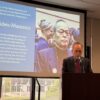
‘Nuclear Weapons Are Not Just Tools of War. They Are Weapons of Mass Suffering.’
"We choose hope because despair is a form of surrender that we cannot accept,” UN Ambassador to the Philippines, Enrique Manolo, told civil society representatives and the diplomatic community, considering the question of whether to pursue nuclear disarmament in a world that is becoming more polarized on the issue.
Press Freedom: A Story of Lives Lost, Budgets Slashed, Status Eroded
Press freedom is on the retreat across much of the world. As documented by recent global surveys authored by the UN and media institutes, the erosion of an independent, fearless and diversified press is a trend that has worsened for well over a decade.
UN Staff Advised to Keep Off Campaign for New Secretary-General
A longstanding rule bars international civil servants from publicly taking a political stand against member states, even against those accused of human rights violations, war crimes and genocide (and even barring staffers from participating in political demonstrations outside the UN).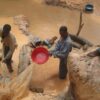
Clean Energy, Digital Technologies Are Coming at a Human Cost, UN Report Warns
A newly released United Nations report has raised urgent concerns that the world’s push toward clean energy and digital technologies is driving a hidden crisis in some of the planet’s most vulnerable regions, where mining for critical minerals is depleting water supplies, damaging health, and deepening inequality.
BULGARIA: ‘We Protested Against a Whole System of Corrupt Governance and State Capture’
CIVICUS discusses Bulgaria’s Gen Z-led protests with Aleksandar Tanev, founder of Students Against the Mafia, an informal student organisation that took part in mass protests against corruption and state capture.

The Ocean Also Has Memories: From Our Territories to the Global Seafood Marketplace
Coming from an island in southern Chile, where the sea is not an industry—but it is daily life, work, food and memory. Growing up in a family that is part of an artisanal fishers’ cooperative. Learning from a young age how to cultivate oysters, work with mussels, and understand the rhythms of the sea.« Previous Page — Next Page »


The Week with IPS

NEXT STOP - SDGs
Tracking global progress towards a sustainable world
Tracking global progress towards a sustainable world
