Languages
Monday, November 23, 2026



News and Views from the Global South
Global

IRAN: Nuclear Watchdog Details Pre-2003 Weapons Research
A new report on Iran's nuclear programme provides substantial evidence that Iran carried out extensive research into how to make a nuclear weapon prior to 2003 but is shaky about how much work has continued.
Haitian Cholera Victims Seek Reparations from U.N.
More than 5,000 Haitian cholera victims are seeking compensation, action and an apology from the U.N. and the United Nations Stabilisation Mission in Haiti (MINUSTAH) for the ongoing epidemic that has killed more than 6,600 Haitians and sickened more than 476,000 since October 2010.
Brazil Takes the Fight Against Hunger Abroad
The Brazilian government is extending its fight against hunger to the world stage, by inaugurating a Centre of Excellence Against Hunger to transmit its positive experiences to other developing countries with the help of United Nations agencies.Global Crisis Makes U.N. Reform Imperative
Reinventing the United Nations is crucial to protect the poorest inhabitants of the planet, at a time when the global economic crisis, the effects of climate change, and food insecurity are undermining development efforts.
U.S. Move Hurts More Than UNESCO
The United States’ decision to cut funding for the United Nations Educational, Scientific and Cultural Organisation will hurt the specialised agency’s work, officials here say.
Brazilian NGOs Say Rio+20 Paper Short on Details
Environmentalists criticised the lack of concrete proposals in the Brazilian government's submission to the preparatory process for the Rio+20 conference, to be held in this city in June 2012.OP-ED: A Rio+20 Activist Manifesto and Action Plan
Unless civil society activists launch their own programme of action at the United Nations Conference on Sustainable Development in Rio de Janeiro next summer (Jun. 4-6), the event will be little more than an expensive talkfest.
Q&A: “Reducing Inequality Should Be a Political Priority”
According to the Human Development Report 2011 released by the United Nations Development Programme (UNDP) this week, Latin America remains the region with the highest income inequality, even as the situation has improved in countries like Argentina, Brazil, Honduras, Mexico and Peru.
G20: Final Push for Financial Transactions Tax
While the Greek bailout and stimulus package dominated discussion among the Group of 20 (G20) major industrialised and emerging market economies at the high-level summit in Cannes, France, this week, the proposed financial transactions tax (FTT) received meagre attention.
At G20 Summit, Civil Society Demands ‘People First, Not Finances’
While the 20 heads of state of the Group of 20 (G20) industrialised and emerging countries gather in southern France to deliberate on the future of the global economy – particularly the crises unfolding in the Eurozone – pockets of activists are amassing around the summit to make their voices heard.
Q&A: Cooperatives: “Meeting Human Need, Not Just Human Greed”
Different countries may celebrate Oct. 31 in a variety of ways, but this year, the 193 member states of the United Nations (U.N.) launched the International Year of Cooperatives 2012 to raise awareness about the impact of cooperatives on the development of communities where they operate.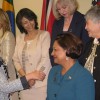
Women Losing Ground in Economic, Political Equality
While gender equality ratios have improved in 85 percent of countries over the past six years, economic participation and political empowerment for women has failed to match the steady progress of health and education, says a new report by the World Economic Forum.
Q&A: Female Empowerment, In-Depth: More Than Just a Resolution
The first United Nations (U.N.) Security Council resolution to specifically address women's contributions to conflict prevention and sustainable peace was passed just 11 years ago, on Oct. 31, 2000.Syria Agrees to Arab League Plan
The Syrian government has accepted several measures suggested by the Arab League aimed at halting the violence in the country, including the removal of tanks and armoured vehicles from the streets.
Climate Change Could Unravel Development Progress
The United Nations unveiled its 22nd annual Human Development Report on Wednesday, with grave warnings that unless countries take action against climate change and implement sustainable solutions, progress in human development will be in serious jeopardy.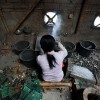
GHANA: Toxic Electronic Waste Contaminates Nearby Areas
Mountains of hazardous waste grow by about 40 million tons every year. This waste, mostly from Europe and North America, is burned in developing countries like Ghana in a hazardous effort to recover valuable metals.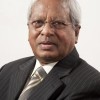
EDUCATION: Bangladeshi Humanitarian Wins Half-Million Prize
A Bangladeshi humanitarian with a British knighthood - and head of one of the world's largest non-governmental organisations (NGOs) promoting the cause of education - walked way with half a million dollars in prize money and a gold medal at the World Innovation Summit for Education (WISE) in the Qatari capital of Doha.
OP-ED: Better Aid Means Better Development
Oxfam and major aid donors of the OECD’s Development Assistance Committee (the DAC) are often on opposite sides of the fence. Today though, we are on the same side —making sure that effective aid lifts people out of poverty.
EcoMobility Gaining Ground, Step by Step
Berlin is a big capital city of a country famed for making excellent automobiles, but it can no longer afford roads and is now moving people by transit, bike and especially through walking.
EUROPE: ‘Agenda for Change’ Leaves Middle-Income Countries Out in the Cold
Last week the European Commission unveiled its ‘Agenda for Change’, a new policy framework outlining priorities for the European Union’s development aid and detailing the Commission’s renewed focus on economic growth as a means of poverty reduction, particularly in the world’s poorest countries.
U.S. Halts UNESCO Funding After Palestinian Vote
The administration of President Barack Obama announced Monday that it would immediately cut U.S. funding for the United Nations Educational, Scientific and Cultural Organisation, just hours after UNESCO's governing board voted overwhelmingly to grant Palestine full membership.« Previous Page — Next Page »


The Week with IPS

NEXT STOP - SDGs
Tracking global progress towards a sustainable world
