Languages
Sunday, September 20, 2026



News and Views from the Global South
Headlines

SWEDEN: ‘The New Migration Laws Are so Vague That People Don’t Know What Might Be Used Against Them’
CIVICUS discusses Sweden’s new migration laws with John Stauffer, legal director and deputy executive director of Civil Rights Defenders, a Swedish civil society organisation that acts as a civil rights watchdog at home and supports human rights defenders in repressive contexts worldwide.

Family Planning and Population Dynamics Are Key to Water Security
This week is World Water Week, the annual conference of governments, business, and civil society on building a water-secure future as global population, climate disruptions, and water demand increase. In Washington, it’s also Water Resources Development Act season, when every two years the US Congress reauthorizes the legilslation that funds US drinking water, wastewater systems, and flood risk management projects.
Internally Displaced in Ukraine: Between Hell and a Future That Does Not Exist
It is impossible to ignore. Loudspeakers across the city broadcast a recorded voice announcing a minute’s silence for those who have fallen in the war. After 60 ticks of the second hand, it is time for the national anthem: “Ukraine has not yet perished.”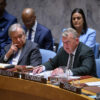
Consequences of Inaction: UN Security Council Pressed to Act Before Hunger Becomes Famine
Across the board, UN officials and humanitarian organizations urged the Security Council to act before the consequences of food insecurity and famines hit, during a high-level open debate on Tuesday, August 25. More than 80 representatives took part in Tuesday’s conversation on conflict-related food insecurity under the theme “Food under fire: the Security Council’s role in mitigating global and local food crises”.
Will the Future of the UN be Dictated by a Hostile US?
As the UN commemorates its 81st anniversary, one lingering question remains: what is the future of the world body.? Will a hostile US downsize its operations at the United Nations, cut down its funding, continue defaulting in its payments -- and perhaps eventually, withdraw from the world body?
U.S. Midwest Flooding Is a Growing Threat to Agriculture
Across the U.S. Midwest, from Illinois to Indiana to Ohio, severe storms and heavy rains caused devastating flooding, extensive damage to infrastructure, and the displacement of hundreds of thousands of people. The historic scale and severity of flooding led to the issuance of disaster proclamations for the States of Illinois and Indiana.
Fishers’ Organisations in India Demand Recognition From FAO
India is ranked the second-largest fish-producing nation globally, accounting for around 8 percent of global output. The fisheries sector in India accounts for nearly 7.43 percent of Agricultural Gross Value Added (GVA), the highest (independent) share among the agriculture and allied sectors.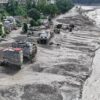
UN Secretary General Expresses Sadness Over Lives Lost in Nepal-Tibet Flash Floods
A massive geophysical disaster along the mountainous Nepal-Tibet border has left at least 160 people dead and hundreds more missing after a glacial collapse triggered devastating flash floods and mudslides on Wednesday.
The Indian Ocean Is Sounding the Alarm and Its Islands Are Among the First to Hear It
Across this vast ocean, the latest monitoring by Mercator Ocean International shows marine heatwave conditions ranging from moderate to severe. At the same time, the World Meteorological Organization expects a strong El Niño to intensify through August to October, with a positive Indian Ocean Dipole also likely to develop. These are not distant scientific signals. They are an urgent warning that the ocean system on which millions depend is under mounting stress.
Beyond the Horizon: Raising a Generation to Protect the Blue Pacific
For generations, Pacific children have grown up with the ocean as part of everyday life. It is where families fish, where stories are passed down, where livelihoods begin and where cultures are rooted.
Grand Planetary Challenges Need a Grand Coalition to Solve Them
Several coalitions exist today to defend the territories in which people live and work. Global leaders have long understood the importance of shared responsibility for collective security and have invested significant time in establishing networks, partnerships and alliances. In 2025, global spending on defense reached a record $2.9 trillion.
A Divided Vote for the UN’s Human Rights Chief
On 24 July, the United Nations (UN) General Assembly reappointed Volker Türk as High Commissioner for Human Rights for a further four years. Only 10 states – among them Israel, Russia and the USA – opposed the decision.
Retired in Ukraine: One Cheese, Two Chickens and a Dozen Eggs
Marina says she does not particularly like her flowers, but that, “for some reason,” people buy them.
Colombia Declares State of Emergency Following Deadly Earthquake
Over the past week, the humanitarian crisis in Colombia has deteriorated significantly following the Mw 7.4–7.5 earthquake that struck the Chocó department on August 10. With the Colombian government declaring a State of Emergency across 15 departments, the nation continues to struggle with massive civilian casualties, immense damage to critical infrastructure, and the disruption of basic services. The national government and the humanitarian community continue to coordinate lifesaving responses and monitor conditions as they evolve.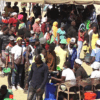
South Africa’s Anti-Immigrant Violence Slows SDG Goals, Rips Apart Africans’ Free Movement Call
When the Malawian government announced the conclusion of the repatriation of its citizens trapped in anti-immigrant violence against foreign Africans in South Africa on August 12, 2026, it had brought home 56,723 nationals, according to data from the Department of Disaster Management Affairs.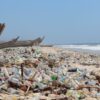
The Plastics Treaty Process Needs Greatly Improved Observer Participation at this Critical Point in the Negotiations and Beyond
In 2022, the United Nations Environment Assembly mandated an Intergovernmental Negotiating Committee (INC) to develop a global, legally binding instrument addressing the full life cycle of plastics, from production and product design to disposal. After the resumed fifth session adjourned without consensus in Geneva in August 2025, the divided process moved into informal consultations before INC-5.4 in March 2027.
GEF Proposes $140 Million Program to Strengthen Drought Resilience
For pastoralists in Arvaikheer — a village in Mongolia’s dry central plains — rain can determine whether there is enough grass for cattle to roam, whether waterholes are replenished and whether families make it through another dry season. But as climate change makes rainfall increasingly unpredictable, even a wet season may no longer provide water and pasture needed to sustain people and livestock.
ECUADOR: ‘Criminalisation Serves as a Deterrent, Seeking to Discipline Others’
CIVICUS discusses the rapid erosion of civic space in Ecuador with Gabriela Panchana, an activist, communicator and founder of the En Voz Alta and Rumbo Plural digital platforms.
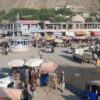
Lailuma Built Opportunities for Afghan Women – Then She Was Killed
Afghanistan has seen a number of unexplained murders in recent months. One of the latest victims is Lailuma, the wife of well-known local singer Salam Maftoon and a community activist.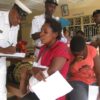
New Emergency Care Skills Help Tanzania’s Frontline Doctors Save Lives
The 14-year-old girl arrived at the hospital fighting for her life. After a tragic hit-and-run car accident, she was rushed into the emergency department with serious abdominal injuries. Every passing minute brought her closer to death.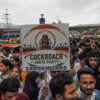
Cockroach Insult Unleashes Biggest Challenge yet to Modi’s Repressive Rule
India’s strongman leader, Narendra Modi, has just been forced to do the thing he likes least: making concessions in response to protests.« Previous Page — Next Page »


