Languages
Saturday, November 28, 2026



News and Views from the Global South
Headlines

Annan Denounced Iraqi Invasion as “Illegal” & Criticized Military Leaders Addressing UN
The Secretary-General of the United Nations, who is a creature of member states, rarely challenges or defies his creators. But Kofi Annan, who died last week at the age of 80, did both. Surprisingly, he lived to tell the tale-- but paid an unfairly heavy price after being hounded by the United States.
An Appreciation – Kofi Annan: A Great Man of Peace & Multilateralism has Left Us
I woke up on Saturday morning with the heart-breaking news that our dear Kofi is no more. The peoples of the world are unequivocal in expressing their feelings of the love, respect and recognition that they have for his qualities of head and heart.
IPS Mourns the Passing of Former United Nations Secretary-General Kofi Annan
Dear Nane Annan & Family, The IPS family would like to express our deepest condolences to you and your family on the passing of a husband, a father, a global statesman. As journalists, we find that few words can express our deep loss for a man who personalised and lived the vision and truth of a just and equal world.
Statement by the Secretary-General on the Passing of Former Secretary-General Kofi Annan
Kofi Annan was a guiding force for good. It is with profound sadness that I learned of his passing. In many ways, Kofi Annan was the United Nations. He rose through the ranks to lead the organization into the new millennium with matchless dignity and determination.
Take Charge of Your Food: Your Health is Your Business
The minimum we expect from the government is to differentiate between right and wrong. But when it comes to regulating our food, it’s like asking for too much. Our latest investigation vouches for this. The Centre for Science and Environment (CSE)’s pollution monitoring laboratory tested 65 samples of processed food for presence of genetically modified (GM) ingredients.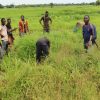
How Ghana’s Rapid Population Growth Could Become an Emergency and Outpace Both Food Production and Economic Growth
Paul Ayormah and his fellow farmers make their way home after hours spent manually weeding a friend’s one-acre maize farm in Ghana’s Eastern Region. “Tomorrow it will be the turn of my maize farm,” he tells IPS.
Music: Nigeria’s New Cultural Export
It is a cold evening in Antwerp, Belgium’s second-largest city, famous for diamonds, beer, art and high-end fashion. Inside a small restaurant, a mix of the latest American pop and rap—clearly enjoyed by diners—is playing on a radio. Nigerians Olalekan Adetiran and Adaobi Okereke, enjoying a kebab dinner, are startled when the radio begins playing the unmistakable “Ma Lo”—a catchy, midtempo and bass-laden song by popular Nigerian artistes Tiwa Savage and Wizkid.
Joint Action Needed to Reform our Food System
While participating in this year’s High-level Political Forum (HLPF), one thing became crystal clear to me. Come 2030, we will not have healthy and affordable food if we continue with business as usual. But no one institution can single handedly change the course of our food system. The key to ensuring a sustainable food system is involving a diverse group of actors – from smallholder farmers to government – to generate ideas for change, together.
Palestinian Children, the True Victims of the Conflict
Over 500 to 700 West Bank children are arrested and prosecuted each year by Israeli military forces. Palestinian child rights organisation, Defense for Children International Palestine (DCIP), says that between 2012 and 2017 the organisation represented more than 700 children, some 72 percent of whom endured violence after their arrest.
Demonizing State-Owned Enterprises
Historically, the private sector has been unable or unwilling to affordably provide needed services. Hence, meeting such needs could not be left to the market or private interests. Thus, state-owned enterprises (SOEs) emerged, often under colonial rule, due to such ‘market failure’ as the private sector could not meet the needs of colonial capitalist expansion.
Let Food Be Thy Medicine
When faced with a crisis, our natural reaction is to deal with its immediate threats. Ateka* came to the make-shift clinic with profuse diarrhoea: they diagnosed cholera. The urgent concern in the midst of that humanitarian crisis was to treat the infection and send her home as quickly as possible. But she came back to the treatment centre a few days later – not for cholera, but because she was suffering from severe acute malnutrition. Doctors had saved her life but not restored her health. And there were others too, who like Ateka eventually succumbed to severe malnutrition.
When Salt Water Intrusion is Not Just a Threat But a Reality for Guyanese Farmers
Mikesh Ram would watch his rice crops begin to rot during the dry season in Guyana, because salt water from the nearby Atlantic Ocean was displacing freshwater from the Mahaica River he and other farmers used to flood their rice paddies.
Scientists Warn of the Imminent Depletion of Groundwater in Chile’s Atacama Desert
Eighteen national science prize-winners in Chile have called for a halt to the over-extraction of water in the four regions over which the Atacama Desert spreads in the north of the country, a problem that threatens the future of 1.5 million people.
Which Way Now for Zimbabwe as Constitutional Court Receives Petition Against Election Results?
Many in Zimbabwe are questioning whether the country can break with its horrid past or embrace a new future after a watershed election that saw Emmerson Mnangagwa win the presidential race by a narrow margin and the opposition lodge a formal petition challenging the results in the Constitutional Court.
Children and Women with Disabilities, More Likely to Face Discrimination
Children with disabilities are up to four times more likely to experience violence, with girls being the most at risk, according to the United Nations Children’s Fund.
Campaigns Promote Women’s Participation in Latin America
An alternative network in Brazil promotes women's participation in elected offices with media support. This campaign, like others in Latin America, seeks to reverse a political landscape where, despite being a majority of the population, women hold an average of just 29.8 percent of legislative posts.
How the Lack of Affordable Vegetables is Creating a Billion-Dollar Obesity Epidemic in South Africa
Every Sunday afternoon, Thembi Majola* cooks a meal of chicken and rice for her mother and herself in their home in Alexandra, an informal settlement adjacent to South Africa’s wealthy economic hub, Sandton.
2017 Global Findex: Behind the Numbers on Bangladesh
On the face of it, the 2017 Global Findex shows that Bangladesh has made great strides toward financial inclusion since the previous Findex was released in 2014.
New Agreement with China: Opportunity to Save Mozambique’s Forests
Mozambique’s forests are disappearing at an alarming rate, with most of the destruction caused by excessive logging, corruption and weak laws.
Q&A: Honouring Women of Africa and the Diaspora
This year, the African Union and the Diaspora African forum are honouring the first woman minister for education in Kenya for her long and outstanding work in girls’ education and governance.
Indigenous Peoples Least Responsible for the Climate Crisis
Indigenous peoples, who comprise less than five percent of the world’s population, have the world’s smallest carbon footprint, and are the least responsible for our climate crisis. Yet because their livelihoods and wellbeing are intimately bound with intact ecosystems, indigenous peoples disproportionately face the brunt of climate change, which is fast becoming a leading driver of human displacement.« Previous Page — Next Page »


