Languages
Monday, November 16, 2026



News and Views from the Global South
Humanitarian Emergencies

Key Facts You Should Know About Global Migration Trends
The UN International Organization for Migration --IOM’s Global Migration Trends Factsheet presents a snapshot of the major migration trends worldwide for the year 2015 based on statistics from a variety of sources.
No Health Protection for Migrant-Women Healthcare Givers
While the media may be attracted by images of migrants drowning or sold as slaves, another flagrant but lesser-known drama is that of care workers, who are overwhelmingly women, often migrants, and who make a very large contribution to global public health, but are exposed to great health risks themselves with little or no protection, let alone basic labour rights.
Why the Rohingya Can’t Yet Return to Myanmar
On Nov. 23, the governments of Myanmar and Bangladesh signed an agreement to return the Rohingya refugees — more than 600,000 people who escaped from Rakhine state in western Myanmar to Cox’s Bazar in Bangladesh — after ethnic cleansing carried out by Myanmar’s armed forces since August.
Rohingyas: Lurching from Crisis to Crisis
Ferdous Begum was cleaning her child after he had defecated in the open, using leaves she collected from a nearby tree at Bangladesh’s Teknaf Nature Park. The settlement is packed with Rohingya refugees who fled military persecution in Myanmar since August.
SLIDESHOW: Tales of the 21st Century – Rohingyas Without a State
 The world has witnessed innumerable images of the long walk to 'freedom' of Rohingya women, children and men. Some trudged for endless hours and days, many carrying elderly parents and babies in baskets, with the women suffering the unimaginable trauma having been victims of rape, torture and harassment.

Rohingya Refugees Endure Lingering Trauma
Twelve-year-old Rubina still struggles with the horrors she witnessed in her homeland in Myanmar before fleeing to neighbouring Bangladesh three months ago.
Bangladesh Aims at Middle-Income Status by 2021
The environmental challenges facing Bangladesh, described by the United Nations as one of the world’s “least developed countries” (LDCs), are monumental, including recurrent cyclones, perennial floods, widespread riverbank erosion and a potential sea level rise predicted to put about 27 million people at risk over the next two decades.
Libya: Up to One Million Enslaved Migrants, Victims of ‘Europe’s Complicity’
“European governments are knowingly complicit in the torture and abuse of tens of thousands of refugees and migrants detained by Libyan immigration authorities in appalling conditions in Libya,” Amnesty International charged in the wake of global outrage over the sale of migrants in Libya.
VIDEO: The Rohingyas ‘Long March to Freedom’
 Over 800 000 of the 1.1 million Rohingya Muslims from the Rakhine state in Myanmar have been on the run for years, fleeing by foot, walking for days at end to seek a safe place for their women and children.

Civil Society Summit Calls for International Action on Climate Migration
Civil society leaders from more than 100 countries called for action on climate-induced displacement at a summit in Suva, Fiji last week.
The Protracted Refugee and Migrant Crisis: A Challenge to Multilateralism
It is an incontrovertible fact that more people are on the move owing to globalization. Fifteen percent of the world’s population are on the move worldwide. In other words, of the world population of 7 billion, one billion are on the move. Seven hundred and forty million people are referred to as internal or as domestic migrants within their countries of origin. The number of internally displaced persons reaches about 60 million. On top of this, the world has more than 244 million international migrants who cross borders often into the unknown. Lastly, there are 22.5 million refugees – encompassing the 5.3 million Palestinian refugees – registered by the United Nations High Commissioner for Refugees who have been forced to flee their home societies as a result of violence and armed conflict. The first two decades of the 21st century will go down in history as the era in which the world has witnessed the most complex and massive movement of people since the end of the Second World War.
A Responsibility to Prevent Genocide
Almost 70 years since the Genocide Convention was adopted, the international community still faces a continued and growing risk of genocide.
Are Value Chains a Pathway to Nutrition in Sub-Saharan Africa?
Although difficult to ascertain whether it is a trend reversal, two recent FAO reports (2017a, b) show a rise in hunger globally as well as in Africa. The number of undernourished (NoU) in the world suffering from chronic food deprivation began to rise in 2014 –from 775 million people to 777 million in 2015 – and is now estimated to have increased further, to 815 million in 2016. The stagnation of the global average of the proportion of undernourished (PoU) from 2013 to 2015 is the result of two offsetting changes at the regional level: in Sub-Saharan Africa, the share of undernourished people increased, while there was a continued decline in Asia in the same period. However, in 2016, the PoU increased in most regions except Northern Africa, Southern Asia, Eastern Asia, Central America and the Caribbean. The deterioration was most severe in Sub-Saharan Africa and South-Eastern Asia (FAO 2017a,b).
No One Country Can Do It Alone — Towards a Migration Compact
International commitment and cooperation is critical to reap the benefits and overcome the challenges of migration, stressed a leading official at the conclusion of a UN meeting.
Despite Progress, Gay & Abortion Rights Face Threats in Latin America
Cancun, Mexico, of white sand beaches and spring break-style nightlife, was, this past June, the unusual backdrop for a regional gathering on human rights and democracy.
Population Emergency
There is no doubt that conducting a population census is an important planning and development tool for a country’s policymakers. It is similar to when young parents plan for the future of their newborn child by taking frequent measurements of the baby’s height and weight to benchmark its physical and mental development. How¬ever, for a child born in Pakistan today the census highlights some crucial aspects: geography to a large extent will determine future opportunities, while gender will determine the access to resources.
Trump-Mideast: Much More than a ‘Kiss of Death’ to Palestinians
US President Donald Trump’s decision to recognise Jerusalem as Israel’s capital does not represent only a ‘kiss of death’ to the two-State solution, but also a strong blow in the face of 57 Muslim countries, let alone igniting fire in this easily inflammable region, providing more false arguments to criminal terrorist groups to escalate their brutal attacks, in addition to taking a step further in Washington’s new conflict with Iran and the ‘restructuring’ of the Middle East.
Rohingya Refugees: The Woes of Women – Part One
Afia* lines up her bucket every morning in the refugee camp for water delivery from humanitarian relief workers. On one particularly sweltering day, she kept four water pitchers in a row with gaps between them, hoping to insert another empty container in the space when the water arrived.
“Migrants Deserve Dignity” says CIVICUS While Trump Pulls out of Proposed Migrant Compact
Continuing his “America First” approach, President Donald Trump has pulled the U.S. out of a proposed United Nations global compact seeking an agreement to protect the safety and rights of migrants and refugees.
Resistance to Antibiotics: The Good, the Bad and the Ugly
The growing resistance to antibiotics and other antimicrobials due to their overuse and misuse both in humans and animals has become an alarming global threat to public health, food safety and security, causing the deaths of 700,000 people each year. This is a fact.
Rohingya Exodus Is a “Major Global Humanitarian Emergency”
In less than four months, over 600,000 Rohingya refugees have fled brutal persecution in Myanmar to seek safety across the border in Bangladesh. They are now crowded into camps across a stretch of 30 kms in Cox's Bazar, a southeastern coastal region of the small South Asian nation.« Previous Page — Next Page »


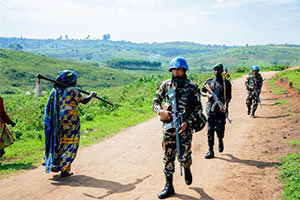 MONUSCO Peacekeepers and FARDC Soldiers Patrol Fataki Area. Credit: UN Photo/Jorkim Jotham Pituwa
Conflict, human rights violations, natural disasters, and famine have been at the forefront of concerns for humanitarian organizations. The escalation of humanitarian crises has led to over 239 million people in need of humanitarian assistance at the start of 2026, as estimated by OCHA’s Global Humanitarian Overview. The 2025 humanitarian appeal received only $12 billion, the lowest funding in over a decade, which has left 24 million fewer people reached in comparison to 2024. Conflict has remained the primary driver of crisis.
Humanitarian emergencies massively impact progress towards the Sustainable Development Goals (SDGs), adversely affecting economic development, inequality, education, planetary well-being, and poverty. Millions of people are faced with reduced access to essential services, including shelter, food, healthcare, and access to clean drinking water. UN Organizations such as UNHCR and the United Nations Children’s Fund (UNICEF) are committed to providing direct relief to affected communities when state governments cannot.
The United Nations 2024 Summit of the Future discussed measures that will be taken to reduce global inequality and promote peacekeeping efforts around the world. The recent UN Climate Change Conference (COP30) in Belém, Brazil, agreed to mobilize $1.3 trillion annually for climate action by 2035, operationalize the loss and damage fund, and triple adaptation finance. However, a fossil fuel transition commitment was not secured, despite climate change and the greenhouse effect being major contributors to humanitarian crises worldwide.
Countries across the world have also rallied to end humanitarian crises, as witnessed in conflicts such as Palestine and Ukraine. IPS is committed to providing relevant and in-depth reports of humanitarian emergencies around the world and their implications.

The Week with IPS

NEXT STOP - SDGs
Tracking global progress towards a sustainable world
Tracking global progress towards a sustainable world