Languages
Monday, November 16, 2026



News and Views from the Global South
Humanitarian Emergencies

Except for Syria, Middle East Disappeared from U.S. Network News in 2017
Except for the ongoing war in Syria, coverage of the Middle East by the evening news programs of the three big U.S. networks virtually disappeared in 2017, according to the latest annual compilation by the authoritative Tyndall Report.
Iraq’s Toxic Conflict
In Iraq, thirty years of armed conflict has killed hundreds of thousands of people, wounded countless more, displaced millions and laid cities and towns to waste.
Climate-Related Disasters Cost Nearly $400 Billion in 2017
I am pleased to be with you at this important and timely summit on climate risk and to discuss the opportunities that are there for us to seize through decisive climate action.
Why Humanitarian Assistance Needs Rigorous Evaluation
According to the United Nations Office for the Coordination of Humanitarian Affairs (UNOCHA) and the Financial Tracking Service (FTS), the number of people in need of humanitarian aid in 2017 rose to 141.1 million and they were located in 37 countries.
How Natural Disasters Undermine Schooling
In 2010, heavy monsoons led to devastating floods in Pakistan that destroyed 11,000 schools. Thousands of additional schools had to be used as community shelters, preventing them from operating as classrooms. In the immediate aftermath of climate-related events such as this, damage to schools and infrastructure often interrupt a child’s education.
Trump’s 1st State of the Union: Refugee Policy & What Will Likely Go Unsaid
It is unlikely that President Trump will reverse his policies toward refugees in his State of the Union address on 30 January. Despite his expected silence on the state of U.S. and global refugee policy, there is a lot to say about how refugee policy has changed and will change in the future.
Aid Group Shines Spotlight on the Neglected
Though 2017 was marked by stories of humanitarian disasters around the world, many crises remain under the radar with devastating consequences for those affected, a new report says.
Migrants Without Shoes
Addis Ababa, Ethiopia, 2013. It is past midnight. The aircraft come in from Saudi Arabia carrying workers who had been hastily ejected. They had gone from Ethiopia to work in a variety of jobs in a Kingdom flush with oil wealth.
Left Behind: Families of Migrants Wait in Limbo
Wahid Haider talks about his son’s departure to Italy almost seven years ago without regret or hesitation. Haider has not seen Nayeem, now 30 years old, since he left Nankar in search of better economic prospects, travelling through Romania, where he spent several months, before entering Italy.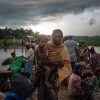
UN Migration Agency Appeals for USD 1.4 Billion to Help over 80 Million People in 50 Countries
IOM, the UN Migration Agency, is appealing for nearly USD 1.4 billion to address the needs of over 80 million people in 50 countries in 2018. These vital funds will support people displaced within the borders of their own countries, migrants, refugees and the communities that host them, people returning to their areas of origin and people experiencing or recovering from conflict and natural disasters.
Fate of the Rohingyas – Part Two
With discussions underway between Bangladesh and Myanmar about the repatriation of more than a half a million Rohingya refugees, many critical questions remain, including how many people would be allowed back, who would monitor their safety, and whether the refugees even want to return to violence-scorched Rakhine state.
Thousands Still Dying at Sea En Route to Europe
Amid concerns that 160 people may have drowned while attempting to cross the Mediterranean this week alone, the UN refugee agency have urged countries to offer more resettlement places.
Fate of the Rohingyas – Part One
The repatriation of Rohingya refugees driven from their villages through violence and terror appears uncertain, with critics saying the agreement legalising the process of their return is both controversial and impractical.
2017 Was a Year of Record-Breaking Climate Events
Parts of the United States are experiencing blizzard and record low temperatures, with sharks freezing in the Atlantic and cold-snapped iguanas falling from trees in Florida.
‘Red Alert’ 2018 – Global Unity, Media & Humanitarian Action
“Unity is the path. Our future depends on it,” said UN Secretary-General Antonio Guterres, as he issued an unequivocal global ‘Red Alert’ in his New Year message on December 31, 2017.
Disasters Bring Upheaval to Sri Lanka’s Rural Economy
Last year was an annus horribilis for 52-year-old Newton Gunathileka. A paddy smallholder from Sri Lanka’s northwestern Puttalam District, 2017 saw Gunathileka abandon his two acres of paddy for the first time in over three and half decades, leaving his family almost destitute.
Marooned in Bangladesh, Rohingya Face Uncertain Future
Hundreds of thousands of Rohingya refugee women from Myanmar are currently living in the cramped camps along Bangladesh Myanmar border. Victims of sexual and physical violence in the Rakhine state, women have been disproportionately affected by this crisis and these women’s perils are far from over in the host country as they continue to face multifaceted challenges.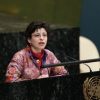
Religion: Between ‘Power’ and ‘Force’
In 1994, Dr. David R. Hawkins wrote a book positing the difference between power and force (Power vs. Force: The Hidden Determinants of Human Behavior - the latest revised version came out in 2014).
Nowhere to Hide from Climate Change
The water is nibbling away the beaches of Fiji. Not even the dead are allowed peace of mind. The graveyard of Togoru - a village on the largest island of Fiji - has been submerged. The waves are sloshing softly against the tilted tombstones covered with barnacles. The names have become illegible, erased by the sea.
To Be a Latin-American Migrant in Madrid
If you are in Madrid and have some spare time, just go to an area which residents consider a “high class” neighbourhood situated in a district bordering Barrio de Salamanca, one of the richest areas in the Spanish capital.
Perpetrators of Crimes against Humanity Must be Brought to Justice
On the occasion of the 2017 International Day of Human Solidarity observed on 20 December, the Chairman of the Geneva Centre for Human Rights Advancement and Global Dialogue Dr. Hanif Hassan Ali Al Qassim calls for peace for and human solidarity with, the Rohingya minority in Myanmar.« Previous Page — Next Page »


 MONUSCO Peacekeepers and FARDC Soldiers Patrol Fataki Area. Credit: UN Photo/Jorkim Jotham Pituwa
Conflict, human rights violations, natural disasters, and famine have been at the forefront of concerns for humanitarian organizations. The escalation of humanitarian crises has led to over 239 million people in need of humanitarian assistance at the start of 2026, as estimated by OCHA’s Global Humanitarian Overview. The 2025 humanitarian appeal received only $12 billion, the lowest funding in over a decade, which has left 24 million fewer people reached in comparison to 2024. Conflict has remained the primary driver of crisis.
Humanitarian emergencies massively impact progress towards the Sustainable Development Goals (SDGs), adversely affecting economic development, inequality, education, planetary well-being, and poverty. Millions of people are faced with reduced access to essential services, including shelter, food, healthcare, and access to clean drinking water. UN Organizations such as UNHCR and the United Nations Children’s Fund (UNICEF) are committed to providing direct relief to affected communities when state governments cannot.
The United Nations 2024 Summit of the Future discussed measures that will be taken to reduce global inequality and promote peacekeeping efforts around the world. The recent UN Climate Change Conference (COP30) in Belém, Brazil, agreed to mobilize $1.3 trillion annually for climate action by 2035, operationalize the loss and damage fund, and triple adaptation finance. However, a fossil fuel transition commitment was not secured, despite climate change and the greenhouse effect being major contributors to humanitarian crises worldwide.
Countries across the world have also rallied to end humanitarian crises, as witnessed in conflicts such as Palestine and Ukraine. IPS is committed to providing relevant and in-depth reports of humanitarian emergencies around the world and their implications.

The Week with IPS

NEXT STOP - SDGs
Tracking global progress towards a sustainable world
Tracking global progress towards a sustainable world

