Languages
Wednesday, November 18, 2026



News and Views from the Global South
Humanitarian Emergencies

Women, Peace and Security Agenda Still Hitting Glass Ceiling
This October will mark the 15th anniversary of the adoption of U.N. Security Council Resolution 1325. The landmark resolution on Women, Peace and Security (WPS) recognises not only the disproportionate impact armed conflict has on women, but also the lack of women’s involvement in conflict resolution and peace-making.
Obama Seeks August Deadline for End to South Sudan War
U.S. President Barack Obama, in a meeting with regional African leaders, threatened new sanctions for the warring factions in South Sudan if a peace deal is not be reached by Aug. 17.
Opinion: European Federalism and Missed Opportunities
"A serious political and social crisis will sweep through the euro countries if they do not decide to strengthen the integration of their economies. The euro zone crisis did not begin with the Greek crisis, but was manifested much earlier, when a monetary union was created without economic and fiscal union in the context of a financial sector drugged on debt and speculation.”
Clean Water Another Victim of Syria’s War
Caught in the grips of a summer heat-wave, in a season that is seeing record-high temperatures worldwide, residents of the war-torn city of Aleppo in northern Syria are facing off against yet another enemy: thirst.
Africa Advised to Take DIY Approach to Climate Resilience
African countries would do well to take their own lead in finding ways to better adapt to and mitigate the changes that climate may impose on future generations instead of relying only on foreign aid.
Civilian Killings? West Literally Gets Away With Murder
The United Nations continues to come under heavy fire for singling out mostly non-Western states for human rights violations while ignoring the misdeeds of Western nations or big powers.U.N. Panel Lays Out Vision of “Just Security”
Amid a range of new and old challenges, from climate change to gender equality and war crimes, a new report by the Commission on Global Security, Justice and Governance emphasises the need to reform the U.N. system.
Children Increasingly Becoming the Spoils of War
Whether in Palestine, Ukraine or Somalia, wars result in millions of children threatened by the brutality of armed conflict.
Pledges for Humanitarian Aid Fall Far Short of Deliveries
When international donors pledge millions of dollars either for post-conflict reconstruction or for humanitarian aid, deliveries are rarely on schedule: they are either late, fall far below expectations or not delivered at all.
Opinion: Why Women Peacemakers Marched in Korea
The year 2015 marked the 62nd anniversary of the armistice agreement that ended the Korean War. The temporary ceasefire has never been replaced with a peace treaty and the demilitarised zone (DMZ) continues to divide the country.
Earthquakes Don’t Kill, Buildings Do – Or Is It Inequity?
70-year-old Chiute Tamang was working in his field when the earth shook on Apr 25. He grabbed a tree. His wife and daughter were inside the house at the time, but managed to run out. In the blink of an eye, the building turned into a heap of stones. They were the lucky ones.“Get to Zero, Stay at Zero” – The Comprehensive Plan to End Ebola
"The threat is never over until we rebuild," Sierra Leone's President Ernest Bai Koroma stressed at an Ebola Recovery Conference Friday in New York.
Syrians: ‘Biggest Refugee Population From a Single Conflict in a Generation’
Barely 10 months ago, the United Nations Refugee Agency (UNHCR) said the refugee population from Syria had reached the three million mark. Today, the latest data from the field show that the number has passed four million.
Q&A: “If We Don’t Close the Poverty Gap, the 21st Century Will End in Extreme Violence”
Implementation of the ambitious post-2015 development agenda which will be adopted in September 2015 at the United Nations depends to a large extent on funding.
U.N. Warns of Real Risk Nepal Will Not “Build Back Better”
As Nepal's monsoon rains approach, some humanitarian aid remains tied up in the capital Kathmandu and there are concerns that a rush to build shelters could lead to the same shoddy construction that collapsed during the Apr. 25 earthquake, a U.N. official said Wednesday.
Humanitarian Emergencies Lend Urgency to World Population Day
On the eve of World Population Day, the United Nations is fighting a virtually losing battle against growing humanitarian emergencies triggered mostly by military conflicts that are displacing people by the millions – and rendering them either homeless or reducing them to the status of refugees.
Ebola Recovery Focuses on Strengthening Africa’s Health Systems
Secretary-General Ban Ki-moon, addressing delegates in a run-up to an international Ebola recovery conference, said last month that “all of the investments, all of the sacrifices and all of the risks by relief workers” would be squandered if an outbreak of the disease recurs.
Despite Scepticism, U.N. Hails Its Anti-Poverty Programme
The United Nations, which launched one of its most ambitious anti-poverty development programmes back in 2000, has hailed it as a riveting success story – despite shortcomings.
Opinion: Religion and the SDGs – The ‘New Normal’ and Calls for Action
In 2007, an op-ed in the International Herald Tribune argued that you “gotta have faith in the U.N”.
Child Labour: A Hidden Atrocity of the Syrian Crisis
In a conflict that has claimed over 220,000 lives and injured a further 840,000 people as of January 2015, it is sometimes hard to see beyond the death toll.
Funding For Desperate Palestinian Refugees Under Threat
The U.N. Relief and Works Agency (UNRWA) faces a severe financial crisis which could see core services to desperate Palestinian refugees in Syria, Lebanon, Gaza and the West Bank halted unless donors step in before the end of September.« Previous Page — Next Page »


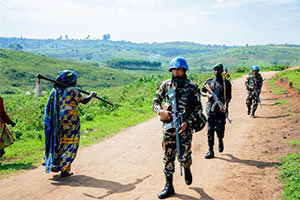 MONUSCO Peacekeepers and FARDC Soldiers Patrol Fataki Area. Credit: UN Photo/Jorkim Jotham Pituwa
Conflict, human rights violations, natural disasters, and famine have been at the forefront of concerns for humanitarian organizations. The escalation of humanitarian crises has led to over 239 million people in need of humanitarian assistance at the start of 2026, as estimated by OCHA’s Global Humanitarian Overview. The 2025 humanitarian appeal received only $12 billion, the lowest funding in over a decade, which has left 24 million fewer people reached in comparison to 2024. Conflict has remained the primary driver of crisis.
Humanitarian emergencies massively impact progress towards the Sustainable Development Goals (SDGs), adversely affecting economic development, inequality, education, planetary well-being, and poverty. Millions of people are faced with reduced access to essential services, including shelter, food, healthcare, and access to clean drinking water. UN Organizations such as UNHCR and the United Nations Children’s Fund (UNICEF) are committed to providing direct relief to affected communities when state governments cannot.
The United Nations 2024 Summit of the Future discussed measures that will be taken to reduce global inequality and promote peacekeeping efforts around the world. The recent UN Climate Change Conference (COP30) in Belém, Brazil, agreed to mobilize $1.3 trillion annually for climate action by 2035, operationalize the loss and damage fund, and triple adaptation finance. However, a fossil fuel transition commitment was not secured, despite climate change and the greenhouse effect being major contributors to humanitarian crises worldwide.
Countries across the world have also rallied to end humanitarian crises, as witnessed in conflicts such as Palestine and Ukraine. IPS is committed to providing relevant and in-depth reports of humanitarian emergencies around the world and their implications.

The Week with IPS

NEXT STOP - SDGs
Tracking global progress towards a sustainable world
Tracking global progress towards a sustainable world