Languages
Wednesday, November 18, 2026



News and Views from the Global South
Humanitarian Emergencies

U.N. Remains Helpless Watching Rising Deaths of Children in War Zones
The rising death toll of civilians, specifically women and children, in ongoing military conflicts is generating strong messages of condemnation from international institutions and human rights organisations – with the United Nations remaining helpless as killings keep multiplying.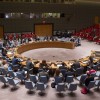
U.N. Official Says Human Suffering in Yemen ‘Almost Incomprehensible’
With a staggering four in five Yemenis now in need of immediate humanitarian aid, 1.5 million people displaced and a death toll that has surpassed 4,000 in just five months, a United Nations official told the Security Council Wednesday that the scale of human suffering is “almost incomprehensible”.
Humanitarian Response in Afghanistan Falters in the Face of Intensifying Conflict
As the number of civilians impacted by the intensifying conflict in Afghanistan rises along with the fighting, humanitarian agencies are struggling to meet the needs of the wounded, hungry and displaced.
U.N. Marks Humanitarian Day Battling Its Worst Refugee Crisis
The United Nations is commemorating World Humanitarian Day with “inspiring” human interest stories of survival – even as the world body describes the current refugee crisis as the worst for almost a quarter of a century.
Prospects for Peace in South Sudan Fading Fast
Dismissing efforts, including those of U.S. President Barack Obama, to sign off on a peace agreement and end the 20-month-long civil war in the world’s newest nation, South Sudanese President Salva Kiir declined to sign, saying he needed more time for consultations.
The U.N. at 70: Leading the Global Agenda on Women’s Rights and Gender Equality – Part Two
The efforts of the United Nations and the global women’s movement to promote the women’s rights agenda and make it a top international priority saw its culmination in the creation of U.N. Women, by the General Assembly in 2010.
Designed to Fail: Gaza’s Reconstruction Plan
The rubble of twisted concrete and metal bakes in the hot Mediterranean sun of a regional heat wave.
U.N. Chief, Seeking Accountability, Shatters Myth of Lifetime Jobs
U.N. Secretary-General Ban Ki-moon stopped short of telling one his high-ranking Special Representatives: “You’re fired.”
U.N. Launches Second Abuse Probe of Peacekeepers in CAR
It was two a.m. on Aug. 2 as peacekeeping forces from the U.N. Multidimensional Integrated Stabilization Mission in the Central African Republic (MINUSCA) searched for a criminal suspect in the PK5 Muslim enclave of the capital city of Bangui.Impressive Relief Effort Alleviating Hardship in Flood-Affected Myanmar
With the rainy season still far from over, flood-affected communities in the Sagaing Region and other parts of northern and western Myanmar are preparing for more hardships, while the government continues what the United Nations has called an “incredible” relief effort.Humanitarian Crisis Deepens in War-Torn Yemen
Doctors Without Borders/Médecins Sans Frontières (MSF) is warning that the violence in Yemen "has radically increased" since March, with the humanitarian group seeing mass casualties from bombings and thousands of severely injured.
Protests Greet Japan’s Relaunch of Nuke Power
Protesters rallied outside Japan's Sendai nuclear plant a day ahead of its planned opening and four years after the Fukushima disaster galvanised opposition to nuclear power in the country.Amnesty Wants International Criminal Court to Intervene in Libya
Calling for an end to “an epidemic of kidnapping blighting” Libya, Amnesty International has faulted the International Criminal Court (ICC) for failing to undertake any investigations into crimes under international law committed by armed groups in the last four years.
No More Hiroshimas, No More Nagasakis, Vows U.N. Chief
Speaking at a commemoration of the 70th anniversary of the atomic bombings of Japan, Secretary-General Ban Ki-moon, a vociferous advocate of nuclear disarmament, echoed the rallying cry worldwide: “No more Hiroshimas, No more Nagasakis.”
Humanitarian Crisis Looming Over Venezuela, Says ICG
A Brussels-based think-tank has warned Venezuela of an impending humanitarian calamity in tandem with growing political instability.
Pakistan One of the World’s First Safe Havens for Refugees
The United Nations has declared that 2015 is already “the deadliest year” for millions of migrants and asylum seekers fleeing war and persecution in their countries.
Churches Seek to Amplify Echo of Hiroshima and Nagasaki
The accounts of survivors of the atomic bombs dropped on Hiroshima and Nagasaki will serve as inspiration for leaders of Christian churches grouped in the World Council of Churches (WCC), which advocates the elimination of nuclear weapons.
U.N. Panel Spotlights Plight of Refugees
“Let us remember that behind every story, every figure, every number, there is a person - a girl, a boy, a parent, a family,” Anne Christine Eriksson, Acting Director of the U.N. Refugee Agency (UNHCR), said at a panel discussion at the U.N. on Thursday.
‘Ambassadors of Freedom’ – Palestine’s Resistance Babies
Thirteen-year-old Hula Khadoura sits on a large sofa in her grandfather’s home in the neighbourhood of Tuffah, Gaza City, her one-year-old twin brothers Karam and Adam on her lap. “I am so happy they arrived,” she beams, holding the babies’ feeding bottles in her hands.
Opinion: Hungry for Change, Achieving Food Security and Nutrition for All
With the enthusiasm of the recent Financing for Development conference behind us, the central issues and many layers of what is at stake are now firmly in sight. In fact, a complex issue like hunger, which is a long standing development priority, remains an everyday battle for almost 795 million people worldwide.
Birth Registrations Plummet in Wake of Ebola Epidemic
Liberia's Ebola epidemic may have subsided but its after-effects are still being felt, with tens of thousands of infants going unregistered at birth, the U.N. children's agency UNICEF says.« Previous Page — Next Page »


 MONUSCO Peacekeepers and FARDC Soldiers Patrol Fataki Area. Credit: UN Photo/Jorkim Jotham Pituwa
Conflict, human rights violations, natural disasters, and famine have been at the forefront of concerns for humanitarian organizations. The escalation of humanitarian crises has led to over 239 million people in need of humanitarian assistance at the start of 2026, as estimated by OCHA’s Global Humanitarian Overview. The 2025 humanitarian appeal received only $12 billion, the lowest funding in over a decade, which has left 24 million fewer people reached in comparison to 2024. Conflict has remained the primary driver of crisis.
Humanitarian emergencies massively impact progress towards the Sustainable Development Goals (SDGs), adversely affecting economic development, inequality, education, planetary well-being, and poverty. Millions of people are faced with reduced access to essential services, including shelter, food, healthcare, and access to clean drinking water. UN Organizations such as UNHCR and the United Nations Children’s Fund (UNICEF) are committed to providing direct relief to affected communities when state governments cannot.
The United Nations 2024 Summit of the Future discussed measures that will be taken to reduce global inequality and promote peacekeeping efforts around the world. The recent UN Climate Change Conference (COP30) in Belém, Brazil, agreed to mobilize $1.3 trillion annually for climate action by 2035, operationalize the loss and damage fund, and triple adaptation finance. However, a fossil fuel transition commitment was not secured, despite climate change and the greenhouse effect being major contributors to humanitarian crises worldwide.
Countries across the world have also rallied to end humanitarian crises, as witnessed in conflicts such as Palestine and Ukraine. IPS is committed to providing relevant and in-depth reports of humanitarian emergencies around the world and their implications.

The Week with IPS

NEXT STOP - SDGs
Tracking global progress towards a sustainable world
Tracking global progress towards a sustainable world

