
Wednesday, November 11, 2026



News and Views from the Global South
Indigenous Rights

Q&A: Native Peruvians ‘More Marginalised Despite Growth’
For the first time, a representative of the indigenous communities in Peru's Amazonas region is sitting in Congress: Eduardo Nayap, an Awajún leader who played a central role in the lengthy protests against laws that opened up native territories in the rainforest to oil, mining and logging companies.EGYPT: Sinai Simmers in Security Vacuum
Even before the recent revolution, Egypt's strategic Sinai Peninsula - inhabited mostly by restive Bedouin tribesmen - had a reputation for lawlessness. But in the months since the popular uprising that led to Mubarak's February ouster, the situation in Sinai appears more precarious than ever.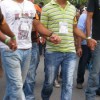
COLOMBIA: Grassroots Rural Movement Unites Behind Call for Peace Talks
"Dialogue is the Path" is the slogan that drew 25,000 people to this northern Colombian oil port city on the Magdalena river that has a history of social struggle. Most of the participants came from remote corners of the country where the brutality of war is experienced in daily life in ways unimagined by city dwellers.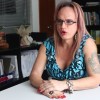
Q&A: “Climate Change Is Affecting Traditional Knowledge”
The traditional knowledge of nature developed since ancestral times by Colombia’s indigenous peoples is increasingly challenged by the unnatural effects of climate change, a phenomenon that is deeply troubling to the keepers of this knowledge, says biologist Brigitte Baptiste.BOLIVIA: Amazon Road Plan Has Native People on the March Again
Indigenous people in the eastern lowlands of Bolivia are again preparing to make the long march to La Paz, 21 years after their first such protest. They have vowed to make the trek in defence of their lands, which they say are threatened by plans for a highway to be built with the backing of the Brazilian government.
COLOMBIA: Displaced Embera Indians a Long Way from Their Land
"I give something, you give something," an Emberá indigenous craftswoman displaying her beautiful handiwork on a sidewalk in the Colombian capital told this reporter, saying she would pose for a photo in exchange for selling a pair of earrings.U.S.: Tribal Council Resists Homophobia
Heather Purser, a member of the Suquamish tribe, whose reservation sits in Washington State, came out to her family at the age of 16, but has never felt completely accepted by her people.Ethnocentric Fishing Practices Threaten Hawaiian Communities
As the world gears up to celebrate the International Day of the World's Indigenous People on Aug. 9, a joint lawsuit filed Wednesday in Hawaii's Federal District Court against the National Oceanic and Atmospheric Administration (NOAA) reveals the interconnectedness of environmental destruction and violations of native people's rights.Climate Changes Bring Harsh Reality for Native Americans
In Shishmaref, an Inupiaq village on an Alaskan barrier island north of the Bering Strait, a way of life is gradually disappearing due to higher temperatures, rising sea levels, declining numbers of sea animals to hunt, and shrinking shorelines wrought by climate change.
COLOMBIA: Native Reserve Braces Itself as Conflict Escalates
Sitting outside her small shop, high in the mountains in the Tacueyó indigenous reserve in southwest Colombia, Liliana Alarco tries to hold back tears as she recalls the day her young son was injured.Palestinian Bedouin a Besieged Minority of the Minority
Israeli policies are destroying the livelihoods of Bedouin communities in the occupied West Bank and the Negev in southern Israel, activists and aid workers warn.Bolivian President Denounces Water Privatisation
"Water is life. Water is humanity. How could it be part of the private business?" asked Bolivian President Evo Morales Wednesday, stressing the social and economic consequences of the growing trend of private ownership over water supply and delivery systems in many parts of the world.People Find Online Power Now in Malaysia
Following a major rally involving tens of thousands of protesters calling for electoral reforms in Malaysia, someone set up a Facebook page calling for Prime Minister Najib Razak to step down. Within ten days, the number of people who said they "like" the page crossed 200,000.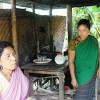
BANGLADESH: Tribal Women Take on Forest Ranger Roles
Jasinta Nokrek loves nothing better than to range through the dense Modhupur forest, the way her Garo tribal ancestors have always done.U.S.: Laws “Not Enough” to Tackle Violence Against Native Women
Juana Majel Dixon, first vice president of the National Congress of American Indians, said earlier this year that, "Young women on reservations live their lives in anticipation of being raped...They talk about 'how I will survive my rape‚' as opposed to not thinking about it at all."
COLOMBIA: Native Groups Mobilise Against Escalation of War
The powerful Regional Indigenous Council of Cauca (CRIC), in southwest Colombia, has called a "minga" or protest march to "curb the militarisation driven by the army and the FARC," the main guerrilla group, which set off a car bomb on a busy market day in a Nasa Indian town on Jul. 9.BOLIVIA: New Food Policy to Boost Small-Scale Farms
In the midst of heated debate with agribusiness, the Bolivian government has launched an agricultural production model aimed at boosting food sovereignty by supporting small farmers, in order to generate surpluses to cushion the swings in international food prices.
RIGHTS-PERU: Following the Clues in Exhumation of Massacre Victims
The daylight is fading, but Francisca Huanca's hopes are growing brighter. "Yes, they're his sneakers, he liked to play football," she says with tears in her eyes. She has just caught a glimpse of the remains of her husband, nearly three decades after he was murdered in the biggest massacre committed by the Maoist Shining Path guerrillas in Peru's highlands.
ENERGY-BRAZIL: Small Dams, Big Problems
Several rivers in the western Brazilian state of Mato Grosso are likely to become chains of artificial reservoirs feeding small hydroelectric plants (SHP), sometimes with larger power stations in between.Minority Women Fight Back Against Mistreatment
Women in minority and indigenous communities are especially vulnerable to wide-ranging forms of violence, abuse and discrimination, according to a new report released Wednesday by Minority Rights Group International (MRG), a human rights group that works on behalf of minorities and indigenous peoples.
NEPAL: Women Grow Carbon Money on Trees
When Bina Tamang was told that she could earn money by not felling trees in the tiny forest that serves as the source of fuel and fodder for 65 families in her area, the 27-year-old was incredulous.« Previous Page — Next Page »





The planet's roughly 350 million indigenous peoples took notable steps on the international stage in the last decade. They got the world's governments to agree to create a body to represent them at the United Nations, the Permanent Forum on Indigenous Issues, and to appoint a special rapporteur responsible for their human rights. In 2007 a Universal Declaration on the Rights of Indigenous Peoples was approved by the UN. Yet the living conditions of most "tribal", "aboriginal", "native" or "first" peoples remain precarious. IPS, with its network of contributors at the UN and linked to indigenous communities worldwide, is committed to tracking the world community's efforts to do justice to the rights and aspirations of these peoples, with a special current focus on Latin America's 40 million rural indigenous peoples.

The Week with IPS

Tracking global progress towards a sustainable world
