
Wednesday, November 11, 2026



News and Views from the Global South
Indigenous Rights

U.S. Replaces Japan in Role of Villain on Whales
The United States has taken over the pro-whaling stance traditionally championed by Japan, but instead of supporting the capture of whales for scientific research purposes, it is doing so under the guise of aboriginal subsistence quotas.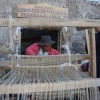
PERU: Indigenous Women Weave New Community Ties
Fuchsia, green and turquoise yarn shuttles swiftly across the wooden loom Dora Huancahuari has learned to use. Together with other craftswomen, she has started a small weaving business which is helping to rebuild their lives in this remote, poverty-stricken Andean community torn by Peru's history of armed conflict.
MEXICO: Native Community Defends Land Against Loggers, Organised Crime
"Our patience has run out," says Mary, an indigenous woman with three children to care for on her own, since her husband was kidnapped from his home by an armed group. In this town in western Mexico, local residents have begun to defend themselves with sticks and stones against illegal loggers and organised crime groups that are their allies.HUMAN RIGHTS-MEXICO: Overdue Homework
Although four of the five sentences in which the Inter-American Court of Human Rights has found the Mexican state guilty involved cases from the southwestern state of Guerrero, the effects of the rulings have not yet had an impact on that area, one of the poorest parts of the country.GUATEMALA: Multi-Partner Alliance Wages War on Hunger
"Now I get supplies to feed my children, and I have a family garden where I grow carrots, onions and beets," Marta Quinilla, a native of Uspantán, an area northwest of the Guatemalan capital that was devastated by the 36-year civil war, says cheerfully.
Hydropower Dams Hurt Amerindians in Brazil and Canada
Michael Lawrenchuk, a Cree political activist from Canada, was given a standing ovation at the International Hydropower Association congress held in this Brazilian border town, after depicting the suffering of his people since dams began to be built on rivers across their land.
PERU: Humala Pledges Justice for Sterilisation Victims
Peruvian President-elect Ollanta Humala will push the legal system to investigate and prosecute those responsible for a massive forced sterilisation campaign targeting poor indigenous women carried out by the government of Alberto Fujimori (1990-2000), said the spokeswoman for Humala's party, Aída García Naranjo.AFRICA: Eco-Labels “Greenwashing” Forest Exploitation
"Eco-label fatigue" is setting in as green logging certification schemes are undermining proper government management of forest resources while "greenwashing" private ownership of these public resources, critics say.
Q&A: “The U.N. Overlooks Native Rights in Developed Countries”
The United Nations has largely overlooked the plight of indigenous peoples in developed countries, says Crystal Lee, a Native American activist from the Navajo tribe.
ELECTIONS-PERU: Leftist Winner Promises “Growth with Social Inclusion”
For the first time in the democratic history of Peru, a left-wing candidate has won the presidency. With the support of an overwhelming majority of voters in the provinces, retired lieutenant colonel Ollanta Humala defeated his right-wing rival Keiko Fujimori, whose strongest backing was in the capital, in Sunday's runoff.OP-ED: Seeking Justice in Mexico, and the Legacy of Robert Kennedy
On this day, 43 years ago, in the midst of a national struggle to make real the promises of justice and equality, we lost Robert F. Kennedy. Today, we honour his legacy when we stand with heroes who are devoted to the pursuit of justice and put their own lives on the line for others.
INDIA: Unwed Tribal Mothers Seek Aid
For Janu, walking the streets to beg for alms is the only option for survival. After all, she has a two-year-old daughter to feed, and she herself, at 14 years old, is little more than a child.INDIA: Violations May Hit Vaccination Plans
After a government report confirmed major ethical violations in trials of Human Papilloma Virus (HPV) vaccines on Indian schoolgirls, senior doctors are calling for transparency in clinical trials conducted under private-public partnerships.CHILE: Dictatorship-Era Law Used to Squelch Activism
"What is happening in Chile isn't justice; it's a pantomime, because under the anti-terrorism law, there is absolutely no way justice can be done," José Venturelli, spokesman for the European Secretariat of the Ethics Commission against Torture, said on a recent visit to this South American country.
AUSTRALIA: Indigenous Say It on Film
From the Australian bush to Alaska’s Arctic wilderness, indigenous peoples’ stories and perspectives take centre stage at the Message Sticks Film Festival, the only annual event of its kind in Australia.Global Campaign to Bestow Legal Rights on Mother Earth
An international coalition of academics and environmental activists has launched a global campaign for the creation of a new U.N. convention to protect "mother earth".Green Economy Needs Respect for Indigenous Rights
Nations must pay more than lip service to the idea of indigenous rights if they hope to seriously address problems like species loss and climate change, say delegates at the Permanent Forum on Indigenous Issues, a U.N. body created to safeguard the rights of the world's 370 million indigenous people.ARGENTINA: Small Loans, Big Solutions
Avoiding the costs of traditional microcredit models, remote communities in the La Puna high plateau region in northwest Argentina have launched a successful loan programme that enables them to meet extraordinary expenses such as weaving material, school supplies or medicine.PERU: Native Birds Under Threat from Illegal Logging
Unique species of native birds live in the transition zone in Peru between the Andes mountains and the Amazon rainforest, where illegal deforestation is destroying their habitat.MEXICO: REDD Rag to Indigenous Forest Dwellers
The implementation of a forestry programme against climate change in the southern Mexican state of Chiapas poses a threat to indigenous people in the state, non-governmental organisations warn.
Indigenous Craftswomen Take on Mexican Fashion World
Reina Pérez, an Otomi indigenous craftswoman in the central Mexican state of Querétaro, skilfully embroiders "grecas" or traditional design motifs in threads of many colours, on fabrics that will be used to make dresses, skirts and blouses.« Previous Page — Next Page »





The planet's roughly 350 million indigenous peoples took notable steps on the international stage in the last decade. They got the world's governments to agree to create a body to represent them at the United Nations, the Permanent Forum on Indigenous Issues, and to appoint a special rapporteur responsible for their human rights. In 2007 a Universal Declaration on the Rights of Indigenous Peoples was approved by the UN. Yet the living conditions of most "tribal", "aboriginal", "native" or "first" peoples remain precarious. IPS, with its network of contributors at the UN and linked to indigenous communities worldwide, is committed to tracking the world community's efforts to do justice to the rights and aspirations of these peoples, with a special current focus on Latin America's 40 million rural indigenous peoples.

The Week with IPS

Tracking global progress towards a sustainable world
