Languages
Friday, June 26, 2026



News and Views from the Global South
Middle East & North Africa
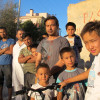
It’s Afghanistan Again in a Turkish Town
People run back home at dusk, just when the shooting intensifies. To Sha Mehmed the experience is familiar. He was 11 when he left his native Afghan village to settle in this small Turkish town on the border with Syria.Hard Times for Iran Hawks
Just three weeks ago, Washington’s hawks, particularly of the pro-Israel neo-conservative variety, were flying high, suddenly filled with hope.
Headed Somewhere in Europe, Somehow
While the relentless war in Syria continuously adds to the number of refugees travelling west to Europe, Greece is fast becoming a nation they are choosing to avoid.
Syria Diplomacy Helps Shuffle Global Order
When U.S. President Barack Obama tried to drum up momentum for airstrikes in Syria to punish and deter the use of chemical weapons, he failed to gain much of a following.
U.N. Team Confirms Syria Chemical Attack but Not Culpability
After an intense investigation of the military attack on civilians in Syria last month, a U.N. team of arms inspectors has reached a predictable conclusion: the deadly attack had all the trappings of the widespread use of chemical weapons.OP-ED: Making Sense of Syria
Tarzie Vittachi, a Sri Lankan journalist who in his final years was the bemused occupant of a high United Nations office, once summed up with his characteristic terse wit a central truth about international affairs: “Everything is about something else.”
Politics Eats Into Palestinian Breadbasket
In the Jordan Valley, contrasts are stark. Lush green agricultural fields and fenced-in greenhouses belong to the Israeli settlements that dot the landscape and benefit from the area’s abundant water supply on one hand. On the other, Palestinian farmers denied access to their lands and other resources by the Israeli authorities struggle to cultivate the most basic crops and make a living wage.U.S. Public-Elite Disconnect Emerges Over Syria
While much of the foreign policy elite here sees the tide of public opposition to U.S. air strikes against Syria that swept over Washington during the past two weeks as evidence of a growing isolationism, veteran pollsters and other analysts say other factors were more relevant.
Israelis Prepare Themselves Regardless
Unmindful of news of the U.S. delaying its military action on Syria to pursue the Russian plan for international monitors to take control and destroy Syria’s arsenal of chemical weapons, Israelis continue to collect their gas mask kits at Home Front Command distribution centres.
Mixed Reactions to Obama’s Embrace of Russian Deal
President Barack Obama’s decision to put off a vote by Congress on the use of military force against Syria in order to pursue a Russian proposal to place Damascus’ chemical-weapons arsenal under international control has evoked both cheers and jeers from across the political spectrum here Wednesday.
Preoccupied with Syria, U.S. Still Saddled with Egypt
The United States, which is preoccupied with the ongoing political and military developments in Syria, is still saddled with an unresolved problem elsewhere in the Middle East: the military takeover of Egypt's first democratically-elected government.
Tourism Rescuing Tunisia
The Tunisian revolution, which ousted the dictator Ben Ali in early 2011, gave greater liberty to Tunisians but it also scared off many tourists. However, despite the current political crisis visitors have steadily returned, and the Tunisian authorities and tourism industry are determined to protect a sector which plays a vital role in the Tunisian economy.
Even if Syria Complies on Chemical Arms, Six Others Still at Large
If Syria eventually agrees to relinquish its stockpile of chemical arms under the 1993 international Chemical Weapons Convention (CWC), what of the six other countries that have either shown reluctance or refused to join the treaty?Russia Throws Obama a Life Preserver on Syria
With President Barack Obama facing increasingly certain defeat in his quest for Congressional authorisation to carry out military strikes against Syria, the Russian government Monday appeared to offer the White House a way out of the crisis.U.N. Inspection a Figleaf to Justify Air Strike on Syria
The United Nations, which has remained deadlocked over Syria, is in danger of being craftily exploited to justify the impending air strike on Damascus./CORRECTED REPEAT/Obama’s Case for Syria Didn’t Reflect Intel Consensus
Contrary to the general impression in Congress and the news media, the Syria chemical warfare intelligence summary released by the Barack Obama administration Aug. 30 did not represent an intelligence community assessment, an IPS analysis and interviews with former intelligence officials reveals.
Egyptian Workers Rising Again After the Uprising
It was the Egyptian state’s brutal restrictions on worker freedoms that transformed Kareem El-Beheiry from a disengaged lay worker into a tenacious labour activist.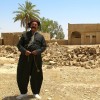
Where a Moustache Can Mean Life or Death
"The soul needs to reincarnate a thousand times before becoming one with god," says Rajab Assy Karim from Ali Saray, 190 kilometres north of Baghdad. Iraq is full of "shortcuts" to the ultimate, and several seem to pass through this tiny desert village.
Obama Increasingly Isolated on Syria Military Action
With a week of intense lobbying behind him, U.S. President Barack Obama looks increasingly beleaguered - both at home and abroad - in his effort to rally support for a military strike against Syria to punish its government for its alleged Aug. 21 chemical-weapons attack outside Damascus.
U.N. Urges Culture of Peace amid Rising Sectarian Strife
Against the backdrop of widespread sectarian violence in Iraq, Lebanon, Egypt and Syria - and rising xenophobia and Islamophobia in Western Europe and the United States - the United Nations hosted its second high-level forum on the "culture of peace".OP-ED: Syria Has Become Iran’s Vietnam – Let’s Help It Escape
As if the Iran nuclear issue was not already difficult enough, it became even more complicated when Bashar al-Assad unleashed his chemical weapons across Damascus suburbs last month. Suddenly, the Syria issue is overshadowing all other factors concerning Iran.« Previous Page — Next Page »


The Week with IPS

NEXT STOP - SDGs
Tracking global progress towards a sustainable world
Tracking global progress towards a sustainable world
