Languages
Friday, June 26, 2026



News and Views from the Global South
Middle East & North Africa

Mystery Attackers Hit Sinai
A period of more than three months since former president Mohamed Morsi's ouster by Egypt's powerful military establishment have been marked by almost daily attacks on Egyptian security personnel, especially in the restive Sinai Peninsula. The identity of the attackers remains a mystery.
Israeli Claim of Iranian ICBM Exploits Biased U.S. Intel
In an effort to provoke any possible opposition in U.S. political circles to a nuclear deal with Iran, Israeli Prime Minister Benjamin Netanyahu has returned to exploiting an old claim that Iran is building intercontinental ballistic missiles that could hit the United States.
U.S. Suspends More Military Aid to Egypt, Arousing Scepticism
The administration of President Barack Obama announced Wednesday it was freezing hundreds of millions of dollars in aid to the Egyptian military pending "credible progress" toward a return to democratic rule.
Syrians Struggle with a Life of Sorts
Free Syrian Army fighters stand guard over the state cable company premises to avoid looting in Khan Al-Assal, a district 14 kilometres west of Aleppo. Much of the rest of the place seems a nightmarish ghost town.
Neoconservatives Despair Over U.S.-Iran Diplomacy
A week that began with a blistering denunciation by Israeli Prime Minister Binyamin Netanyahu of Iranian duplicity ended with diminished prospects for Israel to take direct action to address Iran's nuclear capabilities.
Egyptians Clash on Streets and over Constitution
Bloody clashes erupted in Cairo on Sunday Oct. 6 between supporters of the military and followers of ousted elected president Mohamed Morsi as the latter protested against the July military coup that deposed their leader. But as clashes occurred on the streets, a clash of ideologies has been occurring on the country’s 50-member committee as it amends Egypt’s constitution.OP-ED: Bahrain Repression Continues Amid Sham Trials and Imprisonment
The lengthy prison sentences handed down to 50 Shia activists last week and the refusal of Bahraini courts to hear their allegations of torture once again confirm the regime’s continued repression of the opposition.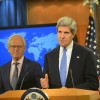
Hope and Pessimism as Israelis and Palestinians Resume Talks
Israeli and Palestinian negotiators returned to the negotiating table on Thursday, ready to put claims by the United States that it will engage more forcefully in the negotiating process to the test.OP-ED: Saudis Should Welcome a U.S. Move Toward Iran
Shortly after President Obama’s startling telephone conversation with Iran’s new president, Hassan Rouhani, a Saudi Arabian journalist wrote that “The phone call between Obama and Rouhani shocked the Gulf states, Jordan, Turkey, Israel, and other countries.” No matter which president initiated the call, he wrote, “What is important to know is what stands behind the conversation and how deep the ties are between America and Iran.”
Egyptian Revolution Brings an IVF Rush
The young couple inspecting Dr Bassem Elhelw’s Cairo Fertility Clinic knew what they wanted from him: a baby boy. They also knew they wanted the child by in vitro fertilisation (IVF).
Netanyahu Stakes Out Maximalist Position on Iran
Like the proverbial skunk at the garden party, Israeli Prime Minister Benjamin Netanyahu used his turn at the podium at the U.N. General Assembly Tuesday to pour scorn on Iran’s new president, 96 hours after a smiling Hassan Rouhani departed New York after a momentous four-day stay that raised unprecedented hopes for détente with the United States and the West.
Egypt Paying a Price for ‘Cheap’ Labour
Egyptian workers who mobilised during the 2011 uprising that toppled the regime of Hosni Mubarak have used the past two and a half years to organise into unions, press for labour reforms, and strike for better wages and working conditions.
‘Interrogating’ an Assad Militiaman
The prisoner is led, handcuffed and dirty, into what until last year served as a school. “A shabiha,” said one of the anti-regime rebels in the room. “We found him two days ago at a checkpoint.”
More Egyptian Unrest Rises in Social Media
Gory social media images that fueled the global Jihadist influx into Syria 18 months ago are back. But this time the outpouring is coming from Egypt.OP-ED: The U.S.-Iran Wrestling Match
From Tehran’s perspective, the current negotiations between Iran and the United States may be best described as a wrestling match.
Mideast and Africa Still Holdouts on Women’s Rights
Gender equality around the world has increased dramatically over the past half-century even though the vast majority of countries continue to restrict women’s economic development in at least one way, the World Bank reports this week.
Southern Libya Awaits Another Spring
“The government doesn’t care about us because we are from the south,” Mohamed Salah Lichekh, head of the Oubari local council in southern Libya, told IPS, expressing the majority sentiment in this part of the country.
Cracks Widen Among Syrian Rebels
Scorching flames from a makeshift oil refinery sting eyes and the fumes choke throats near the top of a hill in northwestern Syria, where Free Syrian Army (FSA) fighters gather for fuel, coffee and phone calls as darkness falls.
U.S., Iran Trade Cautious Overtures at U.N.
While the U.S. and Iranian heads of state have yet to meet, the 68th session of the United Nations General Assembly may mark a new era between the two countries.
Speculation over Iran-U.S. Détente Continues Apace
On the eve of a possible – if seemingly accidental – encounter between U.S. President Barack Obama and Iranian President Hassan Rouhani in the corridors of the U.N. Secretariat building Tuesday, speculation over the possibility of détente between Washington and Tehran has become rampant.Israel Silent on Chemical Weapons
“Does Israel have chemical weapons too?” is the question posed by the U.S. publication Foreign Policy, citing a newly uncovered CIA document from 1983 which alleged that Israel is likely to have developed such weapons.« Previous Page — Next Page »


The Week with IPS

NEXT STOP - SDGs
Tracking global progress towards a sustainable world
Tracking global progress towards a sustainable world
