Languages
Saturday, October 17, 2026



News and Views from the Global South
Migration & Refugees

Supporting Migrants and Remittances as COVID-19 Rages On
Just as COVID-19 has disproportionately impacted some communities more than others, globally, the virus has had an oversized negative impact on migrant workers.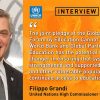
Interview with the UN High Commissioner for Refugees, Filippo Grandi
Education Cannot Wait: As the UN agency mandated by the UN General Assembly to provide international protection and seek solutions for refugees, could you please elaborate on the overall importance of education for refugee children as a component of protection and solutions?
A New Social Contract Needed for Children on the Move
Forced to flee wars and disasters, sometimes without family, and struggling to survive in the worst of circumstances, children on the move have long led very precarious lives. Be they refugees, internally displaced or asylum seekers, vulnerable and marginalised, they lose years of childhood. They are exposed to the worst forms of abuse, such as commercial exploitation and violence. Today, their situation is dire as they remain at the very bottom of the list to receive emergency measures to protect them from the impacts of COVID-19.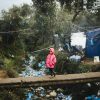
Seeking Asylum? Not Here!
Although the right to seek asylum is recognized nearly universally, governments across the globe are increasingly declaring, “Not Here!”. Those governments view the large and growing numbers of men, women and children seeking asylum in their countries as serious threats to their native populations, ways of life and cultures.
Nepal Welcomes Qatar Labour Reform
Even as Nepali workers stranded overseas face confusion and uncertainty during the Covid-19 crisis, labour reforms in Qatar – including an increase in the minimum wage announced in Doha on Sunday — may have lasting implications for migrants there.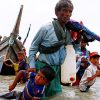
Rohingya repatriation: Myanmar doing little while Bangladesh facing challenges
When Bangladesh continues to bear the brunt of sheltering more than a million Rohingyas, Myanmar is doing little for their repatriation amid the silence of global powers though the Southeast Asian country faces a genocide case, experts and officials said.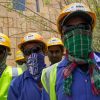
Defying Predictions, Nepal’s Remittances Still High
Despite dire predictions about a drastic drop in remittances that Nepal gets from its workers abroad due to the Covid-19 induced economic downturn, money transfers have hit Rs875 billion which is only 0.5% less than the preceding year.
The Invisibles: Inhumane Conditions of Italy’s Migrant Farmworkers
 Over 200,000 migrant laborers, mostly from Africa, work in Italy’s fields. After being exploited for years, the coronavirus global pandemic made these workers “essential” overnight — but without labor rights or even access to basic sanitation, these farmworkers are living and working in conditions that have been described as modern slavery. Union leader Aboubakar Soumahoro has been documenting these inhumane conditions and is now helping the workers organize to demand real and lasting change.
I Came to Work in Qatar to Pursue My Dreams, But My Life is a Nightmare
Like thousands of migrant workers from Africa and Asia, I am finally in the land of my dreams, Qatar. I knew working here would be tough, but I thought I would be able to regularly send money home to my family and live decently.
No More Lost Generations: Global Fund Provides Education for Children in Crisis
15-year-old Humaira* sits on the mud floor of her hut in Ukhiya camp, Cox's Bazar, listening as the rain beats down on the tarpaulin roof.
COVID-19 Sharpens Caste Discrimination in Nepal
Across Nepal, it is the already under-served and vulnerable who have been affected by the prolonged lockdowns. But it is the Dalit returnees from India who have tested positive and their families who face double discrimination.
Keeping Education within the Grasp of Refugee Children
“Not being able to go to school is not something I’d wish on any child in this world,” said 21-year-old Nujeen Mustafa, a young advocate for refugees who fled the Syrian war with her sister. Mustafa, who now lives in Germany, is also the United Nations Human Rights Council (UNHCR) high profile supporter.
Impending Food Crisis in Lebanon will Largely Affect Migrant Workers
Migrant workers and refugees in Lebanon will “inevitably” suffer the most as food insecurity threatens the nation following last week’s blast.
Rohingya Women Take a Seat at the Table & Share Stories in a Growing Rights Movement
Rohingya women are coming together to feature their own work, plight and stories in mainstream conversations about their community — a space they say they’ve been left out of. “If we think of revolutions or liberty or think of any ways to liberate ourselves from the shackle of suffering and being dubbed as 'the most persecuted minority on earth', women have to be part of it,” Yasmin Ullah, president of the Rohingya Human Rights Network, told IPS.
Marking 75 Years of the Charter of the United Nations
The Charter of the United Nations has been a constant presence in my life. My awareness of it started with the usual brief introduction to the basics of the United Nations as an organization that many young people receive in school. Later, as my political awareness took shape against the backdrop of military rule in Portugal and my country’s status as a colonial power, the Charter’s calls for self-determination and other freedoms registered with urgency. During the time I spent as a volunteer in the poor neighbourhoods of Lisbon, the Charter’s vision of social justice was equally resonant. In subsequent service as a parliamentarian and then as Prime Minister, I was privileged to have an opportunity to advance not only national progress but one of the Charter’s other main objectives: international cooperation. Across a decade as High Commissioner for Refugees and now in my current role, the Charter’s power inspires me onward every day in serving “we the peoples”, including the most vulnerable members of the human family, who have a special claim on that landmark document’s provisions and protections.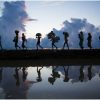
The Great Migration Clash
The world is in the midst of the Great Migration Clash, a bitter struggle between those who “want out” of their countries and those who want others to “keep out” of their countries. More than a billion people would like to move permanently to another country and no less than a billion people say fewer or no immigrants should be allowed to move into their countries.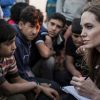
UNESCO, UNHCR & EDUCATION CANNOT WAIT Call for the Inclusion of Refugees in the Post-Covid-19 Education Effort
We must not leave young refugees by the wayside, urged UNESCO, the Office of the United Nations High Commissioner for Refugees (UNHCR) and Education Cannot Wait as they urged more support in favour of young refugees’ education during an online debate today, moderated by UNHCR Special Envoy Angelina Jolie, on how best to provide them with improved learning during and after the pandemic.
Lebanese Financial Crisis Validates Importance of Abolishing ‘Kafala’
They were promised the world but ended up in a Lebanese household. This is the story of many domestic workers in Lebanon. With a 70-year-old sponsor system still in place, domestic workers are tied to their employers with little or no basic rights. The ‘Kafala’ system is the major problem behind what we have been seeing in Beirut in the last months.
In India, Climate Change is Increasing Refugees & Human Trafficking
In India the impacts of climate change induced extreme weather events on the lives and livelihood of people, particularly belonging to the poor and vulnerable sections of the society, are increasing alarmingly with each passing year.
Racism, Shitholes and Re-election
Over the course of his presidency, US President Donald Trump’s racism has become more evident with more leaks of his private remarks, which he has been generally quick to deny, qualify and explain away.
The price of a migrant worker’s dream
May 27, 2020 marked another dark chapter in the history of global migration. On that day, 26 sons of Bangladesh were brutally murdered in Libya. The crime for which they paid this ultimate price was that they dared to dream! They dreamt of having a better life. They had the audacity to reject the rigid class-based society of theirs, which offers little scope to make an upward transition in life. Had fate been kind to them, they would have made it to Italy, or Spain, or some other European nation. They gambled with their life and lost the game. How long can such gambling continue?« Previous Page — Next Page »





Human migration is a matter of global concern. Flows of migrants and refugees influence and change the social, economic and political dynamics of their destinations -- and the places they have left behind. IPS covers crucial issues such as migrant and refugee rights, irregular or undocumented migration, human trafficking, remittances, displaced persons and forced labour. And the positive: in many cases migration creates a new dialogue among civilisations. Migrants themselves become the building blocks of bridges connecting different cultures.

The Week with IPS

NEXT STOP - SDGs
Tracking global progress towards a sustainable world
Tracking global progress towards a sustainable world
