Languages
Wednesday, November 11, 2026



News and Views from the Global South
Migration & Refugees
UK, France Agree to New Measures to Tackle Migration Crisis
In response to the rapidly growing numbers of refugees and asylum seekers flooding European shores, France and the UK have announced new measures to crack down on English Channel crossings.
Opinion: Mexico’s Gruesome War Against Migrants
“Pray for me.” Those are the last words Eva Nohemi Hernández Murillo told her mother, Elida Yolanda, through a patchy phone line on the evening of Aug. 22, 2010.
U.N. Remains Helpless Watching Rising Deaths of Children in War Zones
The rising death toll of civilians, specifically women and children, in ongoing military conflicts is generating strong messages of condemnation from international institutions and human rights organisations – with the United Nations remaining helpless as killings keep multiplying.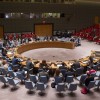
U.N. Official Says Human Suffering in Yemen ‘Almost Incomprehensible’
With a staggering four in five Yemenis now in need of immediate humanitarian aid, 1.5 million people displaced and a death toll that has surpassed 4,000 in just five months, a United Nations official told the Security Council Wednesday that the scale of human suffering is “almost incomprehensible”.
Global Web Movements Lift Democratic Decision-Making to a New Level
In recent years, online activism platforms have multiplied to the degree that they are starting to have a significant real world impact in areas like environmental protection, human rights and public policy.
Opinion: The Writing on the Western Wall
The writing on the Western Wall is evident to most Israelis: “דמוגרפיה היא גורל” or “demography is destiny”. Those unwilling to acknowledge the prophetic message are either deceiving themselves or simply ignoring it in order to avoid facing the implications of demography for Israel’s future.
Humanitarian Response in Afghanistan Falters in the Face of Intensifying Conflict
As the number of civilians impacted by the intensifying conflict in Afghanistan rises along with the fighting, humanitarian agencies are struggling to meet the needs of the wounded, hungry and displaced.
U.N. Marks Humanitarian Day Battling Its Worst Refugee Crisis
The United Nations is commemorating World Humanitarian Day with “inspiring” human interest stories of survival – even as the world body describes the current refugee crisis as the worst for almost a quarter of a century.
Prospects for Peace in South Sudan Fading Fast
Dismissing efforts, including those of U.S. President Barack Obama, to sign off on a peace agreement and end the 20-month-long civil war in the world’s newest nation, South Sudanese President Salva Kiir declined to sign, saying he needed more time for consultations.
Tiny Island Nation Pleads for Global Moratorium on New Coal Mines
The tiny island of Kiribati in the Central Pacific, with a population of about 103,000, has long been identified as one of the U.N. member states threatened with physical extinction due to sea-level rise triggered largely by climate change.
Half a Million U.S. Women and Girls at Risk of Genital Cutting
Jaha Dukureh knows firsthand the barbaric effects of undergoing female genital mutilation/cutting (FGM/C). Now a resident of the United States, she was mutilated as a baby in the Gambia in West Africa. Her sister bled to death after enduring the same procedure.
Pakistan One of the World’s First Safe Havens for Refugees
The United Nations has declared that 2015 is already “the deadliest year” for millions of migrants and asylum seekers fleeing war and persecution in their countries.
Partnerships Critical to the SDGs, Reducing Inequality
Last week, South Korea's Permanent Representative Oh Joon was inaugurated as the new president of the U.N. Economic and Social Council (ECOSOC). As such, he will have a key role in setting the course for implementing the ambitious Post-2015 Sustainable Development Goals (SDGs) that will be adopted at the summit of world leaders in September.
U.N. Panel Spotlights Plight of Refugees
“Let us remember that behind every story, every figure, every number, there is a person - a girl, a boy, a parent, a family,” Anne Christine Eriksson, Acting Director of the U.N. Refugee Agency (UNHCR), said at a panel discussion at the U.N. on Thursday.
Women, Peace and Security Agenda Still Hitting Glass Ceiling
This October will mark the 15th anniversary of the adoption of U.N. Security Council Resolution 1325. The landmark resolution on Women, Peace and Security (WPS) recognises not only the disproportionate impact armed conflict has on women, but also the lack of women’s involvement in conflict resolution and peace-making.
Opinion: European Federalism and Missed Opportunities
"A serious political and social crisis will sweep through the euro countries if they do not decide to strengthen the integration of their economies. The euro zone crisis did not begin with the Greek crisis, but was manifested much earlier, when a monetary union was created without economic and fiscal union in the context of a financial sector drugged on debt and speculation.”
Clean Water Another Victim of Syria’s War
Caught in the grips of a summer heat-wave, in a season that is seeing record-high temperatures worldwide, residents of the war-torn city of Aleppo in northern Syria are facing off against yet another enemy: thirst.
Governments Playing Political Ping-Pong with China’s Uyghurs
Two reports released in quick succession by the international rights group Human Rights Watch have highlighted the plight of China’s minority Uyghur population and shed light on their continuing struggle to find a safe haven elsewhere in the region.
Children Increasingly Becoming the Spoils of War
Whether in Palestine, Ukraine or Somalia, wars result in millions of children threatened by the brutality of armed conflict.
Pledges for Humanitarian Aid Fall Far Short of Deliveries
When international donors pledge millions of dollars either for post-conflict reconstruction or for humanitarian aid, deliveries are rarely on schedule: they are either late, fall far below expectations or not delivered at all.
Syrians: ‘Biggest Refugee Population From a Single Conflict in a Generation’
Barely 10 months ago, the United Nations Refugee Agency (UNHCR) said the refugee population from Syria had reached the three million mark. Today, the latest data from the field show that the number has passed four million.« Previous Page — Next Page »





Human migration is a matter of global concern. Flows of migrants and refugees influence and change the social, economic and political dynamics of their destinations -- and the places they have left behind. IPS covers crucial issues such as migrant and refugee rights, irregular or undocumented migration, human trafficking, remittances, displaced persons and forced labour. And the positive: in many cases migration creates a new dialogue among civilisations. Migrants themselves become the building blocks of bridges connecting different cultures.

The Week with IPS

NEXT STOP - SDGs
Tracking global progress towards a sustainable world
Tracking global progress towards a sustainable world
