Languages
Thursday, October 8, 2026



News and Views from the Global South
Natural Resources

Economic Growth is the Wrong Metric for Our Time
As the United States lurches toward isolationism and authoritarianism, its political problems are now bleeding into pocketbook anxieties that Trump's policies will torpedo economic growth, both domestically and globally.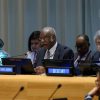
Human Life Hinges on the Preservation of Biological Diversity
Since 2000, the United Nations (UN) recognizes May 22 as the International Day for Biological Diversity, in hopes of promoting international cooperation and conversation surrounding biodiversity issues. Through the 2025 theme; Harmony With Nature and Sustainable Development, the UN seeks to increase public awareness around biodiversity loss and promote progress in the Sustainable Development Goals (SDGs).
UN Ocean Conference Must Inspire Global Ambition
The United Nations Ocean Conference (UNOC) takes place every three years and in just a few weeks, the international community will gather in Nice, France, at a time when the International Science Council has called for the world to address the new reality of a disrupted Earth system.
Seafood Without Transparency is a Recipe for Disaster
Seafood is a staple in my house – fish tacos, paella, sushi. But no matter how good it tastes, I can’t help but wonder: was my fish caught responsibly? Or did something go horribly wrong before it ever reached my plate?
How Mangroves Save Lives, Livelihoods of Bangladesh Coastal Communities
Golenur Begum has faced 12 cyclones in her life. As a child, she witnessed her father’s house destroyed, and as an adult, she watched her home smashed. Saltwater brought by the tidal surges that accompanied the cyclones wrecked their farms and livelihoods. And with climate change, these impacts are becoming more intense and frequent.
Mask Off – Recapping the 2025 World Bank Land Conference
Last week, at its annual Land Conference in Washington D.C., (May 5-8), the World Bank showed allegiance to the new US administration by dropping the pretense of promoting land reform for climate action and confirming that its land agenda is about boosting corporate profits.
Amidst Choking Garbage, Locals Join Hands to Build a Zero-Waste Bali
It was Christmas Eve last year when visitors across several tourism hotspots in Bali woke up to a ghastly scene they hadn’t expected: layers of cans, bags, bottles, and driftwood covering their favorite sandy beaches, washed up by hours of rain and high tide. So bad was the situation that from Kuta to Legian and Seminyak to Jimbaran—none of the island’s picturesque beaches was clean enough to attract the visitors for a swim.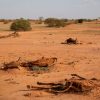
A Natural Disaster that Has Affected More People Worldwide Than Any Other
Here’s a question: Over the past 40 years, what natural disaster has affected more people around the globe than any other?
Former Energy Ministers from Saint Lucia and Uruguay Named REN21 Renewable Energy Champions
The Renewable Energy Policy Network for the 21st Century (REN21), a global network that advances renewable energy through collaboration and knowledge sharing, has named Dr James Fletcher of Saint Lucia and Dr Ramón Méndez Galain of Uruguay as its first Renewable Energy Champions.
Transitioning to a Circular Economy: The Future We Cannot Afford to Delay
From environmental degradation to biodiversity loss and mounting waste, we are facing the dire consequences of a reckless economic model that extracts, consumes, and discards. But there is an urgent alternative—one that is not just possible, but essential.
From Pledges to Action: EU Ocean Leadership on the Line
If one so wished, it would be entirely possible to spend a lifetime travelling from one international environmental conference to the next, without ever returning home. But the relentless pace of these meetings does not always translate into equally rapid action.
Indispensable—Native Hawaiian Elder Says of Indigenous Ocean Management Systems
Indigenous people play a vital role in ocean protection due to their deep-rooted connection to the marine environment and their traditional knowledge of sustainable resource management. They often possess centuries-old practices and stewardship ethics that prioritize ecological balance and community well-being.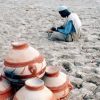
Floods and Droughts are Two Sides of the Same Crisis
Water emergencies are deeply personal to us. Coming from Southeast Asia and southern Africa—two regions that struggle with water challenges—we have witnessed firsthand how water defines the fate of communities and nations.
Korea’s Troubled Waters: Traditional Women Divers Protecting an Ocean in Crisis
Ahead of the 10th Our Ocean Conference, with the theme "Our Ocean, Our Action," comes a global call to protect the world's oceans.
Chel Snakehead: A Fish That Time Forgot, Rediscovered
The Chel Snakehead fish, thought to be extinct, has made a dramatic comeback to the eastern Himalayan ecosystem after more than 85 years of absence near its source river in India.
Four Rare Snow Leopards Spotted Together on Pakistan’s Northern Peaks
In a remarkable conservation achievement, four rare and elusive snow leopards have been spotted together in the rugged peaks of northern Pakistan, highlighting the success of the ongoing global efforts aimed at protecting this critically endangered species and preserving its fragile habitat.
The ‘Plastic Man’: Turning Trash into Treasure
In a quiet corner of Medina Gounass, on the outskirts of Dakar, Senegal, one man has taken it upon himself to breathe new life into a place many had abandoned.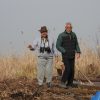
While India’s RAMSAR Sites Tally Rises, Wetlands Remain Endangered
Late in February, India’s noted ornithologist and conservationist, Asad Rahmani, wrote a letter to a wildlife warden in north India expressing his satisfaction about the availability of water in four important wetlands in Kashmir, where migratory birds from central Asia and Europe arrive annually for wintering.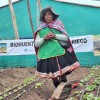
Andean Women Farmers in Peru Face Climate Crisis with Green Practices
"Up here in the highlands, there’s a lot of frost, and everything seems bleak. But I’m so happy since I got my greenhouse and started growing vegetables in a healthy way. I feel like we’re overcoming the challenges of the weather," Anacleta Mamani, a Quechua farmer from the community of Poques (about an hour’s drive from Cusco, the former imperial capital of Peru), told IPS.
CGIAR Gender Accelerator: A Tool to Advance Gender Equality Research in Agri-Food Systems
To advance the participation of women, the youth, and minority communities in the agricultural sector, measures must be taken to recognize and break down the barriers that hold them back. Experts in the agricultural sector agree that even as they constitute a significant percentage of the agricultural workforce, women face persistent challenges. The picture that emerges is a lack of due recognition of their presence and their challenges, such as limited access to resources and knowledge.
Want To Fix the World, Ubuntu (Humanity to Others) Can Help
The world needs an urgent fix and humanity could just be it.« Previous Page — Next Page »





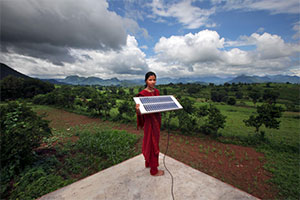 Bringing clean energy to rural India. Credit: Abbie Trayler-Smith / Panos Pictures / Department for International Development
Large reserves of oil, gas and minerals in developing countries generate opulent revenues. They could be used to stimulate economic growth and reduce poverty, but often result in environmental destruction and conflict, benefiting large companies and corrupt governments. Furthermore, competition over natural resources often manifests through geopolitical conflict. For example, before the US-Iraq war, Iraq’s domestic oil industry was nationalized. With US aggression came weakened Iraqi institutions and foreign intervention, thus eventually leading to the privatization of Iraqi oil, leaving the industry now largely dominated by Western companies. As another example, China’s rising investments within the lithium sector in South America are increasing the US-China rivalry across the Western Hemisphere. Notably, Bolivia has the largest reserves of lithium in the world, and the nation’s state-owned lithium extraction firm recently signed a contract with China’s CBC Consortium, while rejecting the entry of Western firms into the nation. In Bolivia’s case, rising Chinese investment in the nation’s lithium sector also raises concerns about environmental sustainability and the sociopolitical rights of Indigenous communities. More broadly, Sub-Saharan Africa holds nearly 30% of global reserves of critical minerals required for low-carbon technologies. Despite this, the region attracts less than 10% of global exploration investment, depicting a critical barrier to both the clean energy transitions and Sub-Saharan Africa’s economic development. Furthermore, resource wealth continues to fuel conflict like Sudan’s civil war, which has led to 9.1 million internally displaced people and is intensely connected to competition over gold, water, and agricultural land. IPS covers news about major oil, gas, and mining projects, their effects on the environment and local communities, and the ideas and actions of the interest groups involved.

The Week with IPS

NEXT STOP - SDGs
Tracking global progress towards a sustainable world
Tracking global progress towards a sustainable world
