Languages
Wednesday, November 18, 2026



News and Views from the Global South
Natural Resources
ANGOLA: Drilling Ever Deeper, Hoping for the Best
While BP struggles to contain an oil spill that U.S. government estimates indicate is now the largest ever in the Gulf of Mexico, questions are being asked about how well prepared Africa's oil-producing countries are for a similar incident.
Gulf Spill Galvanises Activist Community
With the U.S .government and oil giant British Petroleum under fire for their handling of the more than two-month-old Gulf Coast oil spill disaster, environmental and community activists across the country are taking matters into their own hands.Free Ride for Oil and Coal Industry May Be Over
Every day, governments give away an estimated two billion dollars of taxpayer money to the fossil fuel industry. This unmatched largesse to a highly profitable sector by countries verging on bankruptcy or unable to feed large numbers of their own people is "complete madness", according to many experts.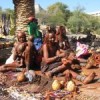
TRADE-SOUTHERN AFRICA: The End of EPA Acrimony May Be in Sight
Southern African trade ministers have pledged to sign a significantly scaled down economic partnership agreement (EPA) with the European Union (EU) before the end of 2010. Could this be the conclusion to years of divisive negotiations?Doubts Over Zimbabwe Diamonds
Three days of tense deliberations by members of the Kimberley Process have failed to reach consensus on whether diamonds from Zimbabwe's Marange fields should be certified as conflict-free. Zimbabwe has already announced that it intends to resume exports of the precious stones immediately.ZIMBABWE: ‘We Too Want to be Wealthy’
Saddled with debts of more than $7 billion, Zimbabwe is anxious to resume diamond exports, suspended in May amidst international condemnation of alleged human rights violations in the Marange diamond fields. But the treatment of people living in the fields themselves suggests the country's record on rights bears further examination.Gulf Spill Could Produce Wealth of Scientific Knowledge
Eventually, the oil spewing from the ruptured well of BP's Deepwater Horizon offshore rig will stop. And some time after that the bulk of the mess will be cleaned up. By then, though, the amount of damage done to the Gulf of Mexico may be catastrophic - but will we know just how catastrophic?
AFRICA: Cautionary Notes Sounded as South-South Trade Booms
An Indian textile engineer and entrepreneur called Raj Rajendran visited Rwanda in 1999. He was tasked to close down an unviable textile factory following the civil war. But he discovered propitious agro-climatic conditions, particularly volcanic soil -- ideal for the rearing of silk worms to produce raw silk.Obama Vows Clean Energy Push, Green Groups Want Details
Despite the pleas of some conservative politicians that parallels should not be drawn between the oil spreading over the Gulf of Mexico and the need to transition out of a reliance on fossil fuels, U.S. President Barack Obama made it clear Tuesday night that he sees the race against the spreading oil as inherently connected to the race against a changing climate.
Ixtoc Disaster Holds Clues to Evolution of an Oil Spill
On a spring day in the Gulf of Mexico, a pipe issuing from the sea floor ruptured, sending an explosion rippling up to the drilling platform above and spewing oil into the surrounding waters. Experts scrambled to seal off the ever-increasing mass of oil by capping the pipe, clogging it or covering it. Nothing worked.SUDAN: Oil Consortium Behind War Crimes – Aid Agencies
The entry of a Swedish-led oil consortium into southern Sudan in 1997 triggered civil war and crimes against humanity, claims a European coalition of aid agencies.Oil Spill Comes at Worst Time for Endangered Bluefin Tuna
With their population at less than 20 percent of what it was four decades ago, bluefin tuna in the western Atlantic need a lot of things to go just right if they are going to survive as a population. Now, just as they are returning to the Gulf of Mexico to spawn, they are likely to find one of their key breeding grounds slicked-over with oil.INDIA: 25 Years On, Bhopal Tragedy Victims Still Crying for Justice
Twenty-five years after an industrial gas leak from the factory of a U.S. multinational firm in this ancient Indian city killed thousands and impaired nearly half a million, victims are still crying for justice.
Fears Grow over Oil Spill’s Long-Term Effects on Food Chain
As oil continues gushing from the ocean floor into the Gulf of Mexico, with no sign of stopping until a new well is finished this August, scientists, environmentalists and local residents are beginning to reckon with the reality of a massive annihilation of sea creatures and wildlife.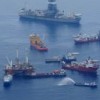
More Deepwater Disasters on the Horizon?
Despite a federal moratorium on offshore oil drilling, new permits and controversial environmental waivers for oil rigs continue to be granted, sparking criticism from policymakers and environmentalists.PERU: Native Peoples’ Right to Consultation on Land Use Enshrined in Law
Indigenous peoples in Peru finally have a law that obliges the state to consult them about any project or provision that affects their territory or communities. But it will be difficult to implement, as the body charged with this task is in need of reforms, and additional legislation is needed before it can be fully enforced.
Q&A: “Militarisation of Zimbabwe’s Diamond Fields Continues”
Almost a year after a review mission of the Kimberley Process Certification Scheme (KPCS) found Zimbabwe guilty of "serious non-compliance" with the scheme’s minimum criteria on conflict diamonds, the militarisation of the southern African country’s diamond mining operations continues.BOLIVIA: Morales Caught Between Gas Revenues and Indigenous Demands
The Bolivian government negotiated with native groups to head off major marches and roadblocks aimed at demanding protection of indigenous land rights and conservation of the environment in their territories.
Q&A: Can Democracy Survive the “Oil Curse” in Africa?
Africa’s economic boom, driven by oil, has undermined the idea that democracy is a prerequisite for economic development on the continent.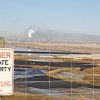
Oil Sands Riskier than Gulf Spill, Say Investor Groups
As the oil leaking into the Gulf of Mexico destroys habitat and livelihoods, the extraction of oil from Canadian oil sands deposits is having a similar impact on fragile ecosystems and communities deep in the North American interior.
ECONOMY: Africa Has Less Say After Changes in World Bank Voting
The World Bank has described its recent increase of 3.13 percent in the voting power of emerging economies as a reform "to enhance voice and participation of developing and transition countries". But the shift has actually decreased a third of African countries’ share of votes.« Previous Page — Next Page »


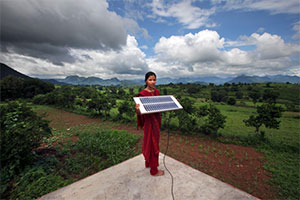 Bringing clean energy to rural India. Credit: Abbie Trayler-Smith / Panos Pictures / Department for International Development
Large reserves of oil, gas and minerals in developing countries generate opulent revenues. They could be used to stimulate economic growth and reduce poverty, but often result in environmental destruction and conflict, benefiting large companies and corrupt governments. Furthermore, competition over natural resources often manifests through geopolitical conflict. For example, before the US-Iraq war, Iraq’s domestic oil industry was nationalized. With US aggression came weakened Iraqi institutions and foreign intervention, thus eventually leading to the privatization of Iraqi oil, leaving the industry now largely dominated by Western companies. As another example, China’s rising investments within the lithium sector in South America are increasing the US-China rivalry across the Western Hemisphere. Notably, Bolivia has the largest reserves of lithium in the world, and the nation’s state-owned lithium extraction firm recently signed a contract with China’s CBC Consortium, while rejecting the entry of Western firms into the nation. In Bolivia’s case, rising Chinese investment in the nation’s lithium sector also raises concerns about environmental sustainability and the sociopolitical rights of Indigenous communities. More broadly, Sub-Saharan Africa holds nearly 30% of global reserves of critical minerals required for low-carbon technologies. Despite this, the region attracts less than 10% of global exploration investment, depicting a critical barrier to both the clean energy transitions and Sub-Saharan Africa’s economic development. Furthermore, resource wealth continues to fuel conflict like Sudan’s civil war, which has led to 9.1 million internally displaced people and is intensely connected to competition over gold, water, and agricultural land. IPS covers news about major oil, gas, and mining projects, their effects on the environment and local communities, and the ideas and actions of the interest groups involved.

The Week with IPS

NEXT STOP - SDGs
Tracking global progress towards a sustainable world
Tracking global progress towards a sustainable world
