Languages
Thursday, November 12, 2026



News and Views from the Global South
Human Rights
World’s Nuclear Arms on High Operational Alert — & Ready to Strike
The world’s nine nuclear armed states have downsized their military arsenals, but made up for their loss by increasing the number of weapons on high operational alert, according to a new report from the Stockholm International Peace Research Institute (SIPRI).
Britain Must Fix Its Anti-Muslim Sentiment Problem
In 2015, When Rabina Khan was running as an independent candidate in the Tower Hamlets’ mayoral elections in London, a male voter asked her what colour her hair was under her veil. Rabina replied and said, it was pink. This small interaction is what got Rabina inspired to write her book, My Hair is Pink Under This Veil.World Day Against Child Labour
The facts:- The progress to end child labour has stalled for the first time in 20 years, reversing the previous downward trend that saw child labour fall by 94 million between 2000 and 2016.

The Real Price of Marriage in South Sudan
August of this year will mark the one-year anniversary of the end of South Sudan’s civil war, yet recent surges of violence suggest that peace is far from being realized. These attacks by armed groups include instances of sexual violence against women and girls.
Global Leaders to Prime Minister Abiy Ahmed: Stop the Atrocities in Tigray
Seven highly respected leaders in conflict resolution have issued a call for Ethiopian Prime Minister Abiy Ahmed to take immediate action to bring a halt to the atrocities being committed in the Tigray region of his nation. The letter urges the Prime Minister to implement seven steps to resolve the crisis.
A Staggering 160 Million Are Victims of Child Labour
Among the many daunting issues leaders of the G7 will have to discuss in their upcoming summit in idyllic Cornwall on June 11-13, child labour won’t be on the official agenda.
Preventing Hunger While Building Peace
Acute hunger is expected to soar in over 20 countries in the next few months, warns a recent report on global “hunger hotspots” from the UN’s Food and Agriculture Organization (FAO) and the World Food Programme (WFP). An estimated 34 million people are “one step away from starvation”, pushed to the brink by climate shocks, conflict, and the Covid-19 pandemic.
Global Progress Against Child Labour “Ground to a Halt” – UN Report
Malleshwar Rao, 27, spent his early years as a child labourer in the southern Indian city of Hyderabad. Soon after finishing school at a local ashram, where the children of poor parents, sex workers and orphans studied, the 9-year-old would rush to a local construction site to join his parents who would be toiling in the harsh tropical sun to construct buildings as daily wage earners. The supervisor would assign Rao simpler tasks and his extra income would help his parents feed him and his younger brother.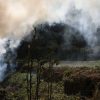
From Climate Change to Covid, Are We Ready to Deal with Disasters?
In the last 20 years, disasters affected over 4 billion people. At global level we witness on average one sweeping disaster a day, the majority of which are floods and storms. From the Covid-19 pandemic to climate change, calamities are taking new shapes and sizes, infiltrating every dimension of society. From the emotional to the political, how do we deal with disasters? How can we create a whole-of-society approach to disaster risk reduction?
Nations Pledge to Tackle Inequalities as part of New Targets to end HIV/AIDS by 2030
World leaders, those on the frontlines of the AIDS response, civil society, academics and youth have agreed that there is no way to end AIDS as a public health threat by 2030 without tackling persistent inequalities among marginalised groups.
Nigeria’s Twitter Ban Is Part of a Larger Attack on Civil Society
Four years ago, Omoregie* and his friends were arrested without cause and taken into custody. When they got to the station, Omoregie watched as the police began to beat his friends. Afraid, he began to discreetly tweet about the attacks as they took place.
Scream of the World: Volcanos and Earthquakes
In February the killing of the Italian ambassador, Luca Attanasio, in the vicinity of the Virunga National Park in eastern Democratic Republic of the Congo, did for a short while put the global spotlight on this troubled area, where warfare, poverty and general insecurity generate immense human suffering.
The 21st Century Nuclear Arms Race
A new report by the International Campaign to Abolish Nuclear Weapons (ICAN)—focusing on nuclear weapons spending-- following on the Bulletin of the Atomic Scientists recent decision that their Doomsday Clock, should be set as close as it has ever been to nuclear catastrophe. should serve as a wake up calls for humanity.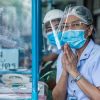
G7 Summit: Time to put Women Front & Centre of the Global Economic Recovery
The leaders of the G7 group of nations will soon gather in Cornwall, United Kingdom, (June 11-13) to devise plans to ‘build back better’ from the COVID-19 pandemic. The summit takes place in the wake of a crisis that has both revealed and further exacerbated existing economic and social inequalities, including gender inequalities.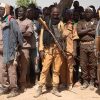
Death toll of Burkina Faso Attack Reaches 160
On the night of Friday 4th June, a group of unidentified armed men stormed the village of Solhan in the north of Burkina Faso, shooting indiscriminately, looting the market and burning homes. A report by RFI, the French radio station said there could have been as many as 200 attackers by some accounts of survivors.
Why We Need More Women in Power
What is the first thing that comes to your mind when you read the words, women and power? The accepted wisdom is that women can be powerful, but not without the constant reference to their gender - which is often based on a set of unconscious biases towards them. Is she competent enough, effective, articulate without being too assertive or too aggressive. Is she a straightjacket, is she too emotional, will her family life impact her work or vice versa. Is she smart enough to camouflage her intelligence, is she ready for a key position, is it worth making her powerful?
Infrastructure Expands in Brazil Despite Crises
Health, fiscal, environmental and political crises have not prevented Brazil from attracting private capital to expand infrastructure, according to the sector's minister, Tarcísio de Freitas.
‘Let’s Talk About Sex’ Discussion Highlights Risks to Women
Every two minutes, a girl or woman dies from pregnancy or childbirth-related complications, including unsafe abortions. Every year, around 12 million girls are married while in their childhoods. An additional 10 million are now at risk of child marriage due to the Covid-19 pandemic.
Indian Muslim Minority Targeted During COVID-19 Pandemic
A Muslim call centre operator at a COVID-19 ‘war room’, who once saw himself a COVID-warrior, is now unemployed after being falsely branded by a top politician as a key member of a bed-for-bribe scam. He is a victim of the rise in Islamophobia in India as the country grapples with the COVID-19 pandemic – with scant evidence of condemnation from the authorities, say activists.
Calls for Zimbabwean Journalist Jeffrey Moyo to be Given a Fair Trial after Bail is Denied
As international correspondent Jeffrey Moyo was denied bail for allegedly breaching a section of the Zimbabwe Immigration Act by helping two foreign journalists work in the country without proper media accreditation, local organisations have called for his release and for him to be accorded a fair trial.
Africa’s Forgotten Crisis
A few weeks ago, I traveled with the UN High Commissioner for Refugees Filippo Grandi to the Modale refugee site in the Nord-Ubangi province of the Democratic Republic of the Congo (DRC). What we witnessed there was a profound humanitarian crisis that has left 4.7 million children and youth in need of urgent, life-saving, life-changing educational support.« Previous Page — Next Page »





One world, one humanity, now one court to defend its rights. Another step towards universal human rights, but not remotely a step far enough. The United Nations adopted the Universal Declaration of Human Rights more than half a century ago, but that has done little to stop violations the world over, just as the Geneva Convention has not protected prisoners of war enough. Democracy itself and the freedom it presupposes has not been protective enough. This is the century to move from politicisation of human rights towards humanising political ways. IPS keeps an eye on that difficult path.

The Week with IPS

NEXT STOP - SDGs
Tracking global progress towards a sustainable world
Tracking global progress towards a sustainable world
