Languages
Wednesday, November 11, 2026



News and Views from the Global South
Human Rights
UN’s Double Standard on Human Rights Abusers Protects Big Powers
When the UN’s annual report on Children and Armed Conflict was released last week, it was expected to “name and shame” some of the world’s worst human rights violators – particularly the abusers of children.
To Build Back Better from the Pandemic, We Must Overhaul the Way We Deal with Development Finance
Over the past 18 months, the impacts of the coronavirus pandemic have transformed our lives and prompted a period of deep reflection as a global community. In some sense, we are only now starting to understand our vulnerabilities, and in particular, how deeply exposed and interconnected we are as people, communities and as countries.
Weaponizing Science in Global Food Policy
In July, the United Nations will convene “Science Days”, a high-profile event in preparation for the UN Food Systems Summit later this year. Over the course of two days, the world will be treated to a parade of Zoom sessions aimed at “highlighting the centrality of science, technology and innovation for food systems transformation.”
“The Creation of a Palestinian State Is Inescapable”
Every Israeli will sooner than later realize that the creation of a Palestinian state is the only way by which Israel can protect its democracy, independence, national security and national Jewish identity. Denying Palestinian statehood defies Israel’s existence as we know it.
COVID-19 as Instigator of Bigotry, Chauvinism and Megalomania
By the end of April 2019, a government campaign to vaccinate more than 40 million children under five against polio in Pakistan was suspended after a series of attacks on health workers and police. On 23 April, a police officer protecting polio workers was gunned down in Bannu, the same day a polio worker was in Lahore seriously wounded by a father “protecting his child from vaccination”, these incidents were followed by the murder of another police and a health worker under his protection. Health workers were also seriously wounded in the districts of Sindh, Balochistan and Punjab. Afghanistan and Pakistan are the only countries where polio remains, in all other nations of the world vaccination campaigns have eliminated the disease. In April this year, three female polio vaccine providers were killed in Afghanistan.
Maldives’ UN General Assembly Presidency Renews Hope for Small Island Developing States
Earlier this month, Abdulla Shahid, the Maldives’ foreign minister, was elected President of the 76th Session of the United Nations General Assembly (UNGA), which commences in September.
Digital Media on the Frontline: Supporting the Ones who Support the Rest
For Dr Farzana Khan, a frontline worker and a second-generation immigrant from Pakistan living in California, social media helped her connect and realign herself during the COVID-19 pandemic.
The Importance of Being Listed: Why Politics Threaten the Protection of Children in Armed Conflict
Frontline workers who document and respond to violations against children have faced a particularly challenging last year, from the impact of Covid-19 on operations and child protection to the record levels of displacement worldwide to the ever-worsening threats from militaries and non-state armed groups.
Boldly Finance Recovery to Build Forward Better
COVID-19 has become a “developing country pandemic”, retreating from the North’s mass vaccination. With developing countries heavily handicapped, the International Monetary Fund (IMF) warns of a “dangerous [new] divergence”.
Canada Must Acknowledge its Problematic Bill 21
The June 5th attack on the Muslim family in London, Ontaria, has left many in Canada in a state of shock. A driver intentionally struck the Afzaal family while they were out for a stroll, killing four, because of their Islamic faith. Canadian Prime Minister Justin Trudeau called the killing, “a terrorist attack and a brazen act of violence.”‘What Will Happen to My Child?’
I first met six-year-old Amina in the Kutupalong refugee camp in 2019. I couldn't help noticing the forlorn image of life in the camps she depicted—a child alone in a corner, playing with a pair of matchboxes instead of a toy. Later, Amina's mother told me that she was hiding under the bed when the Myanmar military surrounded their household in Rakhine. She watched them kill her father and grandfather, and lay hidden while they gang-raped her mother. She hadn't said a word to anyone outside of her family since then.
The Dictator’s Daughter or the Farmer’s Son?
Peru’s first round of elections on 11 April saw voters choosing between 18 presidential candidates with no one candidate leading by an impressive margin.
Kuciak Case Retrial An Opportunity to Break Global Cycle of Impunity in Journalist Killings
A ruling last week ordering a retrial in the murders of a Slovak journalist and his fiancée has led to a “unique” opportunity to break a global cycle of impunity in journalist killings, press freedom groups have said.
Education Cannot Wait for Refugee Children in Crisis, says Yasmine Sherif
With financing, the number of out-of-school refugees could be reduced to zero, Yasmine Sherif, Director of Education Cannot Wait (ECW) says, as the world commemorates World Refugee Day.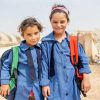
World Refugee Day
"Education will prepare refugee children and youth for the world of today and of tomorrow. In turn, it will make the world more resilient, sustainable and peaceful." ~ Filippo Grandi, UN High Commissioner for Refugees
Apocalypse Now? Christian Fundamentalists and COVID-19
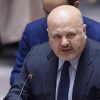
Will a British ICC Chief Prosecutor be Brave Enough to Investigate UK & its Allies?
As British barrister Karim Khan QC begins his term as ICC chief prosecutor, his first steps should be to proceed with investigations into alleged war crimes involving UK allies in Afghanistan and Palestine.
‘Prison was Horrible but I Will Still do my Work as a Journalist’ – Jeffrey Moyo Upon Prison Release
International correspondent Jeffrey Moyo, who was a released from detention today after being arrested for breaching Zimbabwe’s Immigration Act by helping two foreign journalists work in the country, says press freedom is undermined when journalists cannot work undeterred.
Setting the Stage for Wars During a Global Pandemic
Looking through my emails for the last year, I was struck by how often the adjective “unprecedented” occurred. The term, of course, referred to the global Covid-19 pandemic. One would imagine that this unprecedented year would result in unprecedented trends in other aspects of life.
Central Sahel: Ground Zero in Tackling Climate Change Through Education
The climate crisis is amplifying the effects of instability and violence in the world’s poorest countries. Nowhere is this more visible than in Africa’s Central Sahel region, where increasing temperature, floods, droughts and other climate change-induced disasters are triggering conflicts, displacement, and pushing girls and boys into the shadows.
The Marginalisation of Africa
Is Africa marginalised in contemporary economics and politics, and in contemporary economic and political research? Impressions gathered over the years and a bit of evidence (much more could be assembled) indicate that it is. I would distinguish three types of marginalisation: objective, objectified and subjective marginalisation.« Previous Page — Next Page »





One world, one humanity, now one court to defend its rights. Another step towards universal human rights, but not remotely a step far enough. The United Nations adopted the Universal Declaration of Human Rights more than half a century ago, but that has done little to stop violations the world over, just as the Geneva Convention has not protected prisoners of war enough. Democracy itself and the freedom it presupposes has not been protective enough. This is the century to move from politicisation of human rights towards humanising political ways. IPS keeps an eye on that difficult path.

The Week with IPS

NEXT STOP - SDGs
Tracking global progress towards a sustainable world
Tracking global progress towards a sustainable world
