Languages
Sunday, November 15, 2026



News and Views from the Global South
Human Rights
IEDs: Tackling Terrorists’ Weapon of War
Some of the most memorable images of the late Diana, Princess of Wales, show her wearing a protective suit while touring a minefield in Angola in 1997 to raise awareness of the devastating effects of land mines.
Catalysing Change for Gender Equality
Great strides have been taken to empower women and girls in the Asia-Pacific region since the Fourth World Conference on Women in Beijing adopted an ambitious global agenda to achieve gender equality twenty-five years ago. Gender parity has been achieved in primary education. Maternal mortality has been halved. Today, the region’s governments are committed to overcoming the persistent challenges of discrimination, gender-based violence and women’s unequal access to resources and decision-making.
Despite Halting Progress, UN Continues its Push for a Nuclear-Weapons-Free Zone in the Middle East
A longstanding proposal for a regional nuclear-weapons-free zone (NWFZ) in the Middle East – one of the world’s most conflict-ridden regions – has been kicked around the corridors of UN committee rooms since 1974.
I am Generation Equality: Child Marriage Survivor & Activist
-- I am Generation Equality because… I didn’t want other girls to go through the same struggles I experienced. I got married when I was 14 years old. I had no idea what marriage was.Cities need to pull their weight in using education to help migrants and refugees
A new policy paper by the Global Education Monitoring (GEM) Report at UNESCO, released ahead of the UNHCR Global Refugee Forum next month, shows the increasingly important role of cities using education of people on the move as a lever for their inclusion. It calls for international and non-governmental organisations to recognise cities as partners and for governments to clarify and support cities’ role in education.
Businesses Have Key Role in Safeguarding Human Rights
Unanimously endorsed by the UN Human Rights Council in 2011, the Guiding Principles on Business and Human Rights are the authoritative global reference point articulating the responsibilities of companies to respect and protect human rights.
Statistics and Stories – Time to Change the Refugee Narrative?
Statistics and stories. When aid agencies appeal for funding to tackle the latest refugee crisis and journalists do their reporting, then these are the two narratives most chosen -- one impersonal and the other upfront and individual. The sheer numbers can feel overwhelming. The UN refugee agency UNHCR says more than 70 million people are currently displaced by conflict, the most since the Second World War. Among them are nearly 26 million who have fled their countries (over half under the age of 18) and 3.5 million more are registered as asylum seekers.
More Austerity for Developing Countries: It’s Bad News, and It’s Avoidable
After years of austerity, a number of Eurozone countries are now considering expansionary fiscal policies. And in the UK, government spending is set to return to levels last seen in the 1970s. But austerity abounds elsewhere in the world, including in some of the poorest countries.
Global Clothing Brands Should Respond to the #MeToo Mandate
It has been two years since #MeToo went viral, and it’s about time the garment industry’s sexual harassment problem got the attention it deserves. Clothing and footwear brands can do much more to prevent and address gender-based violence in their supply chains, but first they need to confront how badly their inspection or “social auditing” programs fail women.
A Staggering One-in-Three Women Experience Physical, Sexual Abuse
Violence against women and girls is among the most widespread, and devastating human rights violations in the world, but much it is often unreported due to impunity, shame and gender inequality, the UN highlighted ahead of Monday’s World Day to stamp out abuse of women and girls.
Saudi UNESCO Win Riles Khashoggi Standard-Bearers
Human rights campaigners have reacted angrily to the election of Saudi Arabia to the United Nations cultural agency UNESCO’s top board, highlighting the kingdom’s ongoing crackdowns on political freedoms and critics.
We Shouldn’t Expect Philanthropists to Fund Activism
Since philanthropists are unlikely to fund anything that destabilises their businesses, building independent institutions can be an effective approach to create lasting impact.
Sri Lanka’s Presidential Election Brings Back a Polarising Wartime Figure
On 16 November, Gotabaya Rajapaksa – who served as defence secretary during the final phase of Sri Lanka’s brutal civil war – won a decisive victory in Sri Lanka’s presidential election.
U.N. Group Launched to put Afghan Women at Centre of Peace Initiatives
Afghanistan’s first female ambassador to the United Nations this week launched a U.N. group that aims to put women at the centre of peace initiatives in Afghanistan.
Evo Morales: Hero or Villain?
To be president in a country like Bolivia might be like a precarious act performed by a tightrope-dancer between “the Devil and the deep blue sea”. After 23 years as Bolivia’s President, Evo Morales finally lost his foothold and ended up as political refugee in Mexico, adding his name to a long list of previous revolutionary exiles, like Augusto Sandino, Fidel Castro, and most prominently – Leon Trotsky. The last one was murdered, though the others came back, something Evo Morales has promised to do:
Achieving the Possible: “Weapons of Mass Destruction Free Zone in the Middle East”
A historic conference on the Middle East opened at the United Nations in New York on 18th November and will continue until 22nd November. The Conference on the Establishment of a Middle East Zone Free of Nuclear Weapons and Other Weapons of Mass Destruction is presided over by Ambassador Sima Bahous of Jordan.UNESCO launches three reports on journalists’ safety, access to information, and election coverage
UNESCO has presented three reports concerning media issues to Member States meeting at the Organization’s Headquarters for the 40th session of its General Conference. The three reports, available online in English are: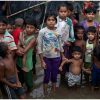
With the UN Security Council in Paralysis, Are there New Hopes for Rohingya Muslims?
The 15-member UN Security Council (UNSC) stands virtually paralyzed in the face of genocide charges against the government of Myanmar where over 730,000 to one million Rohingya Muslims have been forced to flee to neighboring Bangladesh since a 2016 crackdown by Myanmar’s military.
End Rape—an Intolerable Cost to Society
If I could have one wish granted, it might well be a total end to rape. That means a significant weapon of war gone from the arsenal of conflict, the absence of a daily risk assessment for girls and women in public and private spaces, the removal of a violent assertion of power, and a far-reaching shift for our societies.
Climate Change and Loss of Species: Our Greatest Challenges
Mottled and reddish, the Lake Oku puddle frog has made its tragic debut on the Red List, a rapidly expanding roll call of threatened species. It was once abundant in the Kilum-Ijim rainforest of Cameroon but has not been seen since 2010 and is now listed as critically endangered and possibly extinct.
ICC Gives Greenlight for Probe into Violent Crimes Against Rohingya
Judges of the International Criminal Court (ICC) on Thursday authorized an investigation into alleged crimes against humanity, namely deportation, which have forced between 600,000 and one million Rohingya refugees out of Myanmar, into neighboring Bangladesh since 2016.« Previous Page — Next Page »


One world, one humanity, now one court to defend its rights. Another step towards universal human rights, but not remotely a step far enough. The United Nations adopted the Universal Declaration of Human Rights more than half a century ago, but that has done little to stop violations the world over, just as the Geneva Convention has not protected prisoners of war enough. Democracy itself and the freedom it presupposes has not been protective enough. This is the century to move from politicisation of human rights towards humanising political ways. IPS keeps an eye on that difficult path.

The Week with IPS

NEXT STOP - SDGs
Tracking global progress towards a sustainable world
Tracking global progress towards a sustainable world
