Languages
Saturday, November 28, 2026



News and Views from the Global South
Human Rights
Israel Shields Public from Risks of War with Iran
The government of Prime Minister Benjamin Netanyahu has been telling Israelis that Israel can attack Iran with minimal civilian Israeli casualties as a result of retaliation, and that reassuring message appears to have headed off any widespread Israeli fear of war with Iran and other adversaries.
Native People in Argentina Demand a Say in Lithium Mining
Native communities in northwest Argentina turned to the Supreme Court to claim their right to be consulted about projects for prospecting and mining of lithium, regarded as the mineral of the future, located under an enormous salt flat.
Winds of Lent Blowing in Cuba
Debates in civil society, tension with internal opposition groups, demands from outside the country and inevitable comparisons with John Paul II’s visit to this socialist island in 1998 surrounded Benedict XVI’s visit 14 years later to a very different Cuba.ARGENTINA: Lack of Information Raises Risk of Cervical Cancer
A novel research study in Argentina explored women's knowledge and beliefs about cervical cancer, in the provinces with the highest mortality from this highly preventable form of cancer, to design more effective policies.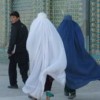
Rights Group Criticises Afghan ‘Moral Crimes’
A new report from Human Rights Watch says hundreds of women and girls in Afghanistan have been imprisoned for 'moral crimes', including running away from home and sex outside marriage.Careless Handling of Benin’s Medical Waste Could Cost Lives
Fifteen-year-old Aicha is one of the many spice vendors hawking their wares in the Dantokpa market, in Benin's economic capital, Cotonou. But a closer look at her tidy stall reveals a disturbing detail: the powdered spices are packaged in recycled medicine vials.
Chad Famine – Mothers Breaking Apart Anthills in Search of Food
"Only God knows what will happen to me and my children - for two months there's been nothing to eat. We're living like beggars," Henriette Sanglar, a mother of four in the Moursal quarter of the Chadian capital, N'Djamena, told IPS.
Drone Technology Takes Off
The Association for Unmanned Vehicle Systems International (AUVSI) held its conference this month in Israel for the first time. Do future wars by land, sea and air belong to robots?Palestinian Prisoners Fight Back With Hunger
As 29-year-old Palestinian prisoner Hana Shalabi enters day 43 of her open- ended hunger strike Thursday from a hospital bed in northern Israel, over two dozen other Palestinian prisoners have now followed suit, refusing food as a way to protest their arrest, detention and treatment in Israeli prisons.Kazakhstan Divided Over Fugitive Banker
As the trial began this week of 37 alleged participants in a strike-related riot, the man who did the most to help the striking oil workers and to publicise their cause, Mukhtar Ablyazov, remained far beyond the Kazakhstan government’s grasp.New Alternative in Senegal After Wade Defeat
Analysts say that Senegal’s outgoing President Abdoulaye Wade was made to pay for his failure to respond to popular demands, particularly arising from the high cost of basic commodities, a lengthy strike by teachers, and high youth unemployment, by losing his bid for a third term of office.OP-ED: Narcotics Watchdog Turns Blind Eye to Rights Abuses
In a world where drug offences are punishable with the death penalty, torture or arbitrary detention, we must ask how far States can go to enforce the global prohibition on drugs.OP-ED: Tunisia’s Youth and Their Fight for Freedom of Expression
In Tunisia, a new debate is taking shape. Long suppressed by the authoritarian regime of former President Zine el Abidine Ben Ali, Tunisia's free expression movement for many years existed on the fringe, comprised of bloggers, software developers, media aficionados and expats whose frustration at Tunisia's Internet censorship and surveillance regime – in place for over a decade – fomented their activism.Neighbours to Confront Mali Coup Leaders
Mali's neighbours have threatened to use sanctions and a readiness to use military force to dislodge those behind last week's coup, urging them to quickly hand back power to civilian rulers.
Women Lead Poverty Reduction in Bangladesh
Kalpana Rani Pal’s pottery business is modest by any yardstick but it is small enterprises like these that are helping reduce poverty levels in Bangladesh.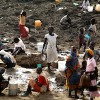
The Forgotten Emergency in Sudan’s Blue Nile State
Hamid Yussef Bashir said he walked for 17 days with his wife and five children to get to a refugee camp in South Sudan. Here in Jamam, they joined about 37,000 other people who fled from the war across the border in Sudan’s Blue Nile state.
Learning Lessons From the Khmer Rouge
For four years, Wan Preung toiled in the fields under the Khmer Rouge, unable to speak his mind. But after the regime fell in 1979, there was still one sensitive subject the teacher could seldom broach with his students: the Khmer Rouge.
Pope Strikes Moderate Tone in Cuba
On his three-day visit to Cuba, Pope Benedict XVI has so far struck a moderate tone, although he called on Catholics in this country to fight with the "weapons" of peace and understanding for an "open, renewed society."
Rio+ 20 Suffers Leadership Void Weeks Ahead of Summit
When a landmark U.N conference on sustainable development kicks off in Brazil mid-June, more than 120 world leaders are expected to participate in the much-ballyhooed talkfest on the future of the global environment.
Argentine Baby Theft Trial Nears End
The trial for the theft of babies of political prisoners during Argentina’s 1976-1983 dictatorship is nearing its end after more than three decades of work by the Grandmothers of the Plaza de Mayo, who have so far tracked down 105 of an estimated 500 missing children.Pro-Peace Jewish Lobby Stresses Return to Stalled Talks
At the third annual conference of J Street, the "pro-Israel, pro-peace" lobby group that is widely seen as a counterweight to the more right-wing American Israel Public Affairs Committee (AIPAC), the Israel-Palestine conflict took the focus back from the ongoing tension with Iran.« Previous Page — Next Page »


One world, one humanity, now one court to defend its rights. Another step towards universal human rights, but not remotely a step far enough. The United Nations adopted the Universal Declaration of Human Rights more than half a century ago, but that has done little to stop violations the world over, just as the Geneva Convention has not protected prisoners of war enough. Democracy itself and the freedom it presupposes has not been protective enough. This is the century to move from politicisation of human rights towards humanising political ways. IPS keeps an eye on that difficult path.

The Week with IPS

NEXT STOP - SDGs
Tracking global progress towards a sustainable world
