Languages
Friday, October 9, 2026



News and Views from the Global South
Peace
Taliban’s Quest for Legitimacy – and a Seat at the United Nations
When the Taliban captured power back in 1996, one of its first political acts was to hang the ousted Afghan President Mohammed Najibullah in Ariana Square in Kabul. The newly-installed government played a triple role: judge, jury and hangman, all three rolled into one.
After Afghanistan, War’s Idealists Must Accept Defeat
As the Western occupation of Afghanistan has come to an end, TV news is broadcasting harrowing scenes of death and destruction, citizens in fear, allies abandoned, and dreams dashed.
The Tragedy of Afghanistan: Is there a Way Forward?
The desperate scenes at Kabul airport of Afghans trying to flee and the image of the US Airforce flight taxying down the runway with people scrambling to climb on, is an image that will be etched on our minds forever.
Afghanistan – What Will Happen Now?
As I write this, India has just celebrated the 75th anniversary of its independence from British rule (Pakistan celebrated it a day earlier). But there is little cause for celebration. A dark shadow looms over both countries, indeed over much of the world as well.
Where Did We Go So Wrong in Afghanistan?
President Biden’s decision to finally withdraw US forces from Afghanistan was the correct decision and certainly overdue. However, the lack of preparation to do so orderly and safely was yet another terrible mistake in a string of mistakes that have plagued the US from day one.
Were US War Profiteers the Ultimate Winners in Battle-Scarred Afghanistan?
As the 20-year-old occupation of Afghanistan came to an inglorious end last week, there were heavy losses suffered by many-- including the United States, the Afghan military forces and the country’s civilian population.
Afghan Female Journalist: “I may not be Alive by the time US can Evacuate Me”
Steven Butler describes it as “mass panic.” As the Taliban seized control of Afghanistan, CPJ’s Asia program coordinator has been fielding “hundreds and hundreds” of daily pleas from journalists asking for help to flee the country.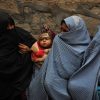
As the Taliban Returns, 20 Years of Progress for Women Looks Set to Disappear Overnight
As the Taliban takes control of the country, Afghanistan has again become an extremely dangerous place to be a woman.
Alarming Crisis of Impunity for Crimes Against Journalists in DRC
The Democratic Republic of Congo is one of the most hostile and dangerous regions for journalists. A complex conflict, deeply rooted in the country’s past, allows very little freedom, both movement and the press.
Violence Casts Shadow Over South Africa’s Post-Apartheid Democratic Gains
Twenty-seven years after South Africa’s first democratic elections, the country finds itself reflecting on the catalysts of a week of looting and destruction of property resulting in more than 200 deaths and US$ 1.3 billion in damage.
Can We Make the Planet Earth a Utopia? Yes: Why Not?
The only Planet in the Universe with living beings, including animal and plant life is the Planet Earth. Can we transform it to a Utopia, more or less, a Paradise. Yes, we can. Why not? If all Nations of the Planet have a genuine desire to have eternal peace and harmony, without recourse to a course that will lead to the destruction of the Planet to smithereens.
At the UN, Climate Change & Security Must Be Tackled Together
Could the next wars be triggered by climate change? Until recently, the question might have seemed like science fiction, but now it is very real. Ethiopia and Egypt are locked in an upward spiral of tensions over the Nile, as a combination of dams and shifting weather patterns pose existential risks to both countries.
Bridging the Gap and Crossing the Bridge
It may be a challenge, but it is also an absolute necessity: bridging the gap between international law and reality and quickly crossing the bridge to reach all crisis-affected children and youth left furthest behind. Inclusive and equitable quality education is the right of every girl and boy and the objective of Sustainable Development Goal 4.
Another Impending Cataclysm in Afghanistan
The Biden administration made a decision to withdraw US troops from Afghanistan based on the Trump-Taliban agreement. Their last combat soldier may have already left. There is nothing to argue about!
If “A Nuclear War Must Never Be Fought,” Then …
After more than a decade of rising tensions and growing nuclear competition between the two largest nuclear-weapon states, U.S. President Joe Biden and Russian President Vladimir Putin agreed at their June 16 summit to engage in a robust “strategic stability” dialogue to “lay the groundwork for future arms control and risk reduction measures.”
Setting the Stage for Wars During a Global Pandemic
Looking through my emails for the last year, I was struck by how often the adjective “unprecedented” occurred. The term, of course, referred to the global Covid-19 pandemic. One would imagine that this unprecedented year would result in unprecedented trends in other aspects of life.
The Marginalisation of Africa
Is Africa marginalised in contemporary economics and politics, and in contemporary economic and political research? Impressions gathered over the years and a bit of evidence (much more could be assembled) indicate that it is. I would distinguish three types of marginalisation: objective, objectified and subjective marginalisation.
World’s Nuclear Arms on High Operational Alert — & Ready to Strike
The world’s nine nuclear armed states have downsized their military arsenals, but made up for their loss by increasing the number of weapons on high operational alert, according to a new report from the Stockholm International Peace Research Institute (SIPRI).
Preventing Hunger While Building Peace
Acute hunger is expected to soar in over 20 countries in the next few months, warns a recent report on global “hunger hotspots” from the UN’s Food and Agriculture Organization (FAO) and the World Food Programme (WFP). An estimated 34 million people are “one step away from starvation”, pushed to the brink by climate shocks, conflict, and the Covid-19 pandemic.
The 21st Century Nuclear Arms Race
A new report by the International Campaign to Abolish Nuclear Weapons (ICAN)—focusing on nuclear weapons spending-- following on the Bulletin of the Atomic Scientists recent decision that their Doomsday Clock, should be set as close as it has ever been to nuclear catastrophe. should serve as a wake up calls for humanity.
The Pandemic Should Not Leave Developing Countries Without a Voice (or a Vote)
Requiring in-person voting to elect the governing bodies of UN agencies may exclude the countries most affected by travel restrictions derived from the pandemic« Previous Page — Next Page »





The Week with IPS

NEXT STOP - SDGs
Tracking global progress towards a sustainable world
Tracking global progress towards a sustainable world
