Languages
Thursday, November 19, 2026



News and Views from the Global South
Population
POLITICS: Israel, Iran, Pakistan World’s Least Popular Nations
Israel, Iran, North Korea and Pakistan are widely seen as exerting the most negative influence on world affairs, according to the latest in a series of annual global surveys by the BBC's World Service on popular perceptions of the world's most powerful or newsworthy nations.RIGHTS-AUSTRALIA: Change National Day Say Indigenous People
Australia's national day is celebrated annually with much fanfare. But Jan.26, which marks the establishment of the colony of New South Wales more than 200 years ago, is viewed by many indigenous activists as the anniversary of the European invasion of their land.
SRI LANKA: Tamils Fearful For the Future
As Sri Lanka celebrates 61 years of independence from British colonial rule on Wednesday, the enthusiasm is understandably not shared by minority Tamils living under the military jackboot in the north of the country.
POLITICS-MADAGASCAR: Scores Dead in Political Violence
"The capital has never known such stillness," Marie Ratonvonirina said of the one-day stayaway declared by the mayor of Antannanarivo, Andry Rajoelina, on Jan. 29.COTE D’IVOIRE: Formal Economy Returns to the North
Mamadou Dembélé has removed all the contraband products he has sold for the past in six years at his shop in Bouaké in central Ivory Coast. This is due to the gradual return of government control in the area - occupied by the rebellion launched in the country in September 2002.CHINA: Striking Hard in Tibet 50 Years After The Uprising
China is preparing for the 50th anniversary of the Tibetan uprising - which saw the Himalayan territory’s spiritual leader, the Dalai Lama, flee into exile - with a 'strike hard' campaign and propaganda on the evils of feudal oppression in pre-1949 Tibet.
SRI LANKA: India Speaks Up For Embattled Tamils
As humanitarian agencies warned of a major crisis unfolding in Sri Lanka, Indian Foreign Minister Pranab Mukherjee made a quick dash Colombo to extract promises concerning the safety of some 250,000 ethnic Tamils trapped in fighting between separatist rebels and government troops.
PAKISTAN: Slum Fire Reignites Housing Concerns
A fire which razed a slum settlement and killed 40 of its residents earlier this month has brought to the fore the deplorable conditions in which half of the 12 million people of this port city live - and official indifference to their plight.
RIGHTS-MALAYSIA: Malaysian, Thai Officials Trafficking Burmese Migrants?
A scandalous trade in Burmese migrant labour involving Malaysian and Thai officials and international human traffickers is now coming to light.
RIGHTS-SRI LANKA: 'Plight of Tamils Similar to Gaza Civilians'
While the Sri Lankan army has announced the capture of Mullaitivu, the last bastion of the Liberation Tigers of Tamil Eelam (LTTE), the plight of more than 250,000 civilians caught in the fighting continues to be as grim as that of civilians in Gaza, say those involved in humanitarian work.HEALTH: Obama Lifts "Global Gag Rule"
U.S. President Barack Obama Friday lifted an eight-year ban on U.S. funding for overseas family-planning groups and clinics that perform or promote abortion or lobby for its legalisation.LABOUR: ‘Meltdown Leaves Migrant Workers Prone to Abuse’
The global recession is causing a heightened sense of job insecurity among millions of migrant workers making them more vulnerable to abuse, say migrant rights advocates.POPULATION: Bridging the Family Planning Gap
Some 43 countries around the world now have populations that are either essentially stable or declining slowly.HEALTH-THAILAND: Burmese Migrant Workers Key to Fighting Bird Flu
Thailand’s plans to contain the spread of the deadly avian influenza virus must involve the tens of thousands of Burmese migrant workers employed in this country’s poultry industry, say experts.
SOMALIA: Poverty Forces Children Into the Streets
Hassan Maye, 13, has been fending for himself and his family in the streets of Mogadishu since he was ten. He shines shoes in the Sinai neighbourhood in the southern part of the Somali capital. On a good day, he says he earns 18,000 shillings - equivalent to roughly 50 cents.THAILAND: Burmese Refugees Set Adrift, Hundreds Feared Dead
Hundreds of Rohingya (Burmese Muslim) refugees are feared dead after being pushed back into the sea by Thai authorities, according to human rights activists based in Thailand.HEALTH-LATAM: Too Many Women and Children Dying
"Latin America is not in the tragic conditions of the least developed countries, but an average rate of 130 maternal deaths per 100,000 live births is very high," UNICEF representative Egidio Crotti told IPS.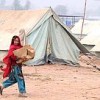
PAKISTAN: Nightmare for Civilians Uprooted by Conflict
"We are in hell! No electricity, no clean drinking water! This is no life, we were better off at home!" fumes Arjumand Khanum, a refugee from Bajaur Agency, on the Pakistan-Afghanistan border.BOLIVIA: Mothers Teaching Mothers to Combat Malnutrition
One of every two children under the age of five in the southwestern Bolivian highlands municipality of Betanzos suffers the effects of chronic malnutrition.CUBA: Racism – “Taboo, Complicated and Thorny” Issue
The persistence of racism in Cuba is disturbing to some of the island's thinkers, who are calling for a debate on the problem in this country, where equal rights have not guaranteed equal opportunities for all social groups.
PERU: A Mining Town’s Woes
A four-hour drive from the Peruvian capital, the town of Morococha ("coloured lake" in the Quechua language) is a living example of what the mining industry has brought to many poor rural villages and towns in this country.« Previous Page — Next Page »


 One Thousand Internally Displaced Persons (IDPs) Relocated from Tomping Camp in South Sudan. Credit: UN Photo/Isaac Billy
It took hundreds of thousands of years for the world’s human population to cross one billion in 1804. Approximately 200 years later, the population has multiplied sevenfold. In 2023, the global population crossed 8 billion, and is expected to reach 9 billion before 2050. With the planet more crowded than ever, it is essential to keep track of population trends, urbanization, migration, and reproduction across the world.
Life expectancy has seen significant strides in the past century, largely due to economic development and increased standards of living. On the contrary, trends in global fertility are shifting, with certain regions in Africa and Asia reporting higher rates, while parts of Europe and North America report stagnant or lower rates. This is in part due to differences in sexual and reproductive healthcare, as well as societal and economic conditions around the world. For example, child marriage is prevalent in certain societies, where childbearing is also considered a familial duty. Meanwhile, stagnating economies frequently experience lower marriage and childbearing rates.
The increase in migration and urban development around the world is also linked to global population trends. By 2050, it is expected that approximately 66 percent of all people will live in cities. Furthermore, global crises such as warfare and natural disasters also prompt transnational migration. Transnational migration is linked to a variety of socioeconomic issues in both host and receiving countries: migrants often leave developing countries with less access to educational and economic opportunities and arrive in developed countries where they are frequently the targets of ethnic, racial, and cultural discrimination, and economic exploitation. Recent crises in Europe and the United States demonstrate the importance of advocating for migrants worldwide. As migrants from the Global South are increasingly stripped of their legal and civic rights in unlawful deportations, or targeted in acts of identity-based violence, it is essential to keep track of population trends and protect the human rights of migrant populations. Climate-related disasters are now a major driver of displacement, with nearly half of all new internal displacements in 2025 being disaster-related.
IPS is devoted to covering issues surrounding population trends, migration, and reproduction through its compelling articles, which use both statistics and human stories to provide readers with robust and informative viewpoints.

The Week with IPS

NEXT STOP - SDGs
Tracking global progress towards a sustainable world
Tracking global progress towards a sustainable world
