Languages
Thursday, November 19, 2026



News and Views from the Global South
Poverty & SDGs

Water Scarcity Could Impact West Asian Credit Ratings
Water scarcity, conflict and refugee exodus is the strongest megatrend in West Asia, indicating the status of current trends and how these factors may shape the future, according to UN Environment Programme’s sixth Global Environment Outlook - GEO-6 Regional Assessment for West Asia released May 2016.
A Triple Threat in the Fight Against AIDS
The exclusion of key regions, contexts and actors must be addressed in order to successfully and significantly reduce HIV and AIDS by 2020, many have noted during the High Level Meeting on Ending AIDS this week.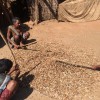
Students Journey: A Step Closer to the SDGs in Rural India
As the seventh largest economy in the world by nominal GDP, India has fared better than many. Through a mix of interventions from the public and private sector, India’s economy has promoted growth and welfare. However, in spite of these developments, the challenge of hunger and malnutrition remain.
‘What Can We Do for You?’ Aid Projects Pour Into Myanmar
International aid agencies, big and small, are beating a path to Myanmar, relishing the prospect of launching projects in a nation of 51 million people tentatively emerging from more than five decades of military rule.
Asia-Pacific Region Aims at Hunger-Free Goal by 2030
The Asia Pacific region - home to two of the world's most populous countries - faces major food security challenges. According to the Asian Development Bank (ADB), both China and India are not only two of the world's biggest producers of food but also the world's biggest consumers.
Thousands of Minor Refugees Stranded Alone in Greece
Closure of the Western Balkans route has trapped tens of thousands of refugees heading to Central and Northern Europe in Greece, including many unaccompanied minors who either escaped from war zones after having lost their relatives, or were sent ahead in hopes of helping their families follow afterwards.
Humanitarian Aid – Business As Unusual?
Big business is most often seen by human rights defenders and civil society organisations as “bad news,” as those huge heartless, soulless corporations whose exclusive goal is to make the biggest profits possible. Too often and in too many cases this is a proven fact.
New Protocol Aims to Cut Trillion-Dollar Food Waste Bill
Four years ago, 27-year-old Tsering Dorji of western Bhutan’s Satsam village took to organic vegetable farming. Since then, thanks to composted manure and organic pesticide, the soil health of his farm has improved, and the yield has increased manifold.
Polynesian Voyagers Bring Messages of Hope to UN on World Oceans Day
Polynesian voyagers who have sailed the world by canoe using ancient navigation skills will bring pledges they collected along the way to the UN on Wednesday as part of World Oceans Day celebrations.
World Bank Slightly Downgrades Global Economic Prospects for 2016
Global economic growth prospects for 2016 have been downgraded to 2.4 percent, in contrast to the initial 2.9 percent rate expected in January 2016, according to a World Bank report released here Wednesday.
“Them” and “Us”, a Metaphor for Urban Inequality
For the inhabitants of “Bajo Autopista” (Under the Freeway), a slum built under an expressway in the Argentine capital, “they” are the people who live in areas with everything that is denied to “us” – a simple definition of social inclusion and a metaphor for urban inequality.
Coral Reef Tourism in Danger as Reefs Struggle to Adapt to Warming
A recent UN Educational, Scientific and Cultural Organization (UNESCO) report on world heritage sites in danger from climate change received widespread media attention after the Australian government requested the removal of a chapter on the Great Barrier Reef.
No More Dumping of Milk in Laikipia
Daniel Mithamo, 28, grew up knowing that dairy farming is about producing milk in large quantities. You sell a few litres, consume some with your family, and dump the rest for lack of cold storage and decent roads to access markets.Thailand Shows the Way Towards an HIV-Free World
Thailand has provided the world with an important milestone towards the global goal of ending pediatric AIDS. This week, the World Health Organization is formally declaring that Thailand has officially eliminated new HIV infections among children. Whereas in 2000 an estimated 1000 children in Thailand were newly infected with HIV, in 2015 just – 85 children were infected with the disease. This very low level of new infection among children is comparable to the results achieved in North America and Western Europe, where mother-to-child HIV transmission is extremely rare.
Q&A: Crisis and Climate Change Driving Unprecedented Migration
Climate change is now adding new layers of complexity to the nexus between migration and the environment.
Golden Rice: The Malnutrition Fighting Crop
Over the past two decades, Bangladesh has remarkably managed to feed an increasing population better - the UN's Food and Agricultural Organization estimates that in 1993, the average Bangladeshi had access to just 2,000 calories per day, whereas today that number has increased to 2,450 calories per day. To a large extent, this success comes on the back of ever-higher rice production - rice makes up 70 percent of the average daily calorie intake.Climbing the Knowledge Ladder
After the Paris Agreement on climate change endorsed by every participating country last December at the 21st Conference of Parties (COP21) of the United Nations Convention in Climate Change (UNFCCC), all the participants , including both developing as well as developed countries, have to put in place a clear strategy to not only reduce emissions of greenhouse gases through mitigation actions, but also to adapt to the adverse impacts of human-induced climate change.
World Oceans Day – A Death Sea Called Mediterranean
While the United Nations identifies 17 major regional seas in its planning, the Mediterranean is perhaps the most dramatic case as it has gone from being the so-called cradle of civilization to be a cemetery for thousands of asylum-seekers and migrants. And it is most probably also the most polluted water basin the whole world. See this report.
Mega Dams Remain Controversial Source of Energy
Although mega dams can have devastating impacts on ecosystems and indigenous communities, many of the world’s poorest countries still see them as a way to fill gaping holes in their energy supplies.
What Lies Ahead for Oceans, Seas and Marine Resources
In September 2015, the international community adopted 17 Sustainable Development Goals, including Goal 14: Conserve and sustainably use the oceans, seas and marine resources for sustainable development.
Stepping Up the Fight to End Cholera and Chikungunya Outbreaks in Mandera County, Kenya
Mandera’s double whammy, the concurrent outbreaks of cholera and chikungunya, is bringing to the fore the need for accelerated epidemic preparedness and prevention systems.« Previous Page — Next Page »


 Romani people in Cairo, Egypt, forage through trash. Credit: UN Photo/Armineh Johannes
In 2015, the United Nations adopted the Sustainable Development Goals (SDGs) in an effort to promote “peace and prosperity for people and the planet.” To achieve that goal, it is essential to provide equal opportunities and access to basic services to all people. The 2025 UN SDG Report found that 35% of the 169 SDG targets are on track or making moderate progress, while 18% have reversed compared to the 2025 baseline. One in ten people still live in extreme poverty, one in eleven experience food insecurity, and over 1.1 billion people live in slums without access to clean water and sanitation. It is imperative to acknowledge the societal, technological, economic, and political issues that sustain poverty in countries around the world. Eradicating poverty will require significant frameworks in policy and governance on a national and international scale to ensure that all people will have equal access to basic services and economic opportunities by 2030. Furthermore, a dramatic reduction of United States foreign aid in 2025, including the termination of 83% of USAID programmes, threatens to erode years of fragile development gains.
Throughout the world, violent conflict and natural disasters also contribute to extreme poverty. The complete destruction of infrastructure and blockage of aid has significantly impoverished Palestine since October 7th. The destructive impact of Hurricane Maria in Puerto Rico left $91 billion in damage. An inadequate US government response also revealed significant and enduring questions within the issue of mitigating poverty: how do we rebuild infrastructure after its destruction? How do we restimulate economic development and bring in financial aid after disasters? Similar questions have been raised in the realm of regional cooperation, as devastating floods have wrecked hundreds of thousands of homes across multiple Southeast Asian nations in the past few years. Furthermore, the COVID-19 pandemic has greatly exacerbated the global poverty crisis, particularly in developing countries, setting back the United Nations goal of eradicating poverty by 2030.
IPS is committed to providing comprehensive features that focus on the persisting environmental, sociopolitical, and systemic issues that sustain poverty, and the steps taken worldwide towards poverty eradication.

The Week with IPS

NEXT STOP - SDGs
Tracking global progress towards a sustainable world
Tracking global progress towards a sustainable world

