Languages
Tuesday, August 11, 2026



News and Views from the Global South


UN’s Proposed Structural Changes Laid Out in a “Strictly Confidential” Internal Document
A six-page internal document, marked “STRICTLY CONFIDENTIAL” on every single page – indicating restricted access to protect sensitive information-- is one of the most comprehensive “compilation of non-attributable suggestions by the UN80 Task Force” on the proposed restructuring of the world body.
The Indus Water Treaty Suspension: A Wake-Up Call for Asia–Pacific Unity ?
On April 23, India suspended the Indus Water Treaty (IWT), a 65-year-old agreement that had been a rare symbol of cooperation between India and Pakistan despite decades of hostility. The suspension came a day after militants attacked civilians in Jammu and Kashmir, a disputed region, killing 26 people, most of them Indian tourists. India accused Pakistan of supporting “cross-border terrorism” and responded by halting the treaty. Pakistan denied involvement in the attack and called India’s move an “act of war.”

Former Energy Ministers from Saint Lucia and Uruguay Named REN21 Renewable Energy Champions
The Renewable Energy Policy Network for the 21st Century (REN21), a global network that advances renewable energy through collaboration and knowledge sharing, has named Dr James Fletcher of Saint Lucia and Dr Ramón Méndez Galain of Uruguay as its first Renewable Energy Champions.
Staff Union Demands Full & Active Participation in Ongoing Negotiations on UN Reforms
As discussions on the restructuring of the United Nations-- including a possible merger of UN agencies and staff lay-offs system-wide -- continue at the highest levels of the Secretariat—the Staff Union (UNSU) is demanding an active presence in the ongoing talks. A proposed resolution, which is expected to be adopted at the UNSU general meeting on May 14, is very specific in its demands.
Transitioning to a Circular Economy: The Future We Cannot Afford to Delay
From environmental degradation to biodiversity loss and mounting waste, we are facing the dire consequences of a reckless economic model that extracts, consumes, and discards. But there is an urgent alternative—one that is not just possible, but essential.
In Zimbabwe, Farmers Are Leading Scientific Research on Conservation Agriculture
Migren Matanga grew up shying away from small and traditional grains in Rushinga, in northern Zimbabwe. The 58-year-old mother of four from Toruzumba village relied on maize and cotton, one of the major cash crops in the area at the time.
Rights with No Age Limit: Hopes for a Convention on the Rights of Older People
The world’s population is ageing. Global life expectancy has leapt to 73.3 years, up from under 65 in 1995. Around the world, there are now 1.1 billion people aged 60-plus, expected to rise to 1.4 billion by 2030 and 2.1 billion by 2050. This demographic shift is a triumph, reflecting public health successes, medical advances and better nutrition. But it brings human rights challenges.
From Pledges to Action: EU Ocean Leadership on the Line
If one so wished, it would be entirely possible to spend a lifetime travelling from one international environmental conference to the next, without ever returning home. But the relentless pace of these meetings does not always translate into equally rapid action.
Armed Gangs Expand Their Control in the Centre Department of Haiti
Following a series of brutal altercations in the communes of Mirebalais and Saut d’Eau in Haiti back in late March, local gangs have taken over both communes, spurring heightened displacement and insecurity. This is indicative of the continuing deterioration of the humanitarian situation in Haiti as these armed gangs expand their control beyond Port-au-Prince.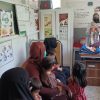
The Taliban Took Everything – Even My Hope
Rukhsar (pseudonym), 27, is a widow and sole breadwinner for a family of five. She recounts her life story under Taliban rule, a reality faced by thousands of women in Afghanistan.
India-Pakistan: On the Brink—But Is There a Way Back?
Just after the young couple arrived at Al-Sayyed Shabistan, a quaint guesthouse in Taobat, on April 30, soldiers showed up, urging them to leave—war, they warned, could break out any moment. Yahya Shah, guest-house owner and head of Taobat’s hotel association, told IPS over the phone, “Tourist season just began, but for two weeks the village feels like a ghost town—everyone’s hit: shopkeepers, eateries, drivers.”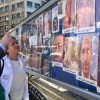
UN Needs to Protect its Vital, Yet Underfunded, Human Rights Work
Major-power cutbacks and delayed payments amidst conflict and insecurity are testing the very principles and frameworks upon which the international human rights infrastructure was built nearly 80 years ago.
Underfunding Threatens Sahrawi Refugees in Algeria
Since the Western Sahara War in 1975, Sahrawi refugees have resided in a collection of refugee shelters in the Tindouf province of Algeria. For over 50 years, these communities have struggled to develop self-sufficiency and have been solely dependent on humanitarian aid for survival, marking one of the most protracted refugee crises in the world.
‘Trump Is Advancing a 21st-century US Variant of Fascism, Backed by a White Nationalist Ideology’
CIVICUS speaks about democratic decline in the USA with humanitarian and civil society activist Samuel Worthington, former president of the US civil society alliance InterAction and author of a new book, Prisoners of Hope: Global Action and the Evolving Roles of US NGOs.
Speaking Out for SRHR: Why Lived Experiences Must Shape Policy and Practice
Just a month ago, I found myself in a hospital, anxiously waiting for my son to be attended to. As we sat quietly in one of the waiting rooms, an emergency case was wheeled in — a young woman, barely out of her teens. Her face contorted in visible pain. Her dress was soaked with blood, which had begun to pool beneath the wheelchair and trickle onto the floor.
World Press Freedom Day 2025
Call to Protect Elections from AI ‘Information Pollution’
The prevalence of artificial intelligence (AI) is changing the flow and access of information, which has a wider influence on how freedom of expression is affected. National and local elections can demonstrate the particular strengths and vulnerabilities that can be exploited as AI is used to influence voters and political campaigns. As people grow more critical of institutions and the information they receive, governments and tech companies must exercise their responsibility to protect freedom of expression during elections. 
New Forms of Power-Sharing are Needed to Uphold Rights of Indigenous Peoples
A UN groundbreaking report published in 1982 laid the legal ground for defining the inalienable rights of Indigenous Peoples. The document, written by José Martínez Cobo, a United Nations Special Rapporteur, analyzed the complex discrimination patterns faced by Indigenous Peoples.
Does the UN’s Restructuring Negotiations Leave the Staff Union Out in the Cold?
The UN’s proposed plans for restructuring the world body, currently under discussion at the highest echelons of the Secretariat, have provoked a protest from the UN Staff Union (UNSU) in New York which claims it is being left out of the ongoing negotiations.
Life and Death in the United States: A Costly Anomaly
On the crucial matters of life and death, the United States is a costly anomaly. Simply stated, women and men in the US pay more for health but get less life.
Lawyer-Turned-Activist Bhuwan Ribhu Honored for Leading a Campaign to End Child Marriage
Bhuwan Ribhu didn’t plan to become a child rights activist. But when he saw how many children in India were being trafficked, abused, and forced into marriage, he knew he couldn’t stay silent.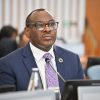
A Premium Is What Africa Pays for Poor Credit Perception
Many African countries are perceived as a credit and investment risk. As a result, they are paying higher borrowing costs than developed countries. African countries often fail to attract international investment and finance as a result of poor credit ratings by international agencies. Only Botswana and Mauritius, out of the 55 African countries, receive an investment grade rating. Lenders view the rest as having 'junk' status, indicating a high risk of loan default. As a result, lenders will demand a higher interest rate to compensate for the perceived increased risk of the borrower.« Previous Page — Next Page »


Want to keep up with the latest news and views from the Global South? Sign up for IPS Daily News Report for daily emails with our top stories about international development, climate change, gender and more. (Formerly IPS TerraViva since 1993).

The Week with IPS

NEXT STOP - SDGs
Tracking global progress towards a sustainable world
Tracking global progress towards a sustainable world
