
Saturday, November 21, 2026



News and Views from the Global South
IPS UN: Inside the Glasshouse

Money Still “Buys” You Gold at the Olympics
The Olympic Games are widely viewed as a chance for countries to showcase their fastest, strongest, most skilled and disciplined athletes, a time when political, economic and cultural differences are set aside and individuals are judged on personal merit alone.
RIO+20: Earth Summit Negotiated the Size of the Zero
Amidst much political fanfare, the 1992 Earth Summit in Rio de Janeiro concluded with the adoption of the Rio Declaration on Environment and Development and the landmark Agenda 21 blueprint for a sustainable future in the 21st century.
Activists Call for Creation of High Commissioner for Future Generations at Rio+20
The theme of the United Nations Conference on Sustainable Development (Rio+20) is "The Future We Want", but there is no official role for youth nor a spokesperson for future generations who will inherit that future.
U.N. Aims To Offset its Own Carbon Footprint
As the international community readies for a global mega-conference on sustainable development in Brazil mid-June, the United Nations is determined to practice what it preaches to the outside world: improve resource efficiency and drastically reduce its own greenhouse gas emissions.
Syria Simmers Amid U.N. Security Council Deadlock
The United States and its Western allies appear increasingly inclined to push for regime change in Syria, although the latest round of diplomatic talks at the U.N. Security Council Wednesday suggest that it remains a distant possibility.
RIO+20: Canada, Last Holdout, Drops Opposition to Water as Human Right
Canada, in a dramatic political turnaround, has signaled its willingness to recognise water and sanitation as a basic human right.
Rio+20 – a Call to Responsibility, a Call to Action
We are all going through a period of great confusion and uncertainty.
After War, Economic Crisis Hits South Sudan
The United Nations has warned that despite the austerity measures put in place by South Sudan to deal with its economic woes, humanitarian agencies will have to increase relief efforts in order to keep the country’s poor alive as the financial situation worsens.
Q&A: Afghanistan Between Peace and Stagnation
Although Afghanistan's government and economy remains fragile and the security situation unstable, the 28 members of NATO plan to withdraw International Security Assistance Force (ISAF) troops by 2014, as they believe it is time to hand over responsibility to the Central Asian nation.
Q&A: The World Must Learn From Smallholder Farmers
As Africa's Sahel region faces a new food crisis, smallholder famers hold the key to making future development policies sustainable.
Q&A: North-South Divide Looms Heavily Over Rio+20 Summit
The 1992 Earth Summit in Rio de Janeiro was to a large extent derailed by a North-South divide: a battle between a coalition of rich industrial nations versus the world's developing countries led by the Group of 77.
Rio+20 is Everyone’s Conference
The United Nations Conference on Sustainable Development, otherwise known as Rio+20, is a once-in-a-generation opportunity.Annan: ‘Bold Steps’ Needed for Syria Peace
Kofi Annan, the U.N.-Arab League envoy to Syria, has called on the country's government to take bold steps to prove its commitment to restoring peace during a visit to Damascus.
Q&A: A Green Economy Without a Pricetag on Nature?
As thousands gear up for the 2012 Earth Summit, Rio+20, scheduled to kick off in Brazil on Jun. 20, questions on the viability and adequacy of a ‘green economy’ abound.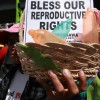
Conference Reaffirms Reproductive Rights
While much of the world is facing a global financial crisis, made worse by government cuts in social spending, members of parliament meeting here Wednesday agreed the economic crunch is no reason for governments to relax their commitment to women’s reproductive rights and health, made 18 years ago.Global Temperatures Rising on a Devastating Trajectory
Climate-heating carbon emissions set a record high in 2011, in a 3.2 percent increase over the previous year, the International Energy Agency reported this week. The main reason for this dangerous increase is that governments are failing to implement policies to prevent catastrophic increases of global temperatures.“Big Five” Crushes “Small Five” Over Veto Powers
At the height of the Cold War, a Peruvian diplomat, Dr. Victor Andres Belaunde, publicly expressed scepticism about the ability of small countries to survive the diplomatic might of the big powers in the world body.
Will Rio+20 Spark a Green Revolution?
Think of Rio+20 as the hothouse to grow the green ideas and values humanity needs to thrive in the 21st century.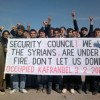
Security Council ‘Unfit for Purpose’, Says Amnesty International
Amnesty International delivered a scathing condemnation of global and national leadership in its 2012 global human rights report on Tuesday, conveying profound disappointment in such leadership for its failure to match the determination and resilience of ordinary civilians in their resistance to repressive regimes.
India’s Economic Growth Leaves Human Development in the Dust
Ahead of the Universal Periodic Review (UPR) of India, a coalition of NGOs denounced the gap between the country’s growth rate and the rate of poverty, malnutrition and lack of health and sanitation.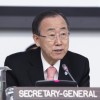
U.N. Chief Disappointed Over Deadlocked Rio+20 Negotiations
Secretary-General Ban Ki-moon, who has invested heavily in the success of the upcoming U.N. Conference on Sustainable Development (UNCSD), is publicly expressing his frustration at the lack of substantial progress on a final plan of action for a greener economy and a sustainable future worldwide.« Previous Page — Next Page »


It was dubbed "The Glass House" by U.S. ambassador James Wadsworth in 1966. Half a century later, the United Nations has gradually expanded its role as agent of peace and protector of the world's vulnerable populations, while simultaneously facing internal pressures to become more inclusive, increase transparency and maintain legitimacy in the post-Cold War political and economic order. Highlighting the local impacts of global policies on economic development, environment, health and human rights, IPS's coverage goes beyond the edicts of the Security Council to illuminate the power struggles, successes and shortcomings of the 193-member institution as it grapples with crises like climate change, armed conflict, poverty and HIV/AIDS.

The Week with IPS
