Languages
Tuesday, August 18, 2026



News and Views from the Global South
Water & Sanitation
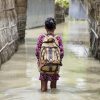
Tackling Climate Change and Preserving the Water Body: A Bangladeshi Perspective
For any riverine country, the state of the water body around big cities and conditions of major rivers hold a leadership position in the overall climate effects and how the water body is protected and preserved impacts the entire economy and living standards of that country. Bangladesh is renowned for the geomorphic features that include massive rivers flowing throughout the country. Within the border of Bangladesh lie the bottom reaches of the Himalayan Range water sources that flow into the Bay of Bengal totaling the number of rivers by a count of 700. The length of river bodies is about 24,140 km. There are predominantly four major river systems: the Brahmaputra-Jamuna, the Ganges-Padma, the Surma-Meghna, and the Chittagong Region river system. The Brahmaputra is the 22nd longest (2,850 km) and the Ganges is the 30th longest (2,510 km) river in the world. (1) The river system works as a backbone for agriculture, communication, drinking water source, energy source, fishing and as the principal arteries of commercial transportation in Bangladesh. During the annual monsoon period between June and October, the rivers flow about 140,000 cubic meters per second and during the dry period, the numbers come down to 7000 cubic meters per second.
World Drains Away Valuable Energy, Nutrients & Water in Fast-Growing Wastewater Streams
Vast amounts of valuable energy, agricultural nutrients, and water could be recovered from the world’s fast-growing volume of municipal wastewater.
Our Message at Davos: Water & Sanitation Are a Critical Line of Defence Against Climate Change
There was only one topic on everyone’s lips at Davos this year – climate change. The headlines focused on the cold war between Greta Thunberg and Donald Trump, but there was much greater consensus among those gathered for the annual meeting of the World Economic Forum (WEF).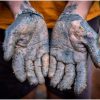
Human Rights? But Not for Sanitation Workers
This year’s Human Rights Day advocates for everyone to stand up for their rights and those of others. Yet this will feel like a distant reality for the millions of sanitation workers in developing countries who are forced to work in conditions that endanger their health and even their lives.
What Do We Want from Our Oceans?
This is a question we need to ask ourselves but before answering we need to acknowledge the diversity of expectations and aspirations that we all have for oceans, which cover more than two-thirds of the planet’s surface.
Water Is Worth More than Milk in Extrema, Brazil
"They called me crazy" for fencing in the area where the cows went to drink water, said Elias Cardoso, on his 67-hectare farm in Extrema, a municipality 110 km from São Paulo, Brazil's largest metropolis.
More Than just a Toilet: Fusing innovation & Partnerships for a Better World
Each year, World Toilet Day* raises awareness of the crucial role that sanitation plays in reducing disease and creating healthier communities. At Kohler, we’re committed to finding solutions for universal sanitation access by leveraging our design & innovation competencies and partnering with like-minded organizations to bring meaningful innovations to those communities most in need.
“Transformational Benefits” of Ending Outdoor Defecation
Ending the practice of defecating in the open, rather than in a toilet, will have “transformational benefits” for some of the world’s most vulnerable people, says the UN’s partner sanitation body, the WSSCC (Water Supply and Sanitation Collaborative Council).
The Ocean in Us: Ocean Action for Climate Ambition
In just under a month, countries around the world will gather for UNFCCC COP 25. The hashtag for this year’s “Blue COP” is yet another reminder to us all that it is “Time For Action”. We can no longer afford to wait as the effects of the climate crisis become ever more present. Vulnerable populations, whether from Small Island States, the rural heartland or the world’s megacities, are becoming ever more vulnerable, and the wellbeing of people and planet continues to face its most existential threat.
Los Angeles Joins a Global Movement to Protect Human Right to Water
On November 6, Los Angeles became the first major city in the United States to earn the designation of “Blue Community” – a bold move that will keep water protected from privatization.
World’s Sewage Workers ‘Underpaid, Sidelined and Risking their Lives’
People who empty out sewage tanks and scrub down latrines doubtless perform a vital, thankless and even undesirable task. A new report, however, shows that doing such jobs could also cost workers their lives.
Rock Glaciers Supply Water to Highlands Communities in Argentina
In Argentina's Puna region, at 4,000 metres above sea level, the color green is rare in the arid landscape, which is dominated by different shades of brown and yellow. In this inhospitable environment, daily life has improved thanks to a system of piping water downhill from rock glaciers to local communities.
How can Taps, Toilets & Good Hygiene Help Ensure Sustainable & Resilient Agricultural Supply Chains?
Water underpins the global economy and agriculture is by far the world’s largest water consumer, accounting for 70% of freshwater withdrawals. Global water demands are projected to increase by 55% by 2050 and climate change will present further pressures on water accessibility.
Urgent Need to Replace Competition with Cooperation in the Aral Sea Basin
The water resources in Central Asia’s Aral Sea Basin support the lives and livelihoods of about 70 million people — a population greater than Thailand, France, or South Africa.
Red Alert for Blue Planet and Small Island States
Barely a week passes without alarming news of the most recent scientific research into the global climate crisis compounding a growing sense of urgency, particularly the impact on small island states from rising sea levels and extreme weather.
India has a Groundwater Problem
A majority of India’s water problems are those relating to groundwater—water that is found beneath the earth’s surface. This is because we are the largest user of groundwater in the world, and therefore highly dependent on it.
The Russian Government and the UN join to fight water hyacinth in Kenya
A major partnership between The Embassy of Russia, the United Nations in Kenya and the County Government of Kisumu will see the over 14,000 hectares of the Water Hyacinth in Lake Victoria cleared following an injection of USD 7 million by the Russian government.
Climate Change to Further Escalate Violence in Western Africa
Nearly 50 million people in west Africa rely on agriculture and livestock for their livelihood but the land available for pastoral use has been rapidly shrinking.
Solar Tubewells Suck Water out of Sindh Desert
At the southern end of Pakistan’s Sindh-Balochistan border near the Kirthar mountain range, Sindh’s Kachho desert has witnessed an unprecedented surge in the use of solar-powered tubewells for groundwater extraction in agriculture.
Governments, Donors and Investors Must Put Their Money Where Their Mouths are on Gender and Climate Change
Climate change has a disproportionate impact on women and girls. This is clear when it comes to water, for instance. The Global Commission on Adaptation Report launched at the United Nations General Assembly last week states that the number of people who may lack sufficient water, at least one month per year, will soar from 3.6 billion today to more than 5 billion by 2050.
Tana River Bears the Cost of Development
 The damming of Kenya's River Tana and the environmental degradation upstream, has reduced the amount of silt and water reaching the Tana River Delta over time. Hence the sea has been pushing further and further inland unhindered, jeopardising livelihoods.
 « Previous Page — Next Page »


The Week with IPS

NEXT STOP - SDGs
Tracking global progress towards a sustainable world
Tracking global progress towards a sustainable world
