Languages
Thursday, October 22, 2026



News and Views from the Global South
Projects

Bringing Clean Water On Tap To Rural Villages In Polynesian Island Nation Of Tuvalu
Rural communities on one of the nine islands that make up the Polynesian nation of Tuvalu are anticipating how life will change when they are connected to piped clean water for the first time.

They Deserve No Less in Central Sahel
“I am so happy. This is my success!” says 13-year old Cynthia, beaming proudly as she shows her Primary School Certificate with an average mark of 120 out of 150. Thanks to the Radio Education Programme, she will now graduate on to Grade 6! Cynthia’s sense of pride, joy and achievement can only be fully understood when placed in the context of her circumstances. Cynthia is an internally displaced girl, living in Burkina Faso in Central Sahel.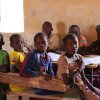
Promoting Peace in Mali
Despite the various challenges they face, teachers are showing incredible dedication to their profession, writes Leandro Salazar-Lievano, our education expert deployed to UNHCR Mali.
Despite Conflict and COVID-19, Children Still Dream to Continue Their Education in Afghanistan
As if four decades of war were not enough, then came the pandemic. For each of the past five years, Afghanistan has been identified by the United Nations as the world’s deadliest country for children and, despite progress made in peace talks between the government and the Taliban, child and youth casualties from the ongoing conflict continue to mount in 2020.
Chile’s Energy Revolution Has an Achilles’ Heel
The Atacama Desert, a giant reservoir of solar power, is the battering ram of the transformation undertaken by Chile to decarbonise its energy mix, in a country with enormous potential in non-conventional renewable sources.
From Paraguay to Italy: Development at All Costs
I am speaking with Gladys and Raúl about civic space in Paraguay, when Raúl suddenly tells me about the fires. Thick smoke has reached the capital Asunción where he is based. In October, Paraguay became Dante’s Inferno.
Education Cannot Wait Interviews LEGO Foundation CEO John Goodwin
John Goodwin joined the LEGO Foundation as CEO in April 2017 to pursue a career where he could combine his business skills with his passion for philanthropy and driving positive social impact.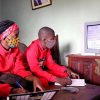
Television Education in Mozambique
"We missed our teachers, they were very friendly and helped us solve the complex exercises, but with the coronavirus, we need to adapt and learn to solve our exercises alone at home," says Alzira Ngomane, 17 years old, and her brother Amilcar Ngomane, 14, from the Albazine district, in the city of Maputo, Mozambique.
Building Blocks for Nuclear Ban Treaty: NPT & Advisory Opinion of the International Court of Justice
The Treaty on the Prohibition of Nuclear Weapons (TPNW) will become binding law for participating states on January 22, 2021. Entry into force was triggered on October 24, the date marking the 75th anniversary of the United Nations, when Honduras become the 50th state to ratify the TPNW, reaching the threshold set by the treaty.
Driving Climate Change from the Top in the Dominican Republic
When President Luis Abinader arrived at his inauguration in an electrically driven car as a symbolic gesture of his Government’s intentions to make sustainable development one of its main objectives – he signalled the start of addressing climate change commitments in the country.
Nuclear Arms Control in Crisis While US Exerts Pressure on Treaty Signatories
Responding to a question, Albert Einstein, the German-born physicist who won the 1921 Nobel Prize for Physics, predicted rather ominously: “I do not know with what weapons World War III will be fought, but World War IV will be fought with sticks and stones.”
Distributed Generation Provides Hope of Energy for the Poor in Brazil
"Showing solidarity is consuming the energy generated in your own municipality" - this is the motto of a project of distributed electricity generation in one of Brazil's many poor neighbourhoods.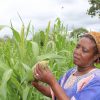
Using Traditional and Indigenous Food Resources to Combat Years of Successive Drought
For Zimbabwean farmer Sinikiwe Sibanda, planting more sorghum and millet than maize has paid off. As the coronavirus pandemic has led to decreased incomes and increased food prices across the southern African nation -- it is estimated that more than 8 million Zimbabweans will need food aid until the next harvest season in March -- Sibanda's utilisation of traditional and indigenous food resources could provide a solution to food security here.
Can Agroecology Feed the World?
Producing food and ensuring nutrition security, protecting the environment and restoring biodiversity, building sustainable and fair food systems: That’s the promise of agroecology.
Budgeting for a Better Future, for Every Child
2020 has not turned out as planned. As the COVID-19 pandemic continues to impact populations around the world, governments have been forced to take a fresh look at their spending and how to meet additional costs of pandemic response as they expect a fall in revenue. Budget information has become even more critical.
Capture of CO2 and Hydrogen as Part of Latin America’s Energy Future
While struggling to increase the generation and consumption of renewable energy, Latin America is beginning to see the rise of new technologies, such as the capture and storage of carbon and hydrogen from fossil fuels or wind and solar energy.
‘The Sahel – a Microcosm of Cascading Global Risks Converging in One Region’
The European Commission this week pledged $27.8 million in humanitarian support to the Sahel region as floods and the coronavirus pandemic exacerbate the stability in a region deeply in conflict. While the figure is less than 2 percent of the $2.4 billion that the United Nations has appealed for, Amnesty International researcher Ousmane Diallo told IPS that despite past donations from international development partners to Sahelian countries, the situation hasn’t improved over the years.
Why Food System Transformation Needs Water
The impact of Covid-19 on supply chains and food security has dealt a blow to the already faltering global development ambition of ending hunger.
NESFAS Partner Communities Celebrate World Food Day
World Food Day, a day dedicated to tackle world hunger, is annually celebrated on October 16, 2020 globally. To commemorate this day, the North East Slow Food and Agrobiodiversity Society (NESFAS) along with its partner organisations — Society for Urban and Rural Empowerment (SURE) and North East Network (NEN), Nagaland — hosted several programmes across 27 communities in Meghalaya and Nagaland. It may be mentioned here that all government SOPs and measures were followed during the events.
Q&A: Food Systems need to Mimic Nature
Despite the World Food Programme (WFP) being awarded the 2020 Nobel Peace Prize for its work in addressing global hunger, sustainable food systems expert Emile Frison believes a lot more needs to be done. This includes the rethinking of approaches to agricultural production, establishing deeper relationships between consumers and producers, and taking a wholistic approach towards socio-economic factors.
How the Pacific Islands are Balancing COVID-19 Survival Demands on Coastal Fisheries with Sustainable Management
Coastal fisheries in the Pacific Islands have become a food and livelihood lifeline to many people who have lost jobs, especially in urban centres and tourism, following COVID-19 lockdowns and border closures. Now governments and development organisations are trying to meet the crisis-driven survival needs of here and now, while also considering the long-term consequences on near shore marine resources and habitats.« Previous Page — Next Page »





The Week with IPS

NEXT STOP - SDGs
Tracking global progress towards a sustainable world
Tracking global progress towards a sustainable world
