Languages
Thursday, September 24, 2026



News and Views from the Global South
Projects

Climate Change Becomes a Reality Check for the North
“This season, the month of May was particularly hot and dry,” says Leo De Jong, a commercial farmer in Zeewolde, in Flevopolder, the Netherlands. Flevopolder is in the province of Flevoland, the largest site of land reclamation in the world. Here a hectare of land costs up to 100,000 Euros. “At the moment, we are spending between 20,000 and 25,000 Euros per week on irrigation.”
Maya Farmers in South Belize Hold Strong to Their Climate Change Experiment
In one of Belize’s forest reserves in the Maya Golden Landscape, a group of farmers is working with non-governmental organisations to mitigate and build resilience to climate change with a unique agroforestry project.
Can the U.S. and Russia Avert a New Arms Race?
Five long years have passed since U.S. President Barack Obama proposed and Russian President Vladimir Putin unfortunately rejected negotiations designed to cut their excessive nuclear stockpiles by one-third below the limits set by the 2010 New Strategic Arms Reduction Treaty (New START).
China-Africa Cooperation a Vibrant Partnership for Sustainable Development
This Forum on China-Africa Cooperation is an embodiment of two major priorities of the United Nations: to pursue fair globalization and to promote development that leaves no one behind in the context of a rules-based system of international relations supported by strong multilateral institutions.
How Guyana Must Prepare to Cope With the ‘Jeopardies and Perils’ of Oil Discovery
Recent huge offshore oil discoveries are believed to have set Guyana– one of the poorest countries in South America–on a path to riches. But they have also highlighted the country’s development challenges and the potential impact of an oil boom.
How Accurate Information About the Weather is Yielding Resilience for Zambia’s Smallholders
Just having better information about when and for how long it will rain is proving the difference between success and failure among smallholder farmers in southern Zambia. Empowered with timely information about the weather ahead of the 2017/18 farming season, 56-year-old Fainess Muzyamba of Pemba district ditched her traditional maize crop for sweet potatoes.
Why India’s Solar Water-Drawing ATMs and Irrigation Pumping Systems Offer Replicable Strategies
At New Delhi’s Savda Ghevra slum settlement, waterborne diseases have become less frequent thanks to solar-powered water ATMs that were installed here as a social enterprise venture three years ago.
How Safe Drinking Water in Rural Vanuatu Will Save Women Time While Aiding in Economic Development
Access to safe water for drinking and an adequate supply of water for other purposes is challenging in the rural areas of Vanuatu. A new project, that uses solar water pumping technology, will save time and energy for rural women whose task it is to collect and make water more accessible to their communities.
Fledgling Venture Aims to Make Money from Cutting Food and Packaging Waste
To tackle food waste, Nicholas Lim did not simply spread the word among his friends and family. In an experiment to see if he could make a viable business out of the problem, he co-founded an online platform that allows individuals, eateries and voluntary welfare organisations to order discounted groceries that would otherwise be thrown away.
Mixed Signals as Guyana Develops its Green Economy Strategy
Guyana is forging ahead with plans to exploit vast offshore reserves of oil and gas, even while speaking eloquently of its leadership in transitioning to a green economy at a recent political party congress addressed by the country's president.
New Relationship Evolves Between Society and Energy in Brazil
“We want to make history," agreed the teachers at the Chiquinho Cartaxo Comprehensive Technical Citizen School. They are the first to teach adolescents about generating power from bad weather in the semi-arid Northeast region of Brazil.
Poverty-Stricken Communities in Ghana are Restoring Once-Barren Land
In the scorching Upper East Region of Ghana, the dry seasons are long and for kilometres around there is nothing but barren, dry earth. Here, in some areas, it is not uncommon for half the female population to migrate to the country’s south in search of work, often taking their young children with them.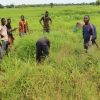
How Ghana’s Rapid Population Growth Could Become an Emergency and Outpace Both Food Production and Economic Growth
Paul Ayormah and his fellow farmers make their way home after hours spent manually weeding a friend’s one-acre maize farm in Ghana’s Eastern Region. “Tomorrow it will be the turn of my maize farm,” he tells IPS.
When Salt Water Intrusion is Not Just a Threat But a Reality for Guyanese Farmers
Mikesh Ram would watch his rice crops begin to rot during the dry season in Guyana, because salt water from the nearby Atlantic Ocean was displacing freshwater from the Mahaica River he and other farmers used to flood their rice paddies.
Scientists Warn of the Imminent Depletion of Groundwater in Chile’s Atacama Desert
Eighteen national science prize-winners in Chile have called for a halt to the over-extraction of water in the four regions over which the Atacama Desert spreads in the north of the country, a problem that threatens the future of 1.5 million people.
How the Lack of Affordable Vegetables is Creating a Billion-Dollar Obesity Epidemic in South Africa
Every Sunday afternoon, Thembi Majola* cooks a meal of chicken and rice for her mother and herself in their home in Alexandra, an informal settlement adjacent to South Africa’s wealthy economic hub, Sandton.
Sousa, a Solar Power Capital in an Increasingly Arid Brazil
Sousa, a municipality of 70,000 people in the west of Paraíba, the state in Brazil most threatened by desertification, has become the country's capital of solar energy, with a Catholic church, various businesses, households and even a cemetery generating solar power.
Why the Flooding in Grenada is a Clear Reminder of its Vulnerability to Climate Change
Grenada is still tallying the damage after heavy rainfall last week resulted in “wide and extensive” flooding that once again highlights the vulnerability of Small Island Developing States (SIDS) to climate change.
VIDEO: Climate Change Could Have Devastating Consequences for Saint Lucia
 The Caribbean island nation of Saint Lucia is home to more than 2,000 native species — of which nearly 200 species occur nowhere else in the world. Though less than 616 square kilometres in area, the island is exceptionally rich in animals and plants.
Land Degradation: A Triple Threat in Africa
Sustainability, stability, and security—the three overlapping issues are an increasing concern among many especially in Africa where land degradation is displacing citizens and livelihoods.
The Sun Powers a Women’s Bakery in Brazil’s Semi-arid Northeast
“The sun which used to torment us now blesses us," said one of the 19 women who run the Community Bakery of Varzea Comprida dos Oliveiras, a settlement in the rural area of Pombal, a municipality of the state of Paraiba, in Brazil's semi-arid Northeast.« Previous Page — Next Page »


The Week with IPS

NEXT STOP - SDGs
Tracking global progress towards a sustainable world
Tracking global progress towards a sustainable world
