Languages
Sunday, November 22, 2026



News and Views from the Global South
Africa
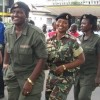
A Place for Women in Sierra Leone’s Military
A woman took position alongside male soldiers at the graveside of a fallen colleague. She positioned her AK47 on her shoulder, and on command fired into the grey sky with the others.
RIGHTS-AFRICA: “Investors Should Help Democratise Zimbabwe”
While investors need assurances about property rights and the protection of investments before they will invest in Zimbabwe’s precarious economy, the state of democracy in the Southern African country should also be a consideration.KENYA: Agricultural Budget Out of Reach of Small-Scale Farmers
Although the majority of Kenyans are agricultural producers, only 3.6 percent of the country’s national budget goes towards the sector. This falls severely short of government’s promise to spend at least ten percent on agriculture.EAST TIMOR: For Fragile States, MDG Summit Outcome Off-target
Calls by fragile states for greater focus on addressing conflict and fragility have been largely ignored in the outcome document of the Millennium Development Goals (MDGs) Summit in New York, but critical donors are at least listening to the growing rumble of voices from developing nations.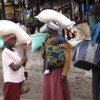
AFRICA: Women Traders Confronting Sexual Harassment at Borders
Harassment and sexual exploitation by border officials seeking bribes constitute the biggest obstacles for female informal cross-border traders in Africa, according to a United Nations Development Fund for Women (UNIFEM) research study.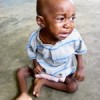
LIBERIA: Chronic Malnutrition Blamed on Mothers
Mercy Freeman sits on a small hospital cot in one of Liberia’s emergency hospitals, looking down at her frail son, whose dark eye sockets have sunk into his bony face.
AFRICA: More Commitment to Education Needed
African nations lack the political will to provide access to primary education to all children, according to the Global Campaign for Education (GCE), a coalition of organisations in 100 countries.
Gender-Based Violence Wracks Malawi Refugee Camp
At the age of 13, Chantal Kifungo* is mother to a ten-month-old baby girl. It wasn’t her choice. Almost two years ago, she was raped by her stepfather – and fell pregnant with his child.
SOUTH AFRICA: Coal – A New Solution to Fuel Problems?
A new solution to power and fuel problems worldwide may be developed by using a resource long characterised as dirty and non-renewable: coal.
TRADE: South Africa Flexing its Muscles With Poor Neighbours
The beleaguered Southern African Customs Union (SACU) has to face up to serious challenges at its upcoming heads of state meeting in October, including the divergent interests of its member states and the lack of coordinated industrial policies in the union.
MOZAMBIQUE: BHP Billiton Plans Six Month Bypass of Smelter Smokestack Scrubbers
Civil society groups are challenging a six-month authorisation granted aluminium giant BHP Billiton to emit potentially dangerous fumes from its Mozal smelter into the air without treating them first.
ETHIOPIA: Children Delight in Tales on Wheels
The middle of September marked the beginning of Meskerem, the first month, the beginning of a new year, just after the girls dance in Tigray to mark the end of the rains and the coming of the summer in a ceremony called Ashenda. Children in Mekelle and other parts of this region in northern Ethiopia had added reason to rejoice.
AFRICA: Liberalised Services Still Require Proper Regulations
With African countries' trade remaining inordinately dependent on natural resources exports, their economies could benefit from liberalisation of trade in services but only as long as proper domestic regulatory frameworks are put in place, some trade experts argue.CHINA: Second Richest Plays Poor
As China basks in international praise for its spectacular economic transformation over the last 30 years, some shadow sides of this story of triumph have begun to emerge.
South Africa’s Progress on MDGs Questioned
With five years left till the Millennium Development Goals' 2015 deadline, civil society groups say South Africa has made progress on some goals but regressed on others.Expectations Scaled Back for Cancun Climate Summit
When, following months of hype, ministers and negotiating teams arrived in Copenhagen last December for a summit on climate change, the expectations for what could be accomplished were unrealistic and made the successes that did occur seem less important than they were, says the climate chief of Mexico, which will host this year’s successor to the Copenhagen summit.SOUTHERN AFRICA: Social Protection, a Human Right?
Without contributions from well wishers and government grants of between 68 and 104 dollars per month per child, the House of Mother and Child in Ennerdale, south of Johannesburg, would barely be able to provide for the 18 vulnerable children who call the place home.
AFRICA: “Future Lies in a Free Trade Area From Cape To Cairo”
African governments’ ambitious plan for a tripartite free trade area (FTA), stretching from South Africa to Egypt, could be more realistic than getting existing ineffective regional customs unions on the continent to work.
SOUTHERN AFRICA: Paying for Social Protection
Despite the Southern Africa region sustaining an annual growth rate of six percent, the U.N. Summit on the Millennium Development Goals will hear that the majority of Southern Africans remain among the poorest people in the world.
ETHIOPIA: New Wheat Variety to Deal with Wheat-killer Diseases
Like most farmers in Ethiopia, Jundi Hajji expected that the profit from his wheat harvest would be sufficient to feed his family of eight until next year's harvest.Hershey Chocolate Linked to Child Labour
Hershey, one of the largest chocolate manufacturers in the U.S., is lagging behind other companies in taking steps to ensure decent working conditions in its supply chain, charges a new report.« Previous Page — Next Page » *#*

The Week with IPS

NEXT STOP - SDGs
Tracking global progress towards a sustainable world
Tracking global progress towards a sustainable world
