Languages
Monday, November 23, 2026



News and Views from the Global South
Africa
UGANDA: Rights Group Protests Indefinite Detentions
A prominent human rights group is demanding the release or trials of five Ugandan detainees held by military intelligence for up to 16 months.
HEALTH-AFRICA: Maintain Funding for HIV/AIDS Prevention
Health experts and scientists have accused the world's wealthiest countries of abandoning the goal of universal access to HIV prevention, care and treatment by 2010.
TRADE-ZIMBABWE: "Another Operation Murambatsvina to Be Unleashed"
It’s a Thursday morning and the Mbare Musika Market is a hive of activity. Trucks, weighed down with assorted fruits and vegetables, negotiate their way through the congested market. You can get anything here -- from vegetables, mealie-meal and cooking oil to television sets and clothing.
HEALTH-NIGERIA: Business Booming for Traditional Bone-Setters
Dressed in a simple buba (Nigerian wear) and black trousers on this particular morning, Lawal Olukole receives patients in a six by six foot consulting room made of plywood.Q&A: Burkina Faso Moving Towards Food Security
Burkina Faso was one of several countries that where a rapid rise in food prices led to rioting in the streets in 2008. Policy-makers had sensed a crisis developing, but the country was not able to build up sufficient reserves of imported commodities such as rice, wheat and oil to avoid it. There is now an emphasis on achieving food security.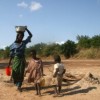
Q&A: Defending Women’s Rights Under New Land Policy
After years of delays, Kenya's cabinet has finally adopted a draft National Land Policy (NLP), which is now awaiting debate in parliament.RIGHTS-UGANDA: Women Press for Domestic Violence Bill
"Man forces wife to breastfeed puppies," screams one headline. "Police boss shoots wife," shouts another; and a third: "Man batters wife over meat". These are typical headlines in Uganda’s newspapers today. Women daily report surviving different forms of violence in their homes: physical, sexual, emotional or even economic abuse.AFRICA: Organic Farming Could be Answer to Food Insecurity
Commercial farmers sometimes fail at organic farming because they switch over too quickly, ditching all chemicals, which is as traumatic for the soil as "a drug addict going cold turkey".EGYPT: Father Still Knows Best
Speculation had been rife in recent months that parliament was on the verge of dissolution by order of the presidency. While the rumour ultimately proved unfounded, local analysts say it reflected a rift between the old and new guards of the ruling National Democratic Party (NDP) of President Hosni Mubarak.
ENVIRONMENT-NIGERIA: Playing With Fire
Nigeria's gas flare-out date has once again been extended - this time to 2011. The decision follows 25 years of political procrastination by the federal government and illegal behaviour on the part of major oil multinationals engaged in flaring associated gas (AG), the byproduct of oil production in the Niger Delta.ECONOMY-AFRICA: The State Is Back, Announces UNCTAD
The state is back; neo-liberal policies have failed; and the liberalisation of trade should be halted. These are some of the findings and recommendations from the United Nations Conference on Trade and Development (UNCTAD) for the poorest countries, most of which are in Africa.
ZAMBIA: Conservation Agriculture Gaining Ground
Not even the least alert of drivers can miss the sign along the busy road 30 kilometres south of Lusaka: "Look, Conservation Farming Pays!"
DEVELOPMENT: Social Enterprise in the Swazi Highveld
In 2006, faith-based charity organisation Bulembu Ministries Swaziland took over management of an all-but abandoned mining town, situated on a 1,700 hectares in northwestern Swaziland.
SWAZILAND: Resurrecting Bulembu
In 2005, Bulembu was a ghost town. The once-prosperous mining town's population had fallen from 10,000 to just 100. The beautiful houses that used to accommodate company staff and their families, schools that had been among the best performers in the Kingdom, shops, clinics - all fell quickly into disrepair when the asbestos mine closed.DR-CONGO: Rape by Regular Army a Growing Problem, HRW Says
In the Democratic Republic of Congo (DRC), tens of thousands of women and girls have suffered horrific acts of sexual violence at the hands of the government army, the Forces Armées de la République Démocratique du Congo (FARDC), said Human Rights Watch in a report released Thursday.EGYPT: 230 Death Sentences in Six Months
Egyptian courts have handed down unprecedented numbers of death sentences in recent months, most of them for violent crime. "Two hundred and thirty death sentences in six months", read the Jun. 24 headline of independent daily Al- Dustour. "Fifty in the last week alone".RIGHTS: Poll Finds Regional Support for Bashir ICC Indictment
A new survey released on Thursday shows that the publics in four majority Muslim and African nations, contrary to the positions of their governments, largely approve of the indictment by the International Criminal Court (ICC) of Sudanese President Omar al-Bashir.
SIERRA LEONE: Radio Stations Banned
Two Sierra Leonean radio stations have been stripped of their licences. The national regulatory body, the Independent Media Commission (IMC), says the stations failed to comply with the country's media code.
ENVIRONMENT-MAURITIUS: Hold Your Fire
Mauritius appears to have a happy problem with the 400,000 tons of waste it produces each year. The island's only landfill is full and the government must decide whether to turn to incinerating waste - generating electricity in the process - or to compost it, to the benefit of farmers.WORLD-TRADE: "Make Doha Round About Development Again"
The present global economic crisis and the need to reform the international financial architecture should encourage a return to the original focus on development in the international negotiations on agriculture, trade and development, also known as the Doha Round, according to two economists studying the issue.
ECONOMY: Accountability To Women Could Upset Business-As-Usual
A public presentation of the "Progress of the World's Women" report by the United Nations Development Fund for Women (UNIFEM) in Pretoria, South Africa this week suggests that one of the most powerful constraints on realising women's rights and achieving the Millennium Development Goals is a lack of accountability to women's needs.« Previous Page — Next Page » *#*

The Week with IPS

NEXT STOP - SDGs
Tracking global progress towards a sustainable world
