Languages
Saturday, November 14, 2026



News and Views from the Global South
Africa
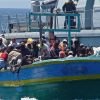
Save the Children Warns Untraceable Minors in Italy May be Trafficked
Thousands of migrant minors placed in reception facilities upon arrival in Italy, as a first step in identification and later relocation into other structures for asylum seekers, are untraceable and feared trafficked.
Zimbabwe’s Election of Great Expectations
Counting is underway today across Zimbabwe as the country voted in an historic election on Jul. 30, which many expect will bring political and economic transformation. It is a long-awaited change for many after autocratic leader, Robert Mugabe, was ousted in a soft coup in November 2017 after 37 years in power.
Q&A: Leprosy Increases as World Gives Attention to Newer Endemic Diseases
In the first six months of this year, the southern African nation of Mozambique has already registered 300 more cases of leprosy, some 951 cases, than it registered for the whole of 2017.
Eradicating Leprosy in Mozambique, a Complicated Task
It takes Faurito António, 42, from Lalaua district, Nampula Province, two hours to reach his nearest health centre in order to receive the drugs necessary for his treatment of leprosy. António, whose foot has become affected by the muscle weakness that occurs when leprosy goes untreated, says this long walk while ill is the reason why many don’t continue treatment - which can take between six to 12 months.
After Elections, Hard Work Starts for Zimbabwe’s Civil Society
For many Zimbabwean voters, casting their ballots on July 30 is sure to be a somewhat surreal experience. For the first time since the country’s independence, the ever-present face of Robert Mugabe will not be staring back at them on the ballot paper.
Peace & Equal Political Participation of Women in the DRC
I am a women’s human rights defender and President of Synergie des Femmes, a platform of 35 organizations working for the improvement, promotion, defense, respect and protection of women's rights in the Democratic Republic of Congo (DRC).
No Time to Slow Down While HIV/AIDS is Threatening a New Generation
As the 22nd International AIDS Conference wraps up in Amsterdam, I can’t help but reflect on how far we have come on this journey with the AIDS epidemic.
Educating Girls, The Only Road To Achieve the SDGs
Better and prolonged education can bring down high rates of illiteracy, sexual abuse and early marriage among girls.
Benin – the Launchpad and Home for African Migrants
Last year, Mohamed Keita returned home to Mali after living and working in Libya for six years. Eighteen months ago he was arrested by security forces in Libya as he and other migrants tried to cross the Mediterranean Sea to Europe via a makeshift boat. After spending a traumatising six months in jail, he was transported back to Mali. But as soon as he arrived he immediately knew that it would be difficult for him to stay put.
Blue Economy Movement Gains Traction in Africa
An increasing number of African countries are now embracing the blue economy for its potential to deliver solutions to their most pressing development needs–particularly extreme poverty and hunger.
Age Appropriate Sexuality Education for Youth Key to National Progress
Fifty years ago at the International Conference on Human Rights, family planning was affirmed to be a human right. It is therefore apt that the theme for this year’s World Population Day is a loud reminder of this fundamental right.
Keep Water Out of the Reach of Children
To many of us, ‘keep out of the reach of children’ is a phrase we see printed on labels for medicines and chemicals. To mothers in Rweru Sector, Rwanda, it’s a daily principle to live by.
Experts Decry Exclusion of Africa’s Local Farmers in Food Security Efforts
Joshua Kiragu reminisces of years gone by when just one of his two hectares of land produced at least 40 bags of maize. But that was 10 years ago. Today, Kiragu can barely scrape up 20 bags from the little piece of land that he has left – it measures just under a hectare.
War, High Tariffs and Nationalisation – their Cost to Africa’s Climate
Africa’s political instability, its armed conflicts and regulatory issues are placing at risk investment needed to tackle climate change and reduce greenhouse gas (GHG) emissions on the continent.
Church and Conflict in South Sudan
Throughout fifty years of struggles, South Sudan’s different churches have remained one of the country’s few stable institutions, and in their workings toward peace, have displayed a level of inter-religious cooperation rarely seen in the world.
West Africa Moves Ahead with Renewable Energy Despite Unpredictable Challenges
The West African nation of Guinea may be a signatory of the Paris Agreement, a global undertaking by countries around the world to reduce climate change, but as it tries to provide electricity to some three quarters of its 12 million people who are without, the commitment is proving a struggle.
Building West Africa’s Capacity to Access Climate Funding
When Senegalese president Macky Sall opened the 30MW Santhiou Mékhé solar plant last June, the country gained the title of having West Africa's largest such plant. But the distinction was short lived.
Senegalese Immigrants Face Police Brutality in Argentina
Senegalese immigrants began to arrive in Argentina in the 1990s and most of them joined the group of street vendors in Buenos Aires and other cities. But in recent months, they have suffered police brutality, denounced as a campaign of racial persecution.
Closing Africa’s Wealth Gap
From “Africa Reeling” to “Africa Rising,” there’s a new narrative for the African continent, now showing promising signs of sustainable growth under more stable governments. McKinsey & Company, a global management consulting firm, predicts that Africa’s combined GDP will be $2.6 trillion by 2020 and that “Africa’s consumer spending by 128 million households with discretionary income is expected to be around $1.4 trillion.”
Ethiopia to Return Land in Bid for Peace with Eritrea
The utterly inconsequential-looking Ethiopian border town of Badme is where war broke out in 1998 between Ethiopia and Eritrea, lasting two years and devastating both countries.
Now is Not the Time to Give up on the People of DRC
After more than 20 years of brutal conflict, few might believe that things could get worse in the Democratic Republic of Congo (DRC). And yet they most dishearteningly are. In the last year, we have witnessed a continuous escalation of violence that has spread to half of the country, endangering millions. Some 2 million children suffer from acute hunger, and the DRC is home to the largest number of displaced people in Africa.« Previous Page — Next Page » *#*

The Week with IPS

NEXT STOP - SDGs
Tracking global progress towards a sustainable world
Tracking global progress towards a sustainable world
