Languages
Saturday, November 21, 2026



News and Views from the Global South
Regional Categories

Extreme Weather the New Normal if Global Warming Increases at Current Speed
Rondrotiana Barimalala is a climate researcher at the University of Cape Town in South Africa and a lead author for the IPCC report to the recently released Intergovernmental Panel on Climate Change (IPCC) report titled Climate Change 2021: The Physical Science Basis.
When Taliban Ministers Avoided Eye Contact With Senior Female UN Officials
When the Taliban ruled Afghanistan during 1996-2001, the United Nations was engaged in a losing battle for women’s rights. And that battle was occasionally led by two senior female UN officials, one of them working for a UN agency providing humanitarian assistance inside unfriendly Taliban territory.
Biden Disappoints, Must Do More, Not Less
US President Biden’s earlier support for a vaccine patent waiver raised hopes for his summit last week. However, it proved disappointing, not only for efforts to end the pandemic, but also for US leadership in these challenging times.
Mexican Illustrators Blur Art Lines in Paris Show
So, what’s the difference between illustration and “art”? When asked this question, Maru Aguzzi replies with a wry smile: “Perhaps the price?”
When Love is Called as a Conspiracy: The ‘Love Jihad’ Bogey Targeting Interfaith Couples in India
When Ali (name changed) proposed to his best friend, little did he know that her parents would take six years to agree to their alliance because he was born into a Muslim family, and they were Hindus.
Data Drought in the Global South
In 2020, every human on Earth created an average of at least 1.7 megabytes of data per second, collectively amassing 2.5 quintillion data bytes. Some 90% of the world’s total data was created in the last two years alone.
Rural Water Boards Play Vital Role for Salvadoran Farmers
After climbing a steep hill along winding paths, you reach a huge water tank at the top that supplies peasant farmer families who had no water and instead set up their own community project on this coastal strip in central El Salvador.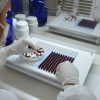
Replacing Monopolies with Impact Rewards
Impact Funds would make the business of innovation more cost-effective and enable a triple win for the potential beneficiaries of innovations.
‘Building Back Better’: Jordan’s Road to Green Economic Recovery
For the first time in decades, Jordan’s economy contracted in 2020. COVID-19 took a heavy toll on the economy, and it was concerning for the country, particularly because Jordan had managed to grow at an average rate of 2%, despite regional and international shocks to its economy amounting to 44% of Gross Domestic Product (GDP) over the past decade.
Scientific Panel’s Scoping Report Instructive for Global Food Systems Transformation
On September 10th, on a sweltering summer afternoon, three fishers drove a van around the residential community of Castle Comfort in Dominica, blowing forcefully into their conch shells – the traditional call that there is fresh fish for sale in the area.
With the World Bank’s “Doing Business” Out of Business, What Should Come Next?
Last week the World Bank announced it was “discontinuing” its “Doing Business” report, which ranks countries on the ease of opening and operating a company.
How Satellite Technologies Can Aid Fiji, Other Pacific Island Nations to Build Climate Resilience
Sepesa Curuki and his community are coming to terms with the prospect of relocation from Cogea village on Fiji’s second-largest island of Vanua Levu. Their village, which lies between two rivers that flow into the Pacific Ocean only 2km away, has been battered by intense and frequent cyclones, flooding and erosion, threatening their very existence.
On the Verge of Change
Current food systems are no longer fit for the 21st century. Inequitable distribution, poor nutritional habits, and climate change are three issues breaking down our global food systems today, forcing us to look for solutions to transform them. Food aid – very much part of our global food systems – needs to be responsive to the challenges that lie ahead.
How Transforming Food Systems Could Unlock a $12 Trillion Global Windfall
With the world still counting the social and economic costs of the Covid-19 pandemic, amid a fresh “code red” on the climate crisis, food may not seem like the most pressing threat to humanity.
Climate Finance Can Transform Food Systems
September 23, 2021 is the first-ever UN Food Systems Summit, convened to mobilize the highest-priority transformations needed to end hunger through the sustainable production and distribution of food. Transforming food systems to ensure food security for all has never been so urgent.
Women Leaders Hailed for COVID-19 Response
On September 20, Prime Minister of Bangladesh Sheikh Hasina accepted an award from the United Nations Sustainable Development Solutions Network for her country’s ‘striking’ progress towards achieving the Sustainable Development Goals.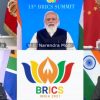
BRICS Puts on Annual Show of Unity
Amid scepticism and a lack of public interest, domestic crises and the backdrop of Covid-19, last week the BRICS countries delivered on their commitment to hold an annual summit without showing the signs of disunity that has beset the group in recent years.
The UN Food Systems Summit – Food Processing, Consumption, Supply Chain, Loss and Waste
Food processing extends shelf-life and can transforms raw food into attractive, marketable products. It can also prevent contamination. The transformation can involve numerous physical and chemical processes such as mincing, cooking, canning, liquefaction, pickling, macerating, emulsification, irradiation and lyophilization. Frozen processed and raw food changes transport and storage requirements radically; while the packaging of food, both raw and processed, is an industry unto itself.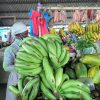
Nurturing a New Generation of Food Leaders
Food security experts have raised an alarm that with as many as 811 million people the world over or 10 percent of the global population going hungry, the world is off-track to ending hunger and malnutrition.
From “We the Peoples” to “Our Common Agenda”, the United Nations is a Work in Progress
When the UN Charter was being drafted in the closing days of the Second World War in 1945, a debate ensued on what its opening words should be. Jan Smuts, representative of colonial South Africa, had originally suggested that the UN Charter begin with the words, ‘The High Contracting Parties.’
For Healthier Food Systems: Turn the Tide Against Ultra-Processed Products
COVID-19 has exposed serious vulnerabilities in how people around the world access and consume food. One of the more alarming trends is the significant increase in the consumption of foods that may be tasty and convenient, but harm our heath. These ultra-processed products include sugary drinks, snack foods, frozen meals, packaged breads and frozen desserts.« Previous Page — Next Page »


The Week with IPS

NEXT STOP - SDGs
Tracking global progress towards a sustainable world
Tracking global progress towards a sustainable world
