Languages
Sunday, November 22, 2026



News and Views from the Global South
Regional Categories
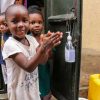
The Urban Poor are Fighting Back Against COVID-19
For those who live in slums and informal settlements, the Covid-19 pandemic has brought to the forefront their greatest vulnerabilities. But they are fighting back; organising, and coming up with creative ways to protect their communities.
Improving People’s Lives with Digital Technology during COVID-19
Digital technology has been crucial in ensuring community and connection during the coronavirus pandemic and subsequent lockdowns. And its shown that collaboration between the private and public sector can ensure that digital technology continues to advance in a way that improves people’s lives under crises, experts said on Tuesday, Oct. 13.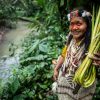
Indigenous Peoples & Local Communities Offer Best Hope for Our Planetary Emergency
Indigenous peoples and local communities offer the best hope for solutions to our planetary emergency. These solutions are grounded in traditional, time-tested practices and knowledge.
Milton Friedman Versus Stakeholder Capitalism
Milton Friedman was arguably the most influential economist of the second half of the 20th century, associated with promoting ‘neo-liberal’, free-market, shareholder capitalism. Friedman’s monetarist economics is now widely considered irrelevant, if not wrong, especially with the low inflation associated with ‘unconventional’ monetary policies following the 2008-2009 global financial crisis.
Q&A: Women in Mali Play Critical Role in Preventing and Resolving Conflicts
The coronavirus pandemic has affected the safety and sense of community for many women in Mali given the travel restrictions and lockdowns in place, Bassirou Gaye, an assistant researcher for a 2019 report on the role of Mali women in peacekeeping, told IPS this weekend.

COVID’s Impact in Real Time: Finding Balance Amid the Crisis
One enduring lesson from the COVID-19 pandemic is that any lasting economic recovery will depend on resolving the health crisis.
Gendering Agriculture so Women Take the Lead in Feeding Africa
Africa’s hopes of feeding a population projected to double by 2050 amidst a worsening climate crisis rest on huge investments in agriculture, including creating the conditions so that women can empower themselves and lead efforts to transform the continent’s farming landscape.
COVID-19: Examining Theories for Africa’s Low Death Rates
As the threat of a COVID-19 pandemic emerged earlier this year, many felt a sense of apprehension about what would happen when it reached Africa. Concerns over the combination of overstretched and underfunded health systems and the existing load of infectious and non-infectious diseases often led to it being talked about in apocalyptic terms.
Scaling Up SDG4 in Crises
Out of global crises spring opportunities for change. In crisis, change is not an option. It is a necessity. And, as Plato famously noted: “Necessity is the mother of invention.” Education Cannot Wait (ECW) is an invention that sprang out of crisis and was borne of necessity.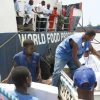
Nobel Peace Prize to World Food Programme Delivering Life-Saving Sustenance to Millions Worldwide
With the 2020 Nobel Peace Prize bestowed on the Rome-based World Food Programme (WFP), the United Nations and its affiliated agencies continue to hold a monopoly of one of the world’s most prestigious annual awards.
What Does Building Back Better Look Like for African Women Engaged in Smallholder Agriculture and Food Businesses?
“We need to build back better.” This has been the rallying call on the COVID-19 response by UN Secretary General Antonio Guterres to leaders and communities around the world. It has been echoed in conference rooms and in the numerous Zoom meetings organized to discuss the pandemic. It will be especially important to apply the idea to women working in the agriculture and food sector.
Why We’re Uniting in Support of African Girl Leaders to beat AIDS & Shift Power
The International Day of the Girl Child on 11th October is a call for us to reflect on our responsibilities. Twenty-five years ago, governments adopted the historic Beijing Declaration and the Platform for Action.
Peer Support Vital to Help Young Returnees Rebuild Their Lives in West Africa
Ismaila Badji could not bring himself to leave his house for weeks after returning to Senegal. “I failed twice; at school and on the road,” he said. “What's wrong with me? I'm still looking for the answer." After spending time in a Libyan detention centre, Badji returned to where he came from. He did not feel like himself, he lacked motivation and he suffered from stigma from the local community.
Does COVID-19 Imply an End to the Epoch of Science?
Around the 16th century there was a radical shift in the way humans perceived nature. New thinking in physics, chemistry, biology and mathematics heralded a deeper understanding of the world around us. Between the 17th and 18th century this new thinking had resulted in spate of technological inventions such as the steam engine, railways, electricity and the telephone.
Mayors Explore how COVID-19 Pandemic will Redefine Urban Cities
The coronavirus pandemic has the potential to bring about positive changes for cities, and give leaders the opportunity to make long-term, transformative changes as a result, according to renowned architect Norman Foster, who was speaking at the first ever Forum of Mayors 2020.
The Wreckage Of Trump’s Presidency*
Like many Americans, I have been observing Trump’s rise to power with some perplexity, often asking myself how and why a man of his character became the President of the United States, which is viewed as the most powerful political office in the world.
Can Colonialism be Reversed? The UN’s Declaration on the Rights of Indigenous Peoples Provides Some Answers
Can a state built upon the “taking of another people’s lands, lives and power” ever really be just? Colonialism can’t be reversed, so at a simple level the answer is no.
The Lebanese Disaster
The 26th of September, the Lebanese prime minister Mustapha Adib stepped down after less than a month on his post. The president, Michael Auon, stated: ”Lebanon will be going to Hell if a new government is not formed soon.” The question is if his nation is not there already. A horrifying image of the state of the nation was provided on the 4th of August when 2,750 tons of ammonium nitrate, stored in a dockside hangar, blew up in an explosion killing more than 190 people, injuring 6,500 and damaging thousands of buildings.
With Armed Groups on the Rise, Youth Engagement is More Important than Ever
As governments worldwide struggle to contain COVID-19, recent reports suggesting armed groups like Islamic State are resurging offer a sobering account of the many challenges that the global community now faces.
Community Hydropower Dam Lights Up Salvadoran Villages
 The people of Potrerillos, a village located in northeastern El Salvador, worked hard to achieve something that many doubted they could do: harness the waters of the Carolina River to install a community mini hydroelectric plant, which supplies them with cheap energy.

Poverty, Official Complicity Hampers Human Trafficking Fight in Malawi
In August, police intercepted the trafficking of 31 people to Mozambique. The victims, all Malawians, included 17 children and 6 women. Their two traffickers, also Malawians, had coerced them from their rural village in Lilongwe district with a promise of jobs in estates in neighbouring Mozambique. But they were saved in large part thanks to their own community.« Previous Page — Next Page »


The Week with IPS

NEXT STOP - SDGs
Tracking global progress towards a sustainable world
Tracking global progress towards a sustainable world
