Languages
Monday, November 23, 2026



News and Views from the Global South
Regional Categories

Carbon Markets Can Provide a Crucial Part of the Solution to the Climate Crisis
One of the main discussions at the COP25 climate change talks was Article 6, which is designed to provide financial support to emerging economies and developing countries to help them reduce emissions by using global carbon markets. Carbon pricing is an essential piece of the puzzle to curb emissions. Without a value on carbon, there is less incentive to make positive changes, especially in the private sector. The most efficient way to carry this forward is to allow trading of carbon both nationally and internationally, which will ensure the lowest cost of mitigation for participants globally.
Education for Constructive Change
We saw a hugely diverse selection of world leaders - from civil society, politics and business - seeking positive change at the UN General Assembly in New York in September. But the global reality is a political and economic environment that is increasingly divided. Boycotts. Protests. Narratives of hate.
Arab Region’s Largest Youth Gathering Focuses on New Tech
On late Monday morning, a motley group of more than a thousand youth gathered in a hall in Sharm el-Sheikh, Egypt, to listen to Sophia — a humanoid robot capable of displaying humanlike expressions and interacting with people. Yahya Elghobashy, a computer science engineering student from Cairo, sat excitedly in the audience. A few meters away from him, also in the audience, was Abdel Fattah el-Sisi — the President of Egypt.
Lithium and Clean Energy in Argentina: Development or Mirage?
The intense white brightness of the salt flats interrupts the arid monotony of the Puna in northwest Argentina, resembling postcards from the moon. Beneath its surface are concealed the world's largest reserves of lithium, the key mineral in the transition to clean energy, the mining of which has triggered controversy.
Billionaires’ Existential Threats to Humanity?
The social utility of billionaires’ existence has come under increased scrutiny, especially during the Democratic Party primaries for the 2020 US Presidential election. Leading newspapers, such as The New York Times, published opinion pieces arguing to abolish billionaires and reflecting on why billionaires engage in illegal insider trading.
Address Malnutrition, Not Just Food Security
Malnutrition remains a formidable challenge in most societies, with less than a tenth of countries in the world not experiencing at least one major malnutrition problem. In relatively more food secure countries, where almost everyone has enough to eat, and few live in fear of a sudden loss of access to food, micronutrient deficiencies and diet-related non-communicable diseases (NCDs) often still loom large.
Madrid Talks End Without Agreement on How to Finance Recovery from Climate-Related Atrocities
Millions of people, particularly in Africa, who lose their property, homes, and even die due to climate-related disasters will have to wait at least another year for the international community to agree on a means of supporting them.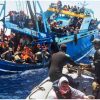
EU Policies Don’t Tackle Root Causes of Migration – They Risk Aggravating Them
According to political scientist Zaki Laïdi’s La tyrannie de l’urgence (The tyranny of emergency) from 1999, crisis and emergency situations leave no time for analysis, prevention or forecasting. As an immediate protective reflex, they prevent long-term solutions and pose a serious risk of jeopardising the future.
How to Recognise Nigeria’s Trafficked Kids
 What is human trafficking and child trafficking? IPS correspondent Tobore Ovuorie takes to the streets of Lagos to find out what Nigerians know about this crime. The answer was, surprisingly, very little. Ovuorie also speaks to experts about how to identify kids who have been trafficked and what ordinary citizens can do about it.

Solar and Biogas, the Perfect Agroenergy Duo in Brazil
 "They're the ideal duo," because the combination of solar and biogas sources makes it possible to provide electricity around the clock, one during the day and the other at night, says Anelio Thomazzoni, a pig farmer who has become a producer of clean energy in southwestern Brazil.
COP 25: African Development Bank urges African nations to persist with climate change ambitions as marathon talks end in Madrid
The African Development Bank has urged the continent’s nations to stay the course on climate action, after a marathon session of talks at the twenty-fifth Conference of Parties to the United Nations Framework Convention on Climate Change (COP 25) in Madrid.
2019 – A Devastating Year in Review
By any measure this has been a devastating year: fires across the Amazon, the Arctic and beyond; floods and drought in Africa; rising temperatures, carbon emissions and sea levels; accelerating loss of species, and mass forced migrations of people.
Women in Climate Hot Spots Face Challenges Adapting
Women in Asia and Africa hardest hit by climate change have a tough time adapting to the climate emergency, even with support from family or the state, finds a new study. The results raise questions for global agreements designed to help people adapt to the climate emergency, it adds.
Four Lessons to Reverse Inequity in the Global Health Workforce
Recently, Madhukar Pai, the Director of McGill University Global Health Program wrote about the inequity in global health research. He observed that researches are skewed in favor of the global north. We agree that this inequity exists. However, we also have found that global fellowships such as the Atlantic Fellowship, of which we are both Senior Fellows, are platforms to reverse this inequity, foster international partnerships and amplify voices of development practitioners from the global south.African Development Bank joins forces with international organisations to help developing countries build resilience to extreme weather
The African Development Bank has joined forces with 11 other international organizations to assist developing countries to build resilience against the impact of natural disasters caused by extreme weather.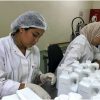
Industrial Energy Efficiency is a Climate Solution
At a time when the world is battling unprecedented drought, bushfires, rising sea levels and water shortages, reducing energy use across industry is one powerful way to fight climate change in the immediate term.
COP 25: ‘Africa’s future depends on solidarity’ Leaders and development partners rally around climate change goals
There was standing room only as ministers, diplomats, activists and journalists gathered at the IFEMA conference centre in Madrid to mark Africa Day at the COP 25 climate meeting.
AUDIO: If We Are to Achieve Zero-leprosy by 2030, This Is the Best Time and Opportunity
Dr Rahat Chawdhury is the Deputy Program Manager at the National Leprosy Program of Bangladesh. His is the umbrella organization of hundreds of doctors, technical experts, counsellors, strategists, health advocates, field workers and thousands of leprosy-affected people as the beneficiaries.

AUDIO: “We Cannot Achieve Zero-Leprosy by 2030 Without a Vaccine” – WHO Team Leader
Dr Erwin Cooreman is the Team Leader of WHO's Global Leprosy Programme. This week, he is in Dhaka to attend the National Conference on Leprosy, which was inaugurated by the prime minister of Bangladesh Sheikh Hasina. In her speech, she reiterated her commitment to make the country Zero-Leprosy by 2030. 
Haiti’s Cry for Help as Climate Change is Compared to an Act of Violence against the Island Nation
Haiti’s Environment Minister Joseph Jouthe has compared the climate emergency to a violent act and appealed to the international community for help to fight climate change.
How Climate Change is Fuelling Insurgency of Nigeria’s Militant Boko Haram
Experts say climate change is a key factor fuelling the insurgency of the armed group Boko Haram. The insurgency, which is aimed at creating an Islamic State in North East Nigeria, is responsible for one of the worst humanitarian crisis in the world.
« Previous Page — Next Page »


The Week with IPS

NEXT STOP - SDGs
Tracking global progress towards a sustainable world
