Languages
Saturday, November 21, 2026



News and Views from the Global South


The Rape of India’s Dalit Women: It’s All about Gender & Class Subordination
Shabnam*, a young woman from Northern India’s Haryana state, is two years away from becoming a law graduate. She sees parallels between her own rape and that of the 19-year-old Maha Dalit woman whose brutal rape and torture by a group of men from a “dominant” or “higher” caste in the neighbouring state of Uttar Pradesh triggered nationwide protests.
Drop Boxes Tell Tale of US Democracy in 2020
It sits stolidly, bolted onto a concrete base outside the Maricopa County Recorder’s office in Phoenix, Arizona. Weighing in at around 600 pounds, it sports “anti-tampering features” and “heavy-duty, all-weather construction”. Security agents check it periodically and it appears to be watched by a camera. As I scrutinize it, a man in an SUV pulls up and deposits a ballot in its slot. He tells me he votes this way every election, then drives off.
Economic Trends and What’s Important in Life
US third quarter GDP numbers released two weeks ago delighted stock markets and President Trump. Output had picked up by 7.4%, annualised as 33.1%, the largest quarterly economic growth on record, almost double the old record of 3.9% (annualised as 16.7%) in the first quarter of 1950, seven decades ago.
COVID-19: A Global Survey Shows Worrying Signs of Vaccine Hesitancy
It has been nine months since the World Health Organisation (WHO) declared the outbreak of COVID-19, caused by the SARS-CoV-2 virus, a “public health emergency of international concern”. Since then, more than 44 million cases have been recorded and over one million lives lost. Economic costs measure in trillions of dollars. Global recovery will take years.
Q&A: COVID-19 has Pushed Women Peacebuilders from Key Leadership Roles
Women need to be given roles as negotiators, not just offered representation through advisory groups, Agnieszka Fal-Dutra Santos from the Global Network of Women Peacebuilders (GNWP) told IPS.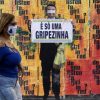
US Groups Linked to COVID Conspiracies Pour Millions of ‘Dark Money’ into Latin America
Half a dozen US Christian right groups have poured millions of dollars into Latin America and have promoted misinformation about COVID-19 and other health and rights issues, openDemocracy can reveal today.
20th Anniversary of UNSCR 1325: Much Remains to Be Done
In 2010, at the opening session of the civil society forum observing the tenth anniversary of UN Security Council Resolution 1325 on “Women and Peace and Security”, I had the honor to declare 1325 as “the common heritage of humanity” indicating the wide-ranging nature of the potential benefits which will flow from the landmark resolution’s full and effective implementation by all at all levels.
In the Face of a Pandemic, the World Turns to Trade
Greatly affected by the coronavirus pandemic, international trade can play a key role in the economic recovery, but it must overcome obstacles, such as protectionism and commercial disputes, especially between the United States and China.
The Day After
For Europe, the region closest by culture and political tradition to the United States, the mood of the day after the presidential election may be very different from that assumed a priori depending on the verdict.
Nuclear Arms Control in Crisis While US Exerts Pressure on Treaty Signatories
Responding to a question, Albert Einstein, the German-born physicist who won the 1921 Nobel Prize for Physics, predicted rather ominously: “I do not know with what weapons World War III will be fought, but World War IV will be fought with sticks and stones.”
Crisis alla Turca II – From Currency Crisis to Debt Crisis?
The meltdown of the Turkish currency that began in 2018 has continued unabated with the decline reaching unprecedented proportions in recent days. The causes of that turmoil including underlying financial fragilities and political shocks were discussed in a previous piece by this author. Since then the economy has become even more vulnerable in these respects.
Nepal Needs to Bridge the Gap Between Legal Provisions Against Child Marriage and Social Norms
Mohan and Sarita (name changed) studied together in the same school from Grade 6 onwards. They were friends initially, but fell in love and wished to be together, though underage.
Reclaiming Africa’s Early Post-independence History
In 1965, Kwame Nkrumah described the paradox of neocolonialism in Africa, in which “the soil continue[s] to enrich, not Africans predominantly, but groups and individuals who operate to Africa’s impoverishment.” He captured what continues to be an essential feature of Africa’s political economy.
Distributed Generation Provides Hope of Energy for the Poor in Brazil
"Showing solidarity is consuming the energy generated in your own municipality" - this is the motto of a project of distributed electricity generation in one of Brazil's many poor neighbourhoods.
Cultivating an Eco-friendly Culture in Indonesia’s Schools
In West Jakarta, Indonesia, teachers at the private Santo Kristoforus High School are so environmentally conscious they make other schools seem a little bit green when it comes to environmental education.
$280m ‘Dark Money’ Spent by US Christian Right Groups Globally
US Christian right groups, many with close links to the Trump administration, have spent at least $280m in ‘dark money’ fuelling campaigns against the rights of women and LGBTIQ people across five continents, openDemocracy can reveal today.
Global Data Community’s Response to COVID-19
The world is currently counting more than 42 million confirmed cases of the COVID-19 and over 1 million deaths since the start of the pandemic.1
The Mental Health Consequences of the Lekki Toll Gate Attack
On October 20, 2020, young Nigerians who were protesting against police brutality were shot by men in Nigerian military uniforms. Unarmed, peaceful citizens were massacred at the Lekki Toll Gate in Lagos, southwest Nigeria.
The Path to Global Food Security
This year, the Nobel Peace Prize recognised the inextricable link between hunger and conflict. With climate change as a further complicating factor, research, investment, and coordination with local farmers are critical for ensuring food security for all.
Finance Covid-19 Relief and Recovery, Not Debt Buybacks
In July, the UN Secretary-General warned that a “series of countries in insolvency might trigger a global depression”. Earlier, the United Nations Conference on Trade and Development (UNCTAD) and the International Monetary Fund (IMF) had called for a US$2.5 trillion coronavirus crisis package for developing countries.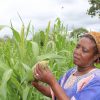
Using Traditional and Indigenous Food Resources to Combat Years of Successive Drought
For Zimbabwean farmer Sinikiwe Sibanda, planting more sorghum and millet than maize has paid off. As the coronavirus pandemic has led to decreased incomes and increased food prices across the southern African nation -- it is estimated that more than 8 million Zimbabweans will need food aid until the next harvest season in March -- Sibanda's utilisation of traditional and indigenous food resources could provide a solution to food security here.« Previous Page — Next Page »


Want to keep up with the latest news and views from the Global South? Sign up for IPS Daily News Report for daily emails with our top stories about international development, climate change, gender and more. (Formerly IPS TerraViva since 1993).

The Week with IPS

NEXT STOP - SDGs
Tracking global progress towards a sustainable world
Tracking global progress towards a sustainable world
